
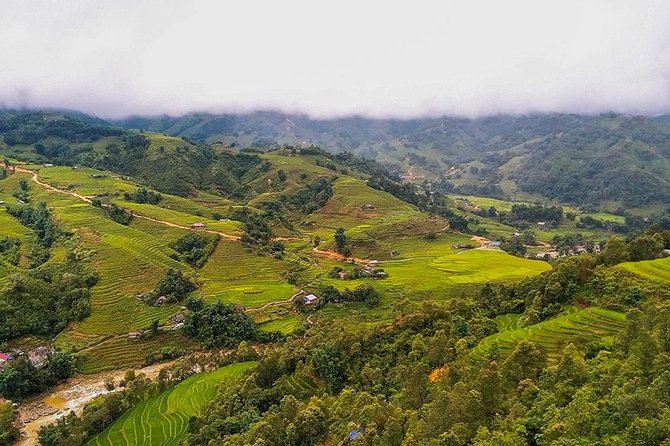
Review · 2-DAY EXPERIENCES
Rice Terraced Fields & Homestay Experience– 2D 1N
Sapa turns hiking into a cultural speed run. This 2-day, 1-night trek pairs rice terrace walks with village time and a homestay night, so you see the mountains and the people without feeling stuck in a bus tour. You start at 9:00 am from Sapa Church, then work your way through villages and terraces before returning by vehicle.
What I like most is the way the local guide experience gets you past surface sightseeing. Guides such as Sang and Su tend to be friendly, confident, and ready to explain what you’re looking at, including rice terraces and village life. Second, the overnight in Ta Van comes with real village rhythm, including dinner and the chance to reset with a hot shower before night time.
One drawback to consider is that homestay quality can vary. One review called out cleanliness concerns, and you should also know that parts of the route can involve shared walking areas that feel busy, with motorbikes on some paved sections.
Key Things You’ll Notice on This Sapa Rice Terrace Trek
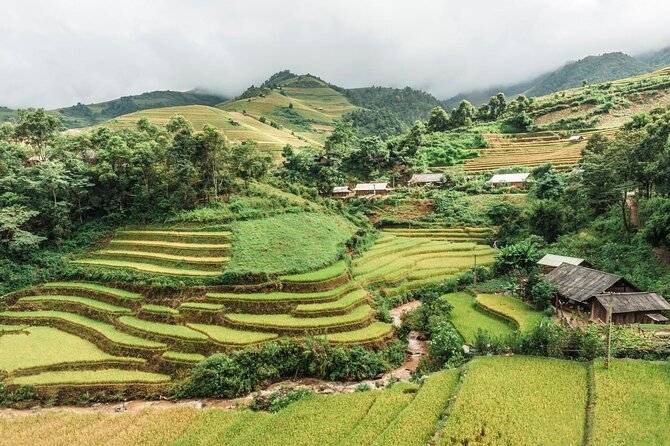
- Small group feel: maximum of 2 travelers, led by a local Hmong guide
- Full meal support: breakfast, dinner, and two lunches included
- Village access handled: village entry fees included for the stops that list tickets
- Homestay time in Ta Van: host family welcome, plus a hot shower and downtime
- Giang Ta Chai waterfalls day: coffee or tea first, then an uphill walk to the falls
- Weather dependent: if conditions are poor, you get a different date or a full refund
Rice Terraces Plus a Homestay Night, The Real Point of This Tour
Sapa can be a little fake-feeling if you only do the highlight viewpoints. This tour is built for the opposite: you trade extra scenic stops for time on paths through rice fields and time inside an actual village routine.
The big win is that the pacing makes sense for most first-timers. You get a full day of walking around the Cat Cat area and the rice terraces viewpoint zone, then you sleep in Ta Van with meals included. The next day focuses on the Giang Ta Chai area and ends at the waterfalls. Your guide also handles the navigation and keeps the day flowing from village to village.
The other practical win is that you’re not paying extra for everything along the way. Village entry fees are included for the stops that specify tickets, meals are covered, and you get round-trip support back to Sapa at the end of the trek. For $85, that matters because Sapa trekking costs add up fast once you start layering guides, transport, and separate tickets.
More Hanoi tours and experiences for the shortlist
From Sapa Church at 9:00 am to Y Linh Ho and the Big Terrace Views
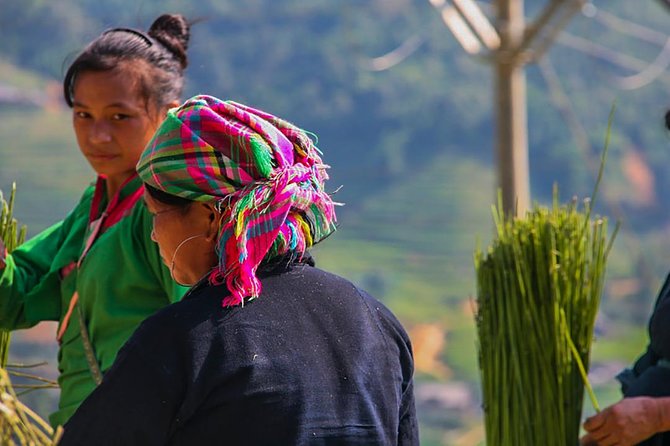
You meet at Sapa Church at 9:00 am, and the tour starts with a quick introduction from your local guide. If you’re staying in Sapa Town, pickup is offered, and the guide can also meet you in front of the local main church area.
From there, you head down about 2 kilometers toward the Cat Cat road. That downhill section sets the tone. You’re not just climbing for views, you’re moving through the terrain in a way that feels like you’re part of the route locals use between fields and village areas.
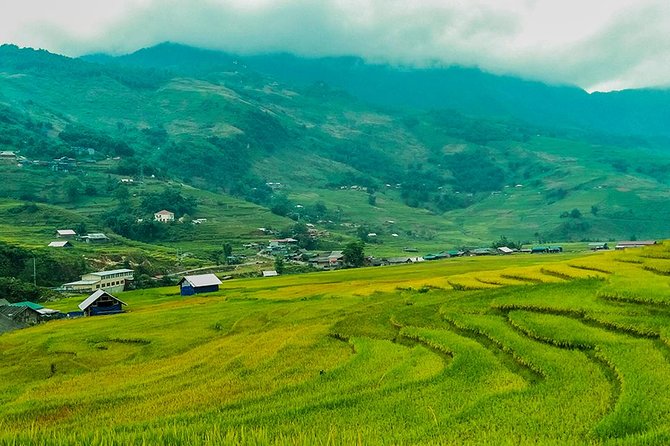
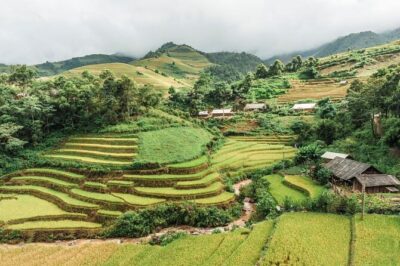
Then comes the reason most people book a terrace trek in the first place: you get to admire the large rice terraces and take in a mountain view on top of Hoang Lien mountain. The tour includes a ticket for the Y Linh Ho stop, which helps you avoid the awkward scramble of figuring out what needs to be paid on your own.
Two practical notes here:
- Dress for mountain walking, because terraces mean slopes and paths that can change depending on the season.
- Expect the route to be scenic, not a straight line. You’ll likely pause for views and for your guide to explain what you’re seeing.
Ta Van Village Homestay: Where the Day Slows Down
After the terrace and village viewing time on day one, you move to Ta Van village, home to the Giay minority. The host family welcomes you, and the tour gives you a real block of time to settle in.
This is the part of the trip that I think adds the most value, because you get more than a quick photo stop. You’re given time to rest and you can take a hot shower. Then you get ready for dinner with the homestay household.
Dinner is included, which is a big deal in a village setting where it’s easy to get stuck paying extra for food later. It also means you don’t have to stress about finding a place to eat after a long day of walking.
What you should keep in mind: a homestay is home, not a hotel. One review mentioned a less-than-stellar cleanliness experience, so I’d treat the homestay as authentic and variable rather than totally standardized. If you’re the type who needs spotless rooms to feel comfortable, this is where you should set expectations early.
Giang Ta Chai Waterfalls Day Two: Coffee, Then the Uphill Push
Day two starts in a calmer way. You can enjoy hot coffee or tea, then take in the view from your homestay area and see the nearby rice fields. After that, breakfast is included.
Then the tone shifts from scenic stroll to effort. You’ll be taken uphill into the mountain until you reach the Giang Ta Chai waterfalls. The tour includes admission for the Giang Ta Chai village stop, which matters because it smooths out access and lets your guide manage the sequence.
This day tends to be the payoff day. Terraces are gorgeous, but waterfalls are dramatic, and Giang Ta Chai is a nice way to end a short trek. If you like that moment when the view suddenly opens and you realize you actually walked to get there, this is the part that will feel like you earned it.
Also, the route isn’t just a single attraction. You’re moving through mountain and village space, so even between the major points, the day is still doing something.
Why the Local Guide Makes the Trek Worth It (Sang, Su, Mi, Tung, Ly, Soso)
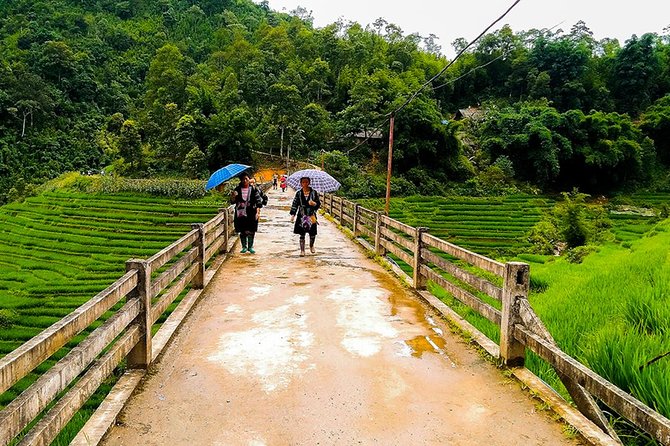
This tour is led by local guides, specifically described as Hmong ethnic guides in the Sapa region. The difference shows up in two places: your understanding and your comfort on the route.
In the feedback, the guides come across as consistently friendly and supportive. Names that stand out include Sang, Su, Mi, Tung, Ly, and Soso. What these guides seem to have in common is confidence plus explanation, so you’re not just walking and hoping you recognize things. You’re learning as you go, including cultural context around what you’re seeing.
If you care about doing more than collect postcards, that’s the value. A guide helps you connect the terraces to daily life, not just treat rice fields as a backdrop. You also get help with the flow of the trek so you don’t feel like you’re stuck trying to figure out the next turn.
And with a maximum group size of 2 travelers, you also avoid the usual big-group friction. Your guide can adjust pace and attention without juggling a crowd.


Price Check: Does $85 Really Make Sense Here?
At $85 per person for a 2-day trip with 1 homestay night, it’s not automatically cheap or expensive. It’s priced like a tour that tries to package the real costs of Sapa trekking.
Here’s what the price covers:
- Local guide
- Air-conditioned vehicle transport
- Village entry fees for the listed ticketed parts
- Homestay accommodation for 1 night
- Meals: breakfast, dinner, and two lunches
- 1 big bottle of water per person
- Transport back to Sapa at the end
If you tried to DIY this, the cost headaches start with guides and coordinating transport. Meals and a homestay night are also harder to manage without ending up in a mismatched setup. This tour bundles it, so your money goes toward the parts that are hardest to organize well.
One extra reality check: tours like this can fill up, and this one is commonly booked about 35 days in advance on average. If you’re traveling during a peak season window, earlier booking gives you more breathing room.
When the Trail Feels Busy, and Why That Matters
Even the best rice terrace trek can have logistics. One important heads-up from the experience is that part of the track can follow a paved road with regular motorbike traffic. That doesn’t ruin the day, but it changes the feel of the hike. You might not have the same quiet, car-free vibe for every segment.
There’s also the issue of shared walking areas. Some sections can involve multiple groups walking together, which can make the pace feel less personal than you might hope for.
This is the kind of thing that matters if you value solitude, silence, and a slow wandering pace. If you’re more focused on views, village time, and a structured guide, the shared segments may feel like a small trade-off.
Who This Trek Fits Best (And Who Might Want a Different Style)
This is best for you if:
- You want a guided experience that handles navigation and village access.
- You’re okay with a moderate fitness level and some uphill effort, especially on day two.
- You like the idea of staying in Ta Van and experiencing dinner in a host family setting.
- You want small-group attention, since the tour caps at 2 travelers.
You might want to consider a different option if:
- You have strong cleanliness requirements for overnight stays. One feedback point called the homestay not clean enough.
- You really hate the idea of walking near motorbike traffic on any portion of the route.
- You want a private, fully customized route with zero crowd overlap. This one is built as a shared tour.
What You Should Expect Logistically, Day to Day
This tour is designed to be smooth. You start at 9:00 am at Sapa Church or nearby meeting points. You get transport by air-conditioned vehicle between key segments. You’ll also return to the meeting point in Sapa at the end of day two.
The rhythm is simple: walk, village time, eat, rest, repeat. You won’t be left hanging without food. Breakfast and dinner are included, plus lunch is included twice. You also receive one large bottle of water per person.
One more factor is weather. The experience requires good weather, and if it’s canceled due to poor conditions, you’re offered another date or a full refund.
That matters in Sapa because mountains can change fast. If you’re flexible on dates, you’ll probably have an easier time making the trek happen.
Should You Book This Sapa Rice Terraced Fields and Homestay Trek?
Yes, if you want a short, well-fed trek that mixes rice terraces, ethnic village time, and a homestay night with a real local guide. The value is strong on paper: guide, transport, meals, homestay, and ticketed village access are all bundled into one price.
If you go in with the right expectations, you’ll enjoy it. Expect gorgeous rice terrace views around the Cat Cat and Y Linh Ho area, a more relaxed homestay evening in Ta Van with hot shower time, and a more active day two culminating at Giang Ta Chai waterfalls.
I’d think twice only if you’re very sensitive to homestay cleanliness or if you strongly prefer quiet, car-free trails all day. This route can include paved segments with motorbikes and shared walking areas. For the right traveler, that’s a minor annoyance, not the main event.
FAQ
What time does the Sapa rice terrace trek start?
It starts at 9:00 am.
Where do we meet for the tour?
The meeting point is Sapa Church (P. Hàm Rồng, TT. Sa Pa, Sa Pa, Lào Cai 333100, Vietnam).
Is pickup offered?
Yes, pickup is offered.
How long is the tour and how many nights do I stay in a homestay?
It runs for about 2 days and includes 1 night of homestay accommodation.
What meals are included during the trip?
Breakfast and dinner are included, and lunch is included twice.
Are village entry fees included?
Yes, village entry fees are included.
How fit do I need to be for this trek?
The tour is designed for travelers with a moderate physical fitness level.
How many travelers are in the group?
The tour has a maximum of 2 travelers.
What happens if weather is poor?
The experience requires good weather. If it is canceled due to poor weather, you will be offered a different date or a full refund.
More 2-Day Experiences in Sapa
More Tour Reviews in Sapa
Not for you? Here's more nearby things to do in Sapa we have reviewed





More 2-Day Experiences to consider.
 ★ 5.0Amanda Cruise – Ha Long, Lan Ha Bay – All Inclusive 2D1N & 3D2NTickets from $564,358 traveller reviews
 ★ 4.82-Day Halong & Lan Ha Bay 5-Star Cruise with BalconyTickets from $1883,300 traveller reviews
 ★ 5.0Sapa 2 Days 1 Night From Hanoi – Overnight in Ta Van VillageTickets from $592,669 traveller reviews
Halong Bay – Le Journey Cruises – All Inclusive 2D1N and 3D2NTickets from $712,500 traveller reviews
★ 5.0Sapa 2 Days 1 Night From Hanoi – Overnight in Ta Van VillageTickets from $592,669 traveller reviews
Halong Bay – Le Journey Cruises – All Inclusive 2D1N and 3D2NTickets from $712,500 traveller reviews
 ★ 5.0Mon Chéri Cruise 5 star: Unique 2 Days Tuan Chau – Halong bay – Lan Ha BayTickets from $1952,422 traveller reviews
 ★ 5.0Doris Cruise 5 star cruise 2 days visiting Halong Bay Lan Ha Bay private balconyTickets from $2352,338 traveller reviews
Top Tier: Overnight Ha Long Bay Cruise 5-Star, Balcony Cabin-2D1NTickets from $1742,251 traveller reviews
★ 5.0Doris Cruise 5 star cruise 2 days visiting Halong Bay Lan Ha Bay private balconyTickets from $2352,338 traveller reviews
Top Tier: Overnight Ha Long Bay Cruise 5-Star, Balcony Cabin-2D1NTickets from $1742,251 traveller reviews
 ★ 5.0CozyBay Cruise-The Best Small Group 2D/1N inHalong-All inclusiveTickets from $1222,199 traveller reviews