
Review · HANOI CITY TOURS
Hanoi: Tire Sandal Workshop with Crafting Experience
Tire sandals tell a war story. In Hanoi, the Tire Sandal King’s Workshop turns that story into a hands-on session where you learn the craft behind Vietnam’s most recognizable footwear and why it became part of daily life. I like that the focus is not just watching, it is making tire sandals yourself in about four hours.
My second favorite part is the way you get context while your hands are busy. You hear why these sandals mattered during the war and how they fit into everyday routines, not just dates and slogans. One possible drawback: the low entry price is only the start. You still need to pay extra for the materials, and taking home a finished pair is optional, so your total day cost depends on what you choose.
Key things to know before you go
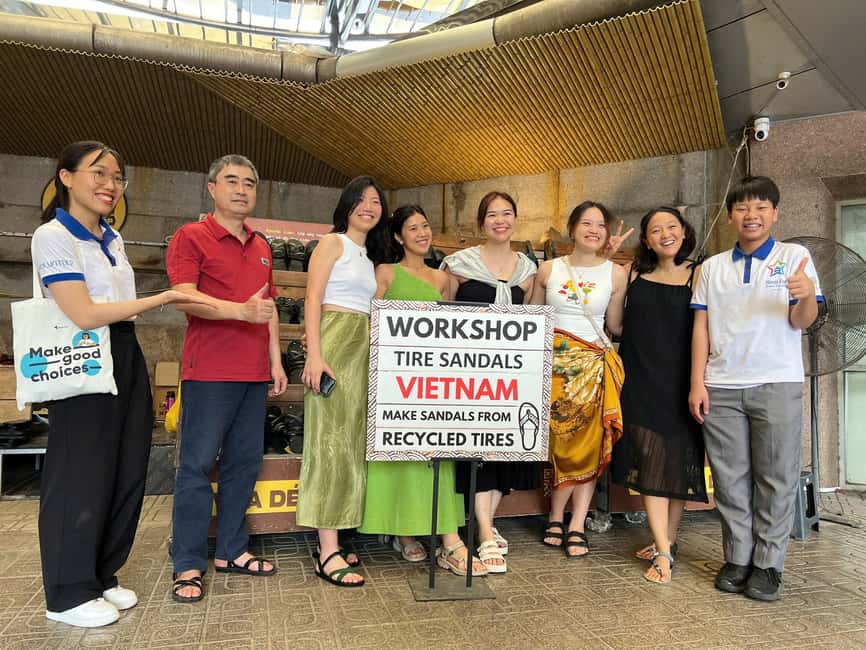
- Ngoc Ha Street location: the workshop is at 19 Ngoc Ha Street, in a set up designed for hands-on making.
- English-speaking guide included: you get an English guide throughout, plus complimentary photos taken by the host.
- You craft during the session: expect tool work and guidance step-by-step while you build your sandals.
- Wartime stories built into the lesson: the talk links the craft to Vietnam’s war experience and later daily life.
- Extra costs are real: materials and a take-home pair are paid directly to the workshop (prices are listed, but still something to plan for).
- Dress code rule: shorts and short skirts are not allowed.
Why Hanoi’s tire sandals still matter
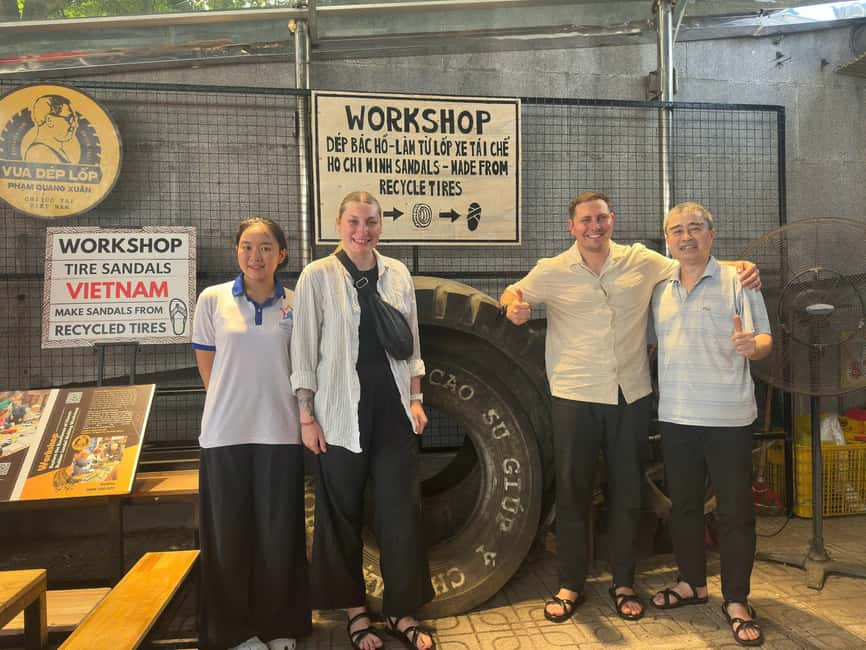
If you have spent any time in Vietnam, you know history is not trapped in museums. It shows up in small practical things, and tire sandals are one of the clearest examples. These are the iconic sandals tied to the wartime period, famously associated with Ho Chi Minh, and they became a symbol of resilience and resourcefulness. This workshop is built around that idea: you learn what the sandals were, why they were used, and why they stuck in people’s routines long after the fighting.
The most useful thing you get is the connection between craft and survival. The workshop does not treat tire sandals like a costume. It frames them as something people needed, made, and relied on when resources were limited. That is why the stories matter here. While you are cutting, assembling, or using a tool, you also hear how the sandals showed up in daily life, and why they carried meaning far beyond the material itself.
And honestly, you also get a reset from typical sightseeing. Four hours here is active and grounded. Your brain is not just collecting facts, it is learning a skill and listening at the same time. It makes the history easier to remember.
More Hanoi tours and experiences for the shortlist



Ngoc Ha Street workshop setting and what to wear
The workshop is at 19 Ngoc Ha Street in Hanoi, and it is set up specifically for this kind of lesson. One helpful detail from the experience description and participant feedback is that it can be set in a covered area within the Ho Chi Minh Museum complex, which matters when Hanoi weather turns messy.
There is also a simple dress rule you should respect: no shorts, no short skirts. Plan for long pants or something that covers your legs comfortably. You will be standing and working with tools, so being comfortable matters more than looking perfect for photos.
You should also think about your expectations for the space. This is not a glossy craft boutique. It is a working workshop designed for making footwear. That means you should show up ready to get a little busy, not just sit and watch. If you have only done quick tourist crafts before, this one feels more like a real lesson. You will be guided step-by-step, and you will use tools rather than simply assemble a pre-made kit.
The four-hour making process: tools, check-ins, and choosing colors
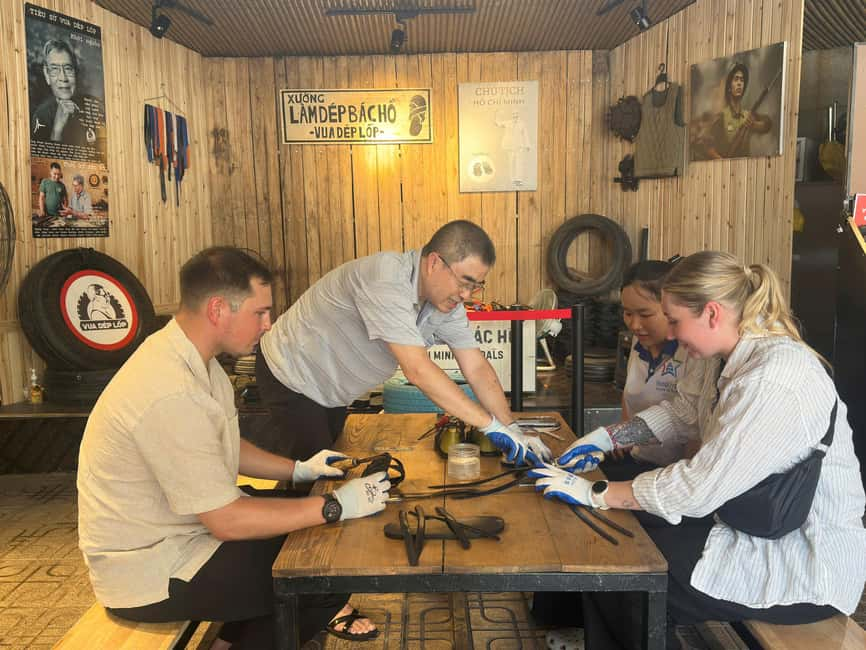
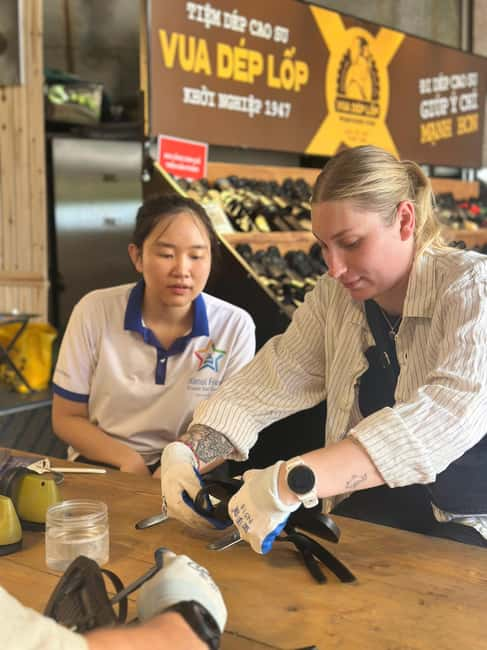
The session runs about 4 hours, and it is structured as a guided, hands-on workshop. I like this format because it keeps you from feeling lost. The guide stays with you, and local artisans provide step-by-step support. In other words, you are not left guessing.
Here is the kind of work you should expect. You start with prepared components, and you learn how to use a tool correctly. One specific detail from the experience is that the soles may already have holes set in, which makes the session practical and time-friendly. Then you focus on assembling the sandal using traditional techniques, with guidance to help you do it right and safely.
You will also have input on appearance. There is mention of choosing colors, so you can make the pair feel more personal rather than completely standard. And you can expect the strength factor. Tire material needs firm handling, so the process can feel a bit physical. You do not need to be an athlete, but do not plan on doing this with delicate, fussy patience.
The pacing is what makes it work. Four hours is long enough to teach you the process and still end with something real. You are building a souvenir experience that feels earned. That is the big difference between this and the classic quick craft where you leave with something pretty but forgettable.
The wartime stories and daily-life meaning you hear while you work
A big part of the value here is that the workshop connects craft to Vietnam’s past in a human way. You learn about the history of Vietnam’s iconic tire sandals, and you hear why they were significant during the war. The message is not abstract. It is practical, the kind of survival logic people used when they had to solve problems with what they could find.
The session also includes stories about the role these sandals played in daily life. That is important, because tire sandals were not only about wartime emergency. They also fit into everyday routines. Hearing that while you are physically making sandals helps the lesson stick. You start to understand why the craft matters culturally. It is not just a symbol, it is a reminder of how people adapted.
If you are the kind of traveler who likes history but hates lectures, this is a good match. The workshop uses your attention where it counts. You listen as you work, not in a long room with slides and silence. That makes it easier to follow and easier to feel.
Price and value: what $5 includes and what costs extra
The headline price is $5 per person, and that is a big reason this workshop is worth considering. At this price point, you are not paying for a souvenir alone. You are paying for the experience: step-by-step guidance, an English-speaking guide throughout, and complimentary photos taken by the host.
But it is also important to plan for the extras listed for the workshop. Materials for making tire sandals cost 300,000 VND, paid directly to the workshop, which is about $12 based on the provided estimate. Then, taking home a pair of handmade sandals is optional and costs 200,000 VND, about $8. Some sessions may quote different take-home amounts depending on what you want to buy, so ask clearly if you are shopping for a specific pair.
You also have an optional add-on: entry to the Ho Chi Minh Museum costs 40,000 VND per person, about $1.60. If you are trying to build a bigger historical block in one day, that museum visit can help connect the story you heard in the workshop to the wider setting.
So what is the actual value? I see it like this. The $5 fee covers your guided lesson, the language support, and the photos. The higher add-ons are about the physical materials and, if you want it, the finished item. If you want a hands-on craft that you can actually point to and say, I made this, you likely will spend more than the base $5. If you want the stories and the lesson even if you leave without a pair, you can potentially keep costs lower by skipping the take-home option.
Either way, the structure feels fair because you see the costs up front rather than getting a surprise at the end.






Photos, museum option, and getting your souvenir right
You will get complimentary photos from the host. That is a small detail, but it matters. Hands-on activities can make it hard to take your own pictures well. Having someone else handle it saves you the awkwardness of holding your phone while your hands are busy.
The take-home part is where you should pay attention before you start. Your handmade pair is optional, and it is not included automatically in the base fee. If you want the finished sandals, plan for the listed extra cost paid directly to the workshop.
If you are thinking about the museum too, this is where the day can feel more complete. The workshop can be set up in the covered area within the Ho Chi Minh Museum complex, and the museum entry is an optional extra you can add. That gives you a chance to see more of the context behind what you were taught about wartime life and symbolism.
One more practical note: the sandal you make may not be the final pair you simply walk away wearing. The materials and take-home option are separate. That means you should decide early if your goal is learning only or learning plus a tangible souvenir you will use or display.
Who should book this Hanoi tire sandal workshop
This is a strong choice if you want history that you can touch, not history that only sits behind glass. I think it fits travelers who like small-group attention and practical skills. It also works well if you are traveling with a partner or small group, since the experience is listed as a private group and you get the guide time more directly.
You should also consider it if you are trying to break up your Hanoi schedule. Four hours is a manageable block, and it gives you a break from constant walking and moving between attractions. Instead, you slow down and focus.
Who might not love it? If you are hoping for a sit-down lecture, this is not that. If you want a souvenir included with no extra payments, you need to plan for the optional costs. And if you dislike tool work or want a very hands-off experience, you might find the making part a little more involved than expected.
But for most people who come to Hanoi wanting something human, hands-on, and connected to the country’s story, this workshop makes sense.
Tips for a smooth session (and better photos)

To get the most out of the time, I recommend arriving ready for a real workshop. Wear clothing that follows the rule, long pants or a skirt that is not short. Comfortable shoes help too, since you will likely be moving around while you work.
Bring a small bag or keep your phone simple. The session is active, so you do not want to juggle things. If you care about photos, let the host handle them and focus on the making. You will get complimentary shots, which reduces the urge to stop mid-process.
Also, check your souvenir expectations at the start. The materials fee is separate, and the take-home pair is optional. If you want a specific result, ask what is available and what cost applies for the pair you want.
Lastly, go in ready to listen. The stories are part of the point. If you only focus on the craft mechanics, you might miss why this experience feels meaningful.
Should you book this workshop?
I think you should book if you want a rare mix of skill and story in Hanoi. The base $5 price gives you guided time in English plus photos, and the added materials and optional take-home pair still look like a straightforward way to support local makers and leave with something real. The wartime and daily-life context makes the craft feel more than a novelty.
Skip or reconsider if you are on a tight budget with no interest in any extra payments, or if the idea of tool work does not sound fun. In that case, you may prefer a purely museum-based day.
If you do book, wear the right clothes, expect a hands-on session, and set your souvenir decision before you start. Then this becomes one of those Hanoi stops you remember because it taught you something, and you lived it for a few hours.
FAQ
How long is the Hanoi tire sandal workshop?
The experience lasts about 4 hours.
Where is the workshop located?
It is at 19 Ngoc Ha Street in Hanoi.
What does the $5 per person price include?
The $5 fee includes step-by-step guidance, an English-speaking guide throughout, and complimentary photos taken by the host.
What extra costs should I expect?
You pay the workshop directly for making materials at 300,000 VND (about $12). A take-home pair is optional and costs 200,000 VND (about $8). Ho Chi Minh Museum entry is optional at 40,000 VND per person (about $1.60).
Do I get to keep the sandals I make?
You get the chance to make them during the session, but taking home a pair is optional and requires an extra payment to the workshop.
Is there an option to visit the Ho Chi Minh Museum?
Yes, museum entry is optional, and the cost is listed separately.
What language will the guide use?
The guide is English-speaking and stays with you throughout the experience.
Are there any clothing restrictions?
Yes. Shorts and short skirts are not allowed.
More Workshops & Classes in Hanoi



More Tour Reviews in Hanoi
Not for you? Here's more nearby things to do in Hanoi we have reviewed











More Hanoi City Tours to consider.
 ★ 5.0Hanoi Jeep Tour: Food, Culture and Fun by Vietnam Army JeepTickets from $5515,222 traveller reviews
 ★ 5.0Full-Day Ninh Binh Highlights Tour from HanoiTickets from $797,761 traveller reviews
 ★ 4.7Ha Long Bay Day Cruise – Swimming, Meal, KayakingTickets from $417,415 traveller reviews
 ★ 4.6Water Puppet Show TicketsTickets from $77,029 traveller reviews
 ★ 5.0Hanoi Motorbike Tour: Food, Culture and Fun by Vintage MotorbikeTickets from $556,699 traveller reviews
 ★ 4.9Guided Food Tour with Train Street VisitTickets from $196,239 traveller reviews
 ★ 5.0Hanoi Cooking Class: Culture, Local Market & Meaning CSR ImpactTickets from $395,147 traveller reviews
 ★ 5.05 Traditional Dishes Hanoi Cooking Class with Market TripTickets from $354,890 traveller reviews
More useful Hanoi routes