

Review · HANOI CITY TOURS
Hanoi Tea Workshop: Specialty Fresh Lotus Tea from West Lake
Lotus tea smells like summer in Hanoi. This Hanoi workshop spotlights Trà Sen Hồ Tây, the prized West Lake tradition, and the big win is tasting lotus tea that comes from real, flower-heavy craft, not factory scenting. I also like that you get brewing practice, so you leave with more than a pleasant memory.
One thing to keep in mind: because fresh lotus depends on harvest time, the exact lotus element can vary seasonally. If you’re chasing a perfectly identical cup every time, you might find the aroma and freshness can shift a bit with what’s available that week, and that’s part of the point.
Quick hits on West Lake lotus tea, Hanoi style

- A traditional, lotus-heavy method uses lots of fresh lotus flowers to naturally carry fragrance into green tea
- You get more than tasting with guided workshop time plus hands-on brewing practice
- Small group size (max 20) keeps the pace relaxed and the Q and A workable
- Supports children’s education via a portion of the experience tied to the farm behind the tea
- You leave with tools like a PDF brewing guide, and a certificate if you request one
- Seasonal lotus matters so your cup reflects the harvest, not a fixed factory recipe
Trà Sen Hồ Tây: what makes West Lake lotus tea special
West Lake lotus tea, called Trà Sen Hồ Tây, is a Hanoi tea tradition with a reputation that goes way beyond modern tea packets. The key idea is simple and kind of brilliant: instead of adding artificial fragrance, the lotus scent becomes part of the tea through a living, seasonal process.
The workshop focuses on that craftsmanship. You’re learning how delicate lotus fragrance is naturally infused into green tea, using a method that’s described as labor-intensive and time-taking. And yes, the numbers are eye-opening: it takes over 1,000 fresh lotus flowers to make just one kilogram of tea. That’s your reality check that this is not a mass product. You can taste the difference when the aroma feels layered and gentle rather than perfumey.
More Hanoi tours and experiences for the shortlist


Your 2-hour game plan at Su Quan Roastery
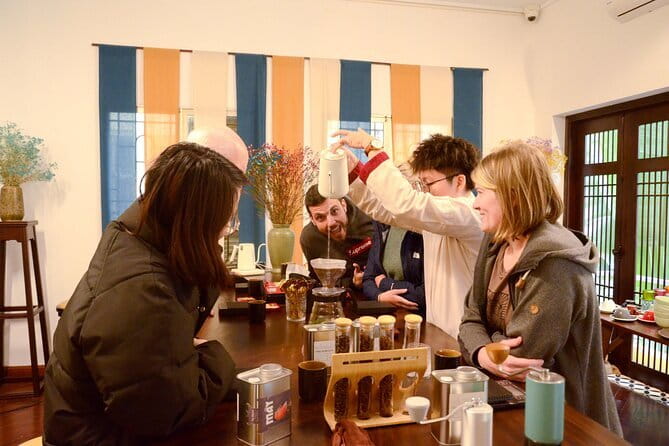
You’ll start at Su Quan Roastery, 75/173 Đ. Hoàng Hoa Thám, Ngọc Hồ, Ba Đình, Hà Nội. The class runs about 2 hours, and it ends back at the same meeting point.
Here’s the rhythm of what you’ll experience, in the order it usually flows in this kind of tea workshop:
- You’re welcomed with a herbal drink plus traditional Vietnamese snacks. This isn’t filler. It helps you slow down and switch from Hanoi street life into tea time.
- Then comes the guided lotus tea workshop, with explanation and cultural storytelling.
- You’ll do a fresh lotus tea tasting, plus a premium West Lake lotus tea tasting.
- You get tea brewing practice, so you learn how to brew what you just tasted.
- You’ll wrap with cultural storytelling and Q and A, and if you want it, you can request a certificate.
- You also receive a PDF file on Vietnamese lotus tea brewing to take home.
Two practical notes that make the experience easier: you get a mobile ticket, and the location is near public transportation.
Welcome drink, Vietnamese snacks, and why it matters
Tea workshops can be rushed, but the structure here is built to set your senses up for success. The welcome herbal drink plus traditional Vietnamese snacks helps you settle in without immediately turning everything into a classroom lecture.
Think of it as a warm-up for your nose. Lotus tea is all about aroma first. If you arrive hungry, talking non-stop, or fresh off a strong coffee, it’s harder to notice the subtle fragrance shifts that the lotus process creates. The snacks and drink help you taste more clearly, and that makes the later lotus tastings more satisfying.
The craftsmanship lesson: how lotus scent becomes tea
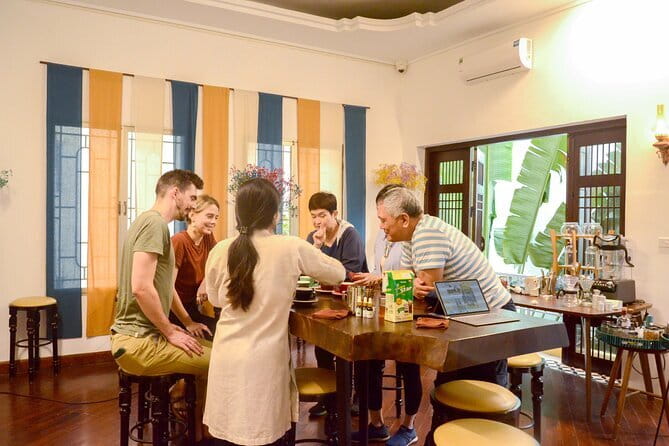
The workshop doesn’t treat lotus tea as a product. It treats it as a craft, tied to patience and nature.
You’ll learn that the fragrance is naturally infused into green tea using an age-old, labor-intensive method. And you’ll get the why behind the effort: the process relies on fresh lotus, which means it’s seasonal and not always identical. That’s part of the authenticity. You’re not tasting a standardized flavor. You’re tasting what the season produced.
One more detail that shapes expectations: this experience explicitly focuses on authentic craftsmanship rather than commercial tea production. Translation: the goal is understanding and appreciation, not speed selling or high-volume sampling.
Also, there’s a human side. Part of the experience supports children’s education at their farm. Even if you only take one sip, it helps you connect the cup to real hands and real places.
Fresh lotus tea tasting: what you should pay attention to
You’ll taste fresh lotus tea and also a premium West Lake lotus tea. During the tastings, pay attention to three things, because they’re where lotus tea tells its story:
- Aroma in stages: your nose will notice different notes as the tea warms
- How the lotus fragrance sits with the tea: you’re looking for a natural blend, not a separate perfume layer
- After-smell: lotus tea often leaves a lighter lingering impression than teas where flavor comes from heavy processing
Because the lotus element can vary with harvest time, you might notice the aroma feels fresher in one session and slightly different in another. That’s not a problem. It’s the product being truthful to the season.






Brewing practice you can actually use
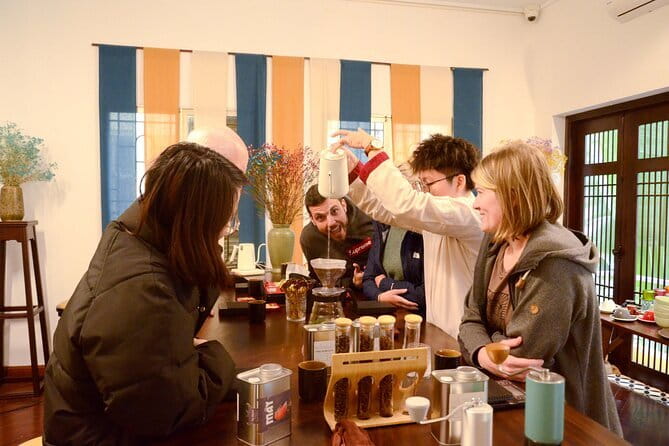
This is the part that makes the workshop more valuable than a basic tasting. You get tea brewing practice during the session, plus a PDF guide for Vietnamese lotus tea brewing afterward.
I like this because it turns the experience into something practical. Otherwise, you taste great tea in Hanoi and then go home with an empty memory and a question like, Now what?
During the practice, use your questions. Ask how they approach brewing to keep the lotus fragrance pleasant rather than overpowering. The class is set up for guided learning and Q and A, so don’t be shy about clarifying what you should replicate at home.
Even if you don’t nail every step on your first try, you’ll at least know the basic approach and have the written guide to reference.
Price and value: is $23 fair for lotus tea?
At $23 per person for about 2 hours, this sits in the “worth it if you care about quality” category.
Here’s what’s driving value:
- Two tastings (fresh lotus and premium West Lake lotus)
- A guided workshop focused on the craft behind the tea
- Brewing practice, not just sipping
- Snacks and a welcome herbal drink
- A PDF brewing guide
- Optional certificate
- Small group size (max 20), which can matter for hands-on learning
- Luggage keeper (up to 3 days), which is a quietly useful add-on if you’re moving around Hanoi
If you’re just hunting for a quick, cheap souvenir activity, $23 plus a full tea session may feel like too much. But if you want to understand why West Lake lotus tea is famous and learn how to brew it, this price becomes much easier to justify.
Who this workshop suits best
This is a great fit if you:
- want a calm, culturally rooted Hanoi activity that’s not centered on big crowds
- enjoy tea and want to learn the craft side, not only drink it
- like hands-on experiences where you practice something you can use later
- prefer small-group learning (max 20 helps keep it personal)
It might be less satisfying if you:
- dislike floral aromas, since the whole point is lotus fragrance
- prefer fast, high-volume tastings where you can move on quickly
Should you book this West Lake lotus tea class?
I think you should book it if you’re the type of traveler who likes learning the “how” behind what you taste. The combination of tastings, guided craft storytelling, and brewing practice is the difference between a pleasant afternoon and a takeaway you can recreate.
Book it especially if you’re in Hanoi when lotus is in season, since the fresh element is part of the value. Just keep your expectations flexible. Harvest time can change what’s available, and that seasonality is part of the authenticity.
FAQ
How long is the Hanoi Tea Workshop?
It lasts about 2 hours.
Where does the workshop start?
You’ll meet at Su Quan Roastery, 75/173 Đ. Hoàng Hoa Thám, Ngọc Hồ, Ba Đình, Hà Nội 100000, Vietnam.
What does the price include?
It includes a welcome herbal drink, traditional Vietnamese snacks, fresh lotus tea tasting, a guided lotus tea workshop, premium West Lake lotus tea tasting, tea brewing practice, cultural storytelling and Q and A, and a PDF file for Vietnamese lotus tea brewing. A certificate is available if you request it, and there is also a luggage keeper (up to 3 days).
Do I get a certificate?
Yes, you can request a certificate.
Is the lotus tea always made with fresh lotus flowers?
The experience notes that seasonal elements (fresh lotus) may vary depending on harvest time.
How many people are in the group?
The workshop has a maximum of 20 travelers.
Is it easy to reach by public transportation?
Yes, it’s listed as near public transportation.
What happens at the end of the tour?
The activity ends back at the meeting point (Su Quan Roastery).
More Workshops & Classes in Hanoi


More Tour Reviews in Hanoi
Not for you? Here's more nearby things to do in Hanoi we have reviewed












More Hanoi City Tours to consider.
 ★ 5.0Hanoi Jeep Tour: Food, Culture and Fun by Vietnam Army JeepTickets from $5515,222 traveller reviews
 ★ 5.0Full-Day Ninh Binh Highlights Tour from HanoiTickets from $797,761 traveller reviews
 ★ 4.7Ha Long Bay Day Cruise – Swimming, Meal, KayakingTickets from $417,415 traveller reviews
 ★ 4.6Water Puppet Show TicketsTickets from $77,029 traveller reviews
 ★ 5.0Hanoi Motorbike Tour: Food, Culture and Fun by Vintage MotorbikeTickets from $556,699 traveller reviews
 ★ 4.9Guided Food Tour with Train Street VisitTickets from $196,239 traveller reviews
 ★ 5.0Hanoi Cooking Class: Culture, Local Market & Meaning CSR ImpactTickets from $395,147 traveller reviews
 ★ 5.05 Traditional Dishes Hanoi Cooking Class with Market TripTickets from $354,890 traveller reviews
More useful Hanoi routes