
Review · HANOI CITY TOURS
Hanoi Knife Making Traditional Workshop
If you like real craft, this one is for you. You’ll head from Hanoi out to a centuries-old forging village and learn the full process of making a simple knife from metal selection to the final sharpening.
What I like most is that it is hands-on, not a sit-and-watch demo, and you get to follow each step closely. Another big plus is the small group size, up to 10 people, which keeps the workshop personal and manageable.
One drawback to plan for: the class asks for moderate physical fitness since you’ll be part of the making process, likely standing and using your arms for basic hammering motions.
Key Highlights You Should Know
- You make the knife step by step, starting with blade design and ending with multi-phase sharpening.
- Family-run craft village setting, with a workshop that focuses on forging skills passed down over generations.
- English support on hand, plus an actively engaging guide experience (Nathan is one example of the kind of guide you may meet).
- Small-group format, capped at 10 travelers, so questions do not get lost.
- Sharpening includes a tar-based chemical wash, described as a special family recipe during one stage.
- You’ll take home your finished knife, a souvenir that actually has a job to do.
From Hanoi to a Forging Village: Where This Knife Workshop Really Lives
This is not a tabletop workshop in the middle of town. The experience starts in Hanoi, then you ride in an air-conditioned vehicle (pickup is offered) to the outskirts where the forging tradition is the local business. That location matters, because knife making here is not presented as a novelty. It is a trade with deep roots, originally tied to weapons during the Vietnam wars, and it has shifted over time toward practical tools like agricultural implements.
The vibe in a forging village is also different from a museum. You’re closer to the real workflow: cutting, heating, hammering, shaping, and sharpening all in sequence. If you’ve been craving something more “work” than “performance,” this setup delivers.
Also, the tour keeps the group compact, up to 10 travelers, so you are not pushed through like a conveyor belt. I like that, because metalwork needs patience. You also tend to get better explanations when the group is small.
More Hanoi tours and experiences for the shortlist


The Making Process: Sketch, Forge, Shape, and Sharpen
You can think of the class as a guided walk through the full life of a knife blade. It is not just learning terms like tang and blade. You see how each step changes the metal, and you follow the logic of why makers do things in a certain order.
Design First, With Real Material Choice
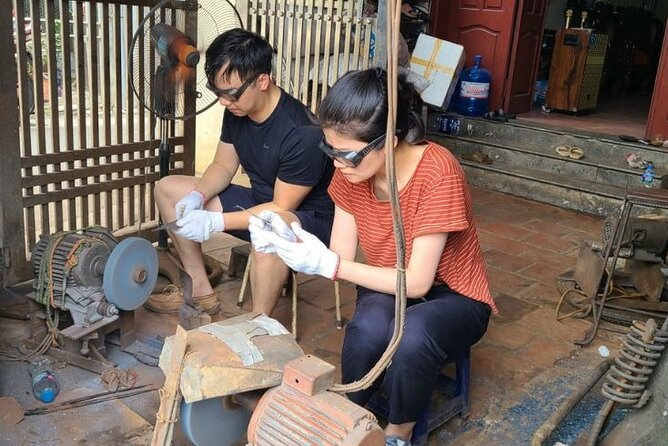
The process begins with design: you start by sketching the shape of the blade onto a sheet of metal that is chosen for its durability. This is a great first checkpoint because it grounds everything that follows. You’re not pretending the blade came from nowhere. You’re starting with stock material and planning the final form.
In fact, one of the practical joys is that you can pick the size of the knife you are making, which helps the result feel personal rather than generic.
Forging at the Embers
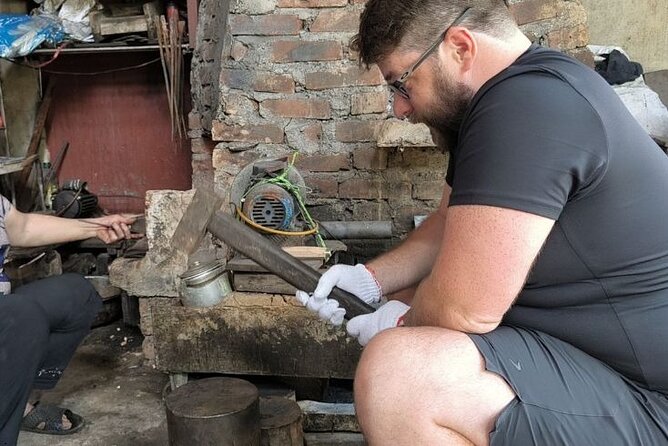
Next comes forging. You’ll use tools like a hammer, cutter, and anvil to cut out the blade and the tang, then heat them in crackling embers. The tang, the part that extends into the handle, is not just a detail. It’s what makes the knife usable. Watching makers transition from cut metal to heated shape teaches you that knife making is as much about controlling heat as it is about strength.
If you worry that forging sounds intimidating, don’t. The key is guidance. In this workshop, you are working with makers who do this for a living, and the tone is patient and instructional.
Shaping, Trimming, and Getting the Blade Straight
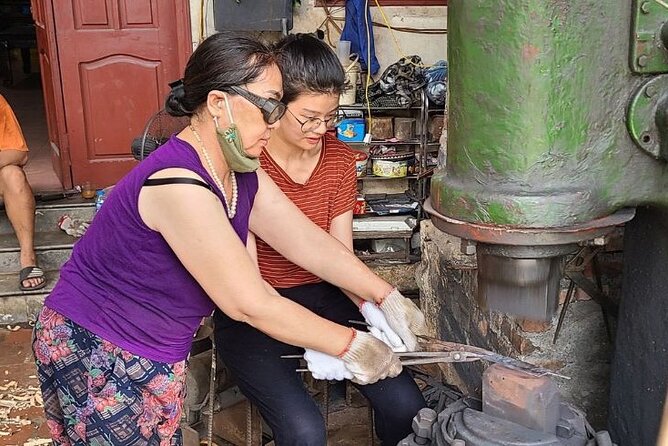
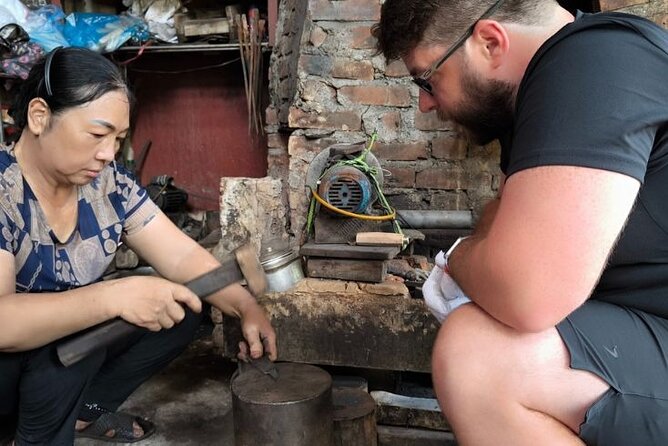
After forging, shaping is about repeated controlled blows, alternating strikes with the maker to shape the blade. Then comes the step that makes the knife look clean and intentional: imperfections get trimmed by a hydraulic cutting machine. That matters because it shows you that good knife making is not only old-world hammering. It also uses tools that help correct and finish with accuracy.






Sharpening in Phases (Including a Special Wash)
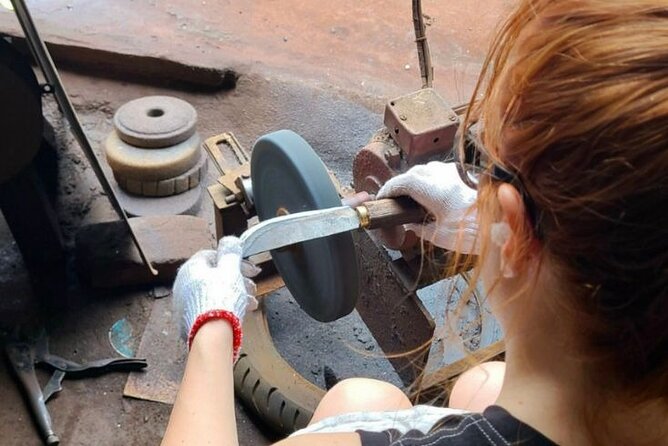
Sharpening is where a blade goes from functional to truly usable. The class includes several phases, and one stage involves soaking the blade in a tar-based chemical wash, described as a secret family recipe. Even if you do not know the chemistry behind it, you can feel the difference in the care and process.
The grindstone step then turns your blade into an edge you can respect. This is one reason the experience is worth it. You’re not leaving with a “cool-looking metal thing.” You’re leaving with an actual knife.
What Makes It Feel Authentic: The Workshop Pace and the Family Makers
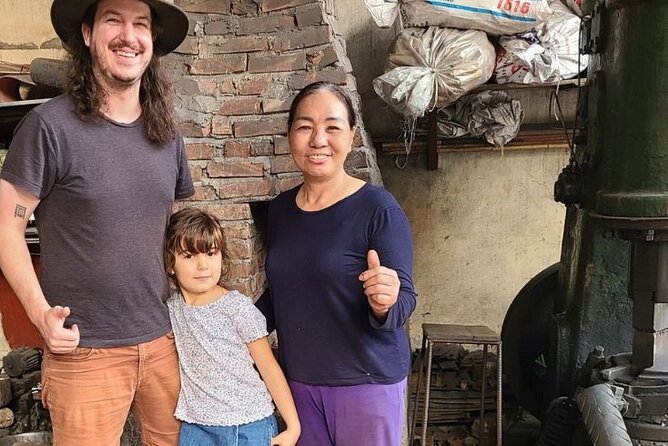
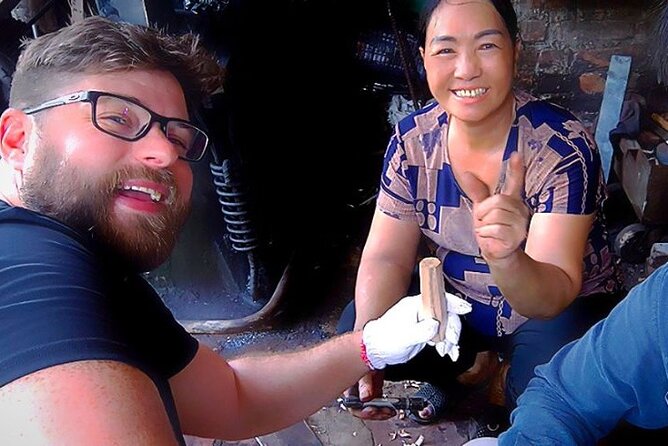
What people remember most is not the tools, it is the people at work. This workshop is described as family-run, and that shows in how the session unfolds. You get lots of patience and helpful guidance, especially when you are learning something from scratch.
One review-style detail that sticks in your head is how early the makers start training. The lady teaching in the workshop shared that they begin at age 12, and you can see that skill is not a one-day performance. It’s built up over years. That is the kind of background that turns a “class” into something more like a living trade.
You may also meet an English guide who helps keep the pace comfortable and understandable. One example name that comes up is Nathan, praised for being patient and engaging, and for making the time fly by. Even if the guide you meet is different, the goal is clear: you should feel supported while you learn.
The small group size helps here. With max 10 travelers, you’re less likely to get stuck waiting your turn while everyone else watches.
What You Take Home: A Knife That Is More Than a Souvenir
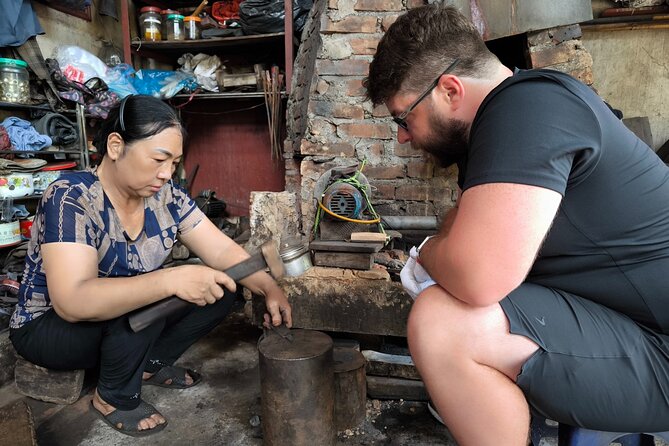
Plenty of travel souvenirs are just decoration. This one is a tool you can use. That changes the value equation in a big way.
Because you make a simple knife through the steps, you end up with something you can recognize as real handiwork. It is a conversation starter, sure. But it is also an object with meaning, built through design, heat, shaping, and finishing.
One practical benefit: you’ll have the kind of item you can show someone at home without explaining a bunch of theory. You can point to the blade and tang and talk about the sharpening phases. The experience also leans into the idea of making a practical kitchen knife style, not a novelty sculpture. If you want a souvenir with daily-life usefulness, this is the direction you want.
Timing, Transport, and How to Prepare for the 3.5 Hour Session
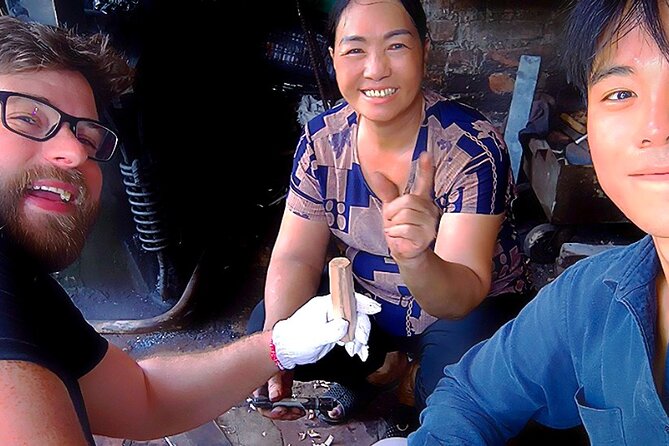
The total duration is about 3 hours 30 minutes. That length is a sweet spot. You have enough time to experience the full workflow, but it does not drag for a whole day.
You’ll be picked up (if you select it) and transported by an air-conditioned vehicle. That matters in Hanoi because the heat can be real, and the ride helps you stay comfortable before you start working with metal and embers.
You should also plan for moderate physical effort. The class involves participating in the forging and shaping process, which means standing, using your arms, and focusing while work moves forward. If you feel uneasy about physical work in general, you might find it tiring. If you’re okay with hands-on activity for a few hours, you should be fine.
Two small practical notes:
- Wear clothes you’re comfortable getting a little dusty from a workshop environment.
- Don’t schedule a super demanding meal or activity right after, since sharpening and finishing is still work.
Price and Value: Is $50 a Fair Deal for Knife Making?
At $50 per person, the value looks solid once you factor what’s included. You get:
- An English tour guide
- The iron material
- Air-conditioned vehicle transport
- A hands-on workshop that follows the full making sequence
You do not get lunch or tips, so you’ll want to handle food on your own.
The biggest value driver is that you are paying for a small-group, guided craft session that results in a takeaway item. Many experiences in Hanoi charge similar money for tours that end in photos and a shop stop. Here, the time goes into making something real, with a guided process that includes design, forging, shaping, and sharpening phases.
Also, because the max group size is 10, you’re not sharing attention with an overly large crowd. In practical terms, that usually means faster correction when you’re learning technique and more chances to ask questions.
If you like crafts that connect you to local working life, not just local sights, you’ll likely feel you got your money’s worth.
Who This Workshop Suits Best (And Who Might Want Something Else)
This class is a great match if you:
- Want a hands-on activity instead of another walking tour
- Like learning through making, not just hearing stories
- Enjoy authentic village settings outside the city center
- Want a souvenir you can actually use, not only display
It may not be the best fit if you:
- Want a fully low-effort experience
- Prefer passive observation only
- Feel uncomfortable with moderate physical activity during a workshop
The group cap keeps it manageable, but it still functions like a working session. The goal is to learn the process of knife making, including the steps that involve forging and sharpening.
Should You Book This Hanoi Knife Making Class?
I’d book it if you want a meaningful craft experience that goes beyond sightseeing. The reason is simple: you follow each stage of knife making from blade design through shaping and on to sharpening, and you do it in a real forging village setting where the trade is the point of the day.
Book it with a realistic mindset. You are signing up for participation in a workshop process, not a polished show. If you’re comfortable with moderate physical effort and you like hands-on learning, this is a strong value use of half a day in Hanoi.
If you’re looking for something more chill, or you want purely classroom style instruction, you might feel the pace is too hands-on. But for most people who want a real skill-based day, this one is a satisfying choice.
FAQ
How long is the Hanoi Knife Making Traditional Workshop?
It runs for about 3 hours 30 minutes (approx.).
How much does the workshop cost?
The price is $50.00 per person.
Do I get pickup from Hanoi?
Pickup is offered.
What’s included in the price?
You get an air-conditioned vehicle, iron material, and an English tour guide.
Is lunch included?
No, lunch is not included.
How big is the group?
The workshop has a maximum of 10 travelers.
What if the weather is bad?
This experience requires good weather. If it is canceled due to poor weather, you will be offered a different date or a full refund.
What is the cancellation policy?
You can cancel for a full refund up to 24 hours in advance. If you cancel less than 24 hours before the experience starts, the amount paid is not refunded.
More Workshops & Classes in Hanoi



More Tour Reviews in Hanoi
Not for you? Here's more nearby things to do in Hanoi we have reviewed












More Hanoi City Tours to consider.
 ★ 5.0Hanoi Jeep Tour: Food, Culture and Fun by Vietnam Army JeepTickets from $5515,222 traveller reviews
 ★ 5.0Full-Day Ninh Binh Highlights Tour from HanoiTickets from $797,761 traveller reviews
 ★ 4.7Ha Long Bay Day Cruise – Swimming, Meal, KayakingTickets from $417,415 traveller reviews
 ★ 4.6Water Puppet Show TicketsTickets from $77,029 traveller reviews
 ★ 5.0Hanoi Motorbike Tour: Food, Culture and Fun by Vintage MotorbikeTickets from $556,699 traveller reviews
 ★ 4.9Guided Food Tour with Train Street VisitTickets from $196,239 traveller reviews
 ★ 5.0Hanoi Cooking Class: Culture, Local Market & Meaning CSR ImpactTickets from $395,147 traveller reviews
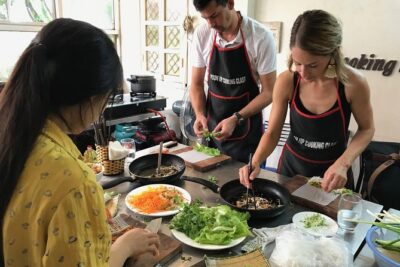 ★ 5.05 Traditional Dishes Hanoi Cooking Class with Market TripTickets from $354,890 traveller reviews
More useful Hanoi routes