
Review · HANOI CITY TOURS
Hanoi Knife-Making Class:Join the Legacy in Blacksmith’s Workshop
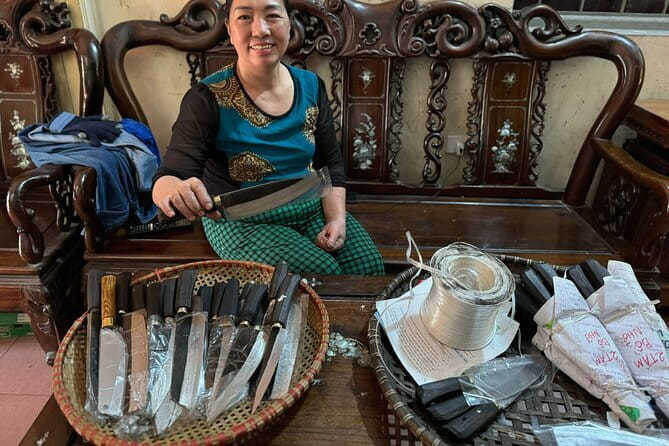
This craft class hits different because you make the blade yourself. In Hanoi, the hands-on knife-making workshop in Da Sy links a centuries-old blacksmithing village with a truly personal souvenir, guided by Tuyen in her family forge. I also love the step-by-step flow from sketch to sharpening, and the rare tar-based technique used during the honing process. The main drawback is simple: it is not a sit-back, low-effort activity, so you should be ready for heat, tools, and focused instruction.
You start at Đa Sỹ, Kiến Hưng, Hà Đông in Hanoi, then spend about 2 hours 30 minutes working in a fully equipped workshop with a small group (maximum 10). You will use your hands throughout, from choosing a blade design to shaping and finishing your own knife. Expect a mobile ticket, and enough structure that beginners can follow along with steady guidance.
At around $45.51 per person, the value comes from one key thing: the tools are provided, safety gear is included, and you take home a functional knife you made. That is a different kind of souvenir than the usual photo-and-sip experience. If you are hoping for a gentle cultural tour only, this one leans more practical than passive.
Key things you will notice fast
- Da Sy’s working forge is built around real metalwork, not a staged demo
- Tuyen, a female master artisan with 44 years of preserving the trade
- Design to knife in one session, including handle work and finishing
- Hammering plus tool help, with a hydraulic machine for smoother shaping
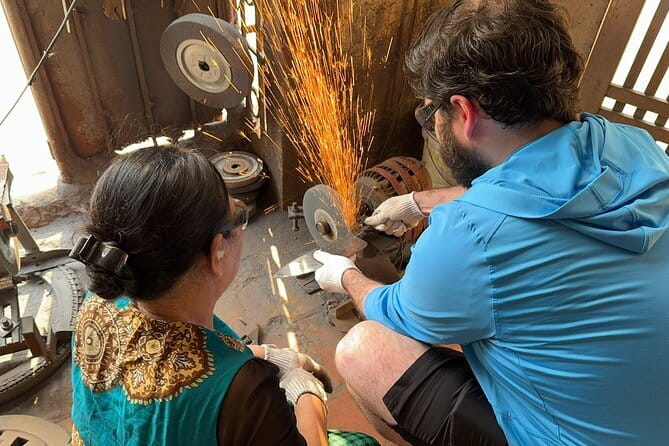
- Tar-based sharpening as part of the grindstone routine
- Small group size (max 10) so you get hands-on time
Why Da Sy’s knife workshop feels like craft, not souvenir shopping
Da Sy is known for blacksmithing that goes back generations, and the village’s blades were once associated with historical war supply. Here, that legacy is not told like a museum story. It is built into what you do with your own hands.
The class is also unusual in who leads it. You work with the only officially recognized female artisan in the trade, Tuyen, who has spent 44 years keeping the craft alive. That matters, because you are not just watching someone perform. You are learning within a tradition that has survived because people passed it on.
And yes, you are leaving with something practical. The end goal is a knife you can use for meals, not only a decoration to keep in a drawer. That gives the day a satisfying finish.
More Hanoi tours and experiences for the shortlist



Meeting in Hanoi and settling into a real work space
The experience starts and ends back at the meeting point in Đa Sỹ, Kiến Hưng, Hà Đông, Hà Nội, Vietnam. You do not have to think about much beyond arriving on time with comfortable clothes and a plan to get a little dirty.
Once you are in the workshop area, the rhythm becomes clear. This is step-by-step instruction in a fully equipped setting, with safety equipment provided. If you are worried about doing it wrong, the format is designed to keep you moving in the right direction.
Because the group stays under 10, it is easier for the artisans to correct your grip, your angles, and your timing. It also means you are not stuck watching for long stretches, waiting your turn.
Design time: sketching a blade that matches your taste
Before anyone heats metal, you begin with design. You sketch your blade, then you choose a durable metal piece based on strength and quality. That first decision sets your knife’s personality, because the overall shape comes from how you start.
What I like about this stage is that it teaches you to think like a maker. You are not picking a pre-made product off a shelf. You are choosing a target shape, then working toward it with real constraints.
You will also get help from the artisan side as you move from sketch to metal. That guidance is what turns this from a risky DIY stunt into a beginner-friendly craft day.
Forging and shaping: where the class gets properly hands-on
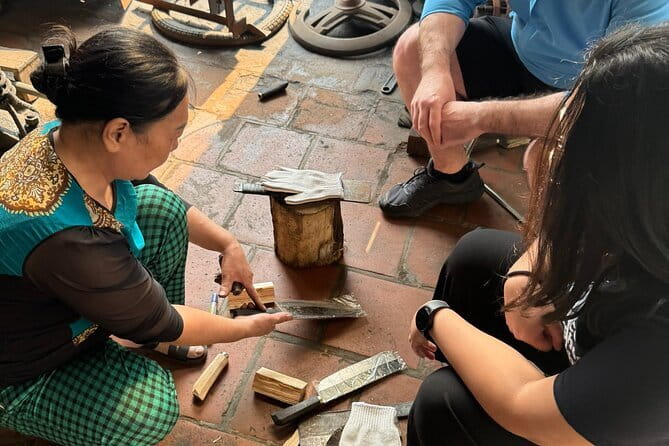
After design, you cut out the blade and tang, the part that fits into the handle. Traditional tools like hammers, cutters, and an anvil are part of the process, and then the metal goes into the forge so it is ready to shape.
This is the part that makes the experience feel honest. You feel the pace of hammering and reheating. You see how small changes in angle affect the metal. Even if you have never handled tools before, you can still learn because the artisan guides your technique.
You will take turns hammering side-by-side with the artisans. That shared rhythm is one of the best parts of the day, because it makes the work feel less intimidating. If you like crafts where you can talk while doing the work, this is one of the better formats in Hanoi.
For smoothing and refining, a hydraulic machine helps refine rough edges for a smoother finish. That detail is practical. It speeds up the finishing without turning the day into a purely machine-driven process.
Handle making: carving wood into something you will actually hold
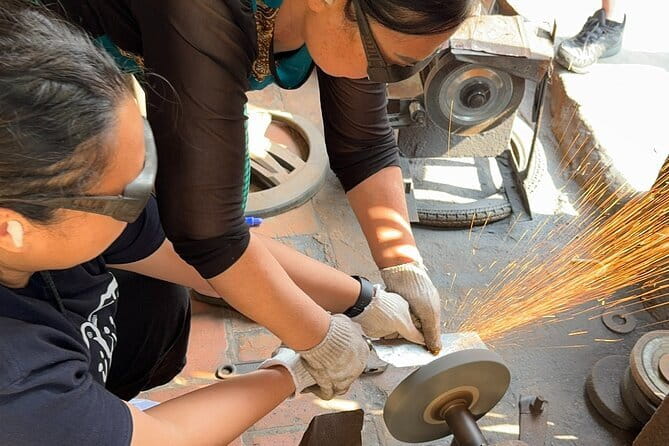
Knife making is not only about the blade. You also work on the handle, and you can customize it as part of your knife build. One thing people highlight is how the handle can begin as a block of wood with bark, then gets carved into shape through the same hands-on process.
What this adds is a second layer of satisfaction. A finished knife feels personal because you shaped the grip as well as the blade. It is also where you can slow down and focus on comfort, because a handle that feels right matters.
If you like learning the why behind craft choices, pay attention during handle shaping. The goal is not only a pretty form, it is control when you hold the knife.






Sharpening on the grindstone, plus the tar-based secret
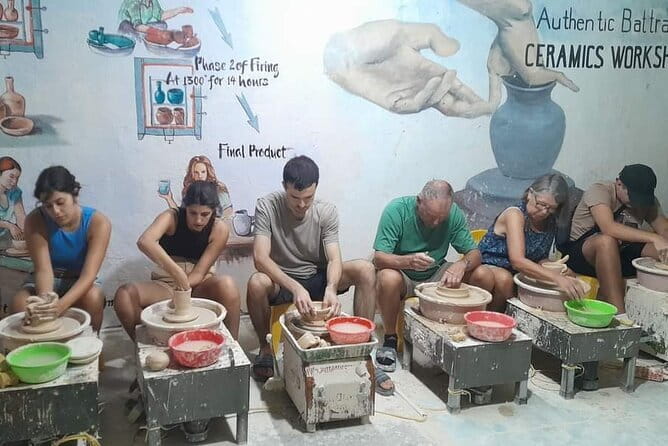
Sharpening is where the story gets distinctly Da Sy. The class ends with grinding and honing on a grindstone, but there is a rare step included: a tar-based wash.
That tar-based technique is described as an age-old family secret passed down through generations. It likely plays a role in the sharpening routine and finishing behavior, and it is the kind of step that makes you feel like you got access to craft knowledge that rarely shows up in tourist workshops.
Be ready for a final sequence that is more method than magic. You are not just rubbing a blade on a stone and calling it done. The process includes several steps, and the tar-based wash comes in during the sharpening routine.
When you finish, you are walking away with a functional knife that you made through the full workflow. That is the real point of doing it this way.
Guides you might meet: artisan leadership plus translation help
Language can be a hurdle in workshops, so it is good that you get support. In previous sessions, guides named Mint, Nick, and Tulip have been mentioned as personable and supportive, with Nick and Tulip particularly noted for giving helpful Hanoi food recommendations alongside the class.
What matters for you is that you get step-by-step instruction, not vague pointers. The artisans guide your technique, and the interpreter side helps you understand what is happening as you work.
Also, having a female master artisan leads the craft day in a way that feels grounded. Tuyen is known for 44 years in the trade, which means your day is rooted in practice, not just performance for visitors.
Price and value: why $45.51 can make sense here
The price is about $45.51 per person, and the duration is around 2 hours 30 minutes. That alone tells you it is not a casual craft demo that you watch from the back.
The value comes from the full set of inputs you get:
- Tools are provided at the artisan’s house
- Safety equipment is provided
- You shape, sharpen, and take home a handmade knife
In other words, you are paying for a complete maker session. When you compare that to buying a finished souvenir, this has a built-in labor story and a real-use payoff.
You should also think about what kind of souvenir you want. If you want a knife that feels like a personal achievement, this class delivers that. If you only want photos and easy sightseeing, the energy level may feel like too much.
Practical tips for making the day easier
This is a work-style workshop. That means your comfort matters.
Wear clothes you do not mind getting scuffed or dusty. You will be close to heat and active tools, and you will use your hands for most of the session.
Also think about your hands and posture. Hammering, cutting, and shaping can be tiring, even with guidance. Bring water if allowed where you are waiting, and pace yourself during the busiest steps.
The airport catch: check rules before you fly
A handmade knife is exactly the kind of thing that can create problems at security. One participant noted their knife was around 14 cm long, and even a small blade can still trigger restrictions.
So here is my practical advice: plan for packing rules before you leave. Check your home country and airline rules for carrying or checking a knife. If you cannot be sure, ask the workshop team what they recommend for safe transport.
It is the one thing that can turn a great souvenir into a stressful last-day chore. Handling that early keeps the day fun.
Should you book this Hanoi knife-making class?
Book it if you want a Hanoi experience that is hands-on, structured, and led by a long-time female master artisan. You are likely to enjoy it most if you like crafts where effort pays off, and if you want a knife you can take to the kitchen instead of another item that sits in a drawer.
Skip it or think twice if you dislike physically focused activities. This class is not laid back. You work through design, forging, shaping, and sharpening, so you should be ready to pay attention and use your body during the session.
If you are traveling for authentic skills and memorable take-home work, this is a strong choice. Just remember the transport reality: make sure you can safely bring a handmade knife home.
FAQ
What is the duration of the Hanoi knife-making class?
The class lasts about 2 hours 30 minutes.
How much does it cost?
The price is $45.51 per person.
What do I make, and do I take it home?
You design, forge, shape, and sharpen your own knife during the class, and you take the handmade knife home at the end.
Are tools and safety equipment provided?
Yes. All tools and necessary safety equipment are provided at the artisan’s house.
Where does the class start and end?
It starts at Đa Sỹ, Kiến Hưng, Hà Đông, Hà Nội, Vietnam, and it ends back at the meeting point.
What is the cancellation policy?
You can cancel for a full refund if you cancel at least 24 hours before the experience starts. If you cancel less than 24 hours before the start time, the amount paid is not refunded.
More Workshops & Classes in Hanoi



More Tour Reviews in Hanoi
Not for you? Here's more nearby things to do in Hanoi we have reviewed











More Hanoi City Tours to consider.
 ★ 5.0Hanoi Jeep Tour: Food, Culture and Fun by Vietnam Army JeepTickets from $5515,222 traveller reviews
 ★ 5.0Full-Day Ninh Binh Highlights Tour from HanoiTickets from $797,761 traveller reviews
 ★ 4.7Ha Long Bay Day Cruise – Swimming, Meal, KayakingTickets from $417,415 traveller reviews
 ★ 4.6Water Puppet Show TicketsTickets from $77,029 traveller reviews
 ★ 5.0Hanoi Motorbike Tour: Food, Culture and Fun by Vintage MotorbikeTickets from $556,699 traveller reviews
 ★ 4.9Guided Food Tour with Train Street VisitTickets from $196,239 traveller reviews
 ★ 5.0Hanoi Cooking Class: Culture, Local Market & Meaning CSR ImpactTickets from $395,147 traveller reviews
 ★ 5.05 Traditional Dishes Hanoi Cooking Class with Market TripTickets from $354,890 traveller reviews
More useful Hanoi routes