
Review · HANOI CITY TOURS
Hanoi Knife Making Traditional Workshop
Steel turns into stories in three hours. In Da Sy village outside Hanoi, you walk through the real steps of knife making, from sketching a blade shape to sharpening the finished edge. It is part craft class, part cultural visit, and the payoff is a practical souvenir you can actually use.
I really like two things here. First, the English-speaking guide support is strong, with hosts like Tee, Nathan, Khoi, and Minh often stepping in to translate the process and the village context. Second, you do real work, not just watching, and you leave with a knife you helped shape, hammer, polish, and sharpen.
One thing to consider: this is not a full DIY workshop where you control every stage. The master smiths handle key riskier steps and certain machines, so you may find some parts are more supervised coaching than total independence.
Key highlights worth your time
- Da Sy village forging tradition you hear about as you work, including how the craft shifted from weapons to farming tools
- Design choice before you forge, with guidance on blade shapes and what you can realistically make in a 3 hour session
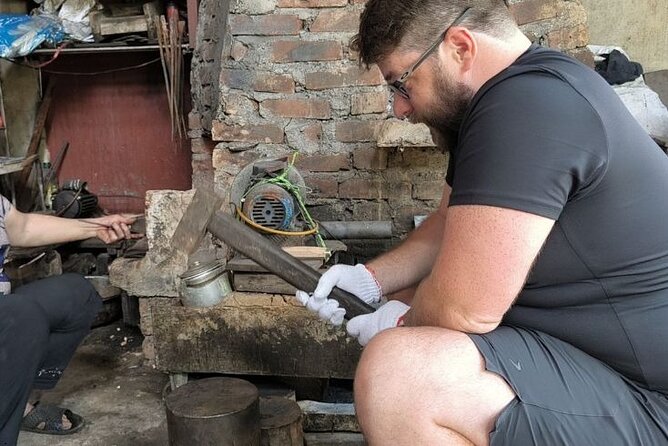
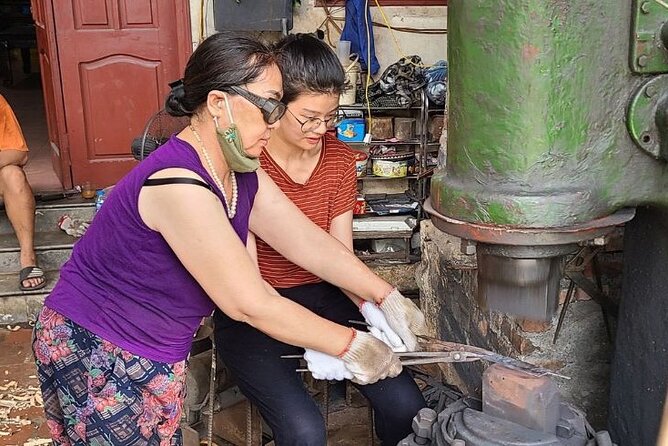
- Hands-on forging steps, including hammering, placing metal in embers, shaping the blade, and finishing touches
- Sharpening with a special tar-based wash, described as part of the blade prep in the traditional process
- Friendly English guides like Tee, Nathan, Khoi, and Minh, who help you follow instructions and feel comfortable
- A take-home knife that feels earned, not just a mass-made souvenir
Da Sy village knife making: where the craft still earns a living
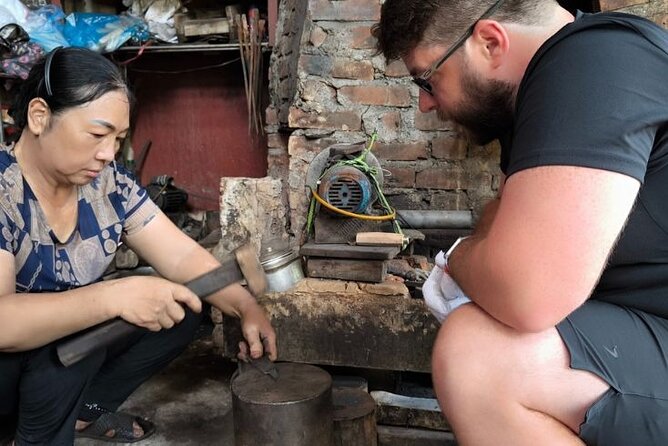
Hanoi can feel loud and fast. This workshop slows you down and hands you something real to do. You travel from the city to Da Sy, a village known for forging work that goes back hundreds of years.
The story you hear matters. In past generations, this area produced weapons during the Vietnam wars, and today the same skills support agricultural life through metal tools. That continuity is part of why the workshop feels grounded, not staged.
You also get a village-style day structure. Expect greetings, a short history rundown, and then the focus shifts to the shop where the work happens. A bottle of water is included, and you’ll want comfortable shoes since you are standing and moving around.
More Hanoi tours and experiences for the shortlist


The 3-hour flow: hotel pickup to finished knife
Timing is straightforward. The class runs about 3 hours, but you should check availability for the starting time that fits your day.
Hotel pickup is included. You are asked to wait about 5 minutes in the hotel lobby, and then you head out with your guide. In practice, this is one of the easiest parts of the day, because it removes the guesswork of how to get to a craft village outside the center.
Once you arrive, you typically start with a welcome and orientation, then you move into the making. Many guides also weave in practical context as you go, with hosts like Tee and Nathan often translating village history and craft terminology as needed. After that, it is hammer work, shaping, and finishing, ending with a knife that is ready to take home.
The workshop also often includes a short time in the shop space, with tea or snacks mentioned in the experience. That is not just extra politeness, it helps you understand the craft as a working family business, not a one-off demo.
Choosing your knife: design decisions that affect the whole day
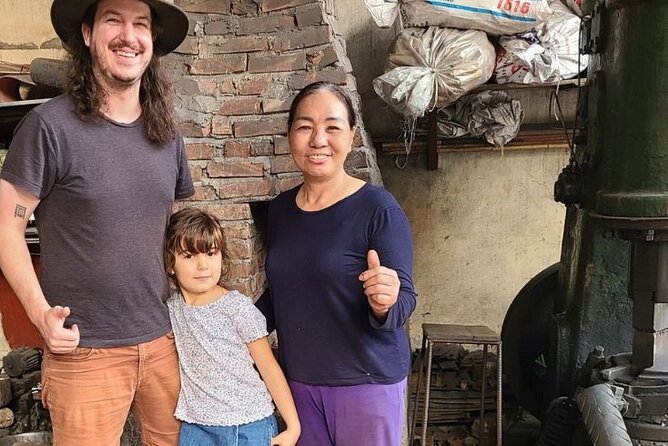
You do not show up and get assigned a random souvenir. You can usually choose a knife design before you start forging. In many cases, you pick from options shown to you, or you choose based on a photo or the shape you want.
This choice is not a gimmick. Your selection influences how the blade is sketched on metal and how you work through shaping and finishing. It also helps the masters plan what you can realistically do hands-on within the workshop time.
Guides often help you make a smart pick. If you want something that feels similar to a style you have seen before, they tend to guide you toward a design that matches the tools and timing. One useful detail from the experience: you get the chance to take part in handle work too, so the final knife can feel more personal in your hands.
Step-by-step forging: what you do, what the master controls
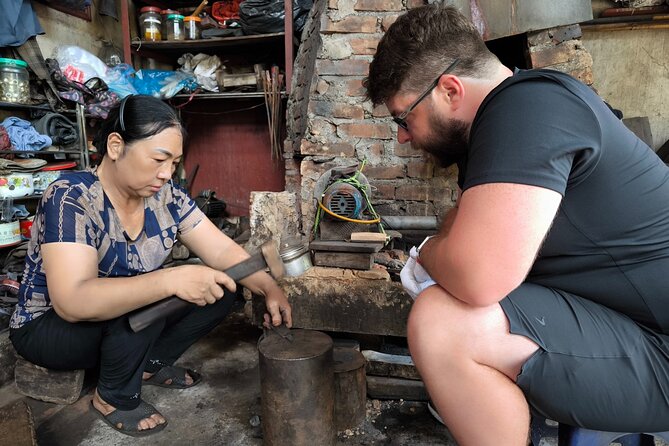
The workshop is built around the full making process, not a single trick. Here is how it typically works.
First comes design and marking. You sketch the blade shape on metal. The metal is selected for its durability, and the outline you choose becomes the template for the rest of the day.
Next is cutting out the blade and tang, the part that runs into the handle. You may be involved using tools like hammer and cutter, and you then place the metal into crackling embers. This is where the day feels most like blacksmithing, because you are watching heat transform the metal in real time.
Then comes shaping. You alternate hammer blows with the master. Your goal is to get a blade shape that looks clean and works in the sharpening stage. The workshop uses tools to correct issues, including trimming by machine when needed. Reviews also point out a hydraulic cutting machine being part of the process, which is a good reminder that some steps are specialized and supervised for a reason.
After shaping, you move into finishing and sharpening. Sharpening happens on a grindstone, and the process includes multiple phases. One phase includes soaking the blade in a special tar-based chemical wash, described as a secret family recipe. That detail is a big part of why this workshop feels like more than a craft presentation.
Finally, you do handle work and finishing touches. Many people leave saying they made key parts, not just watched the master assemble everything. You might still feel the difference between what you do and what a seasoned maker does, but the end result is still very much yours.
Guides and masters: the difference between translation and real coaching
A big reason this workshop earns a strong reputation is how the guides support you. Names like Tee, Nathan, Khoi, Minh, and others come up repeatedly, and the pattern is consistent: they translate instructions clearly and also help you slow down enough to do the work safely.
It is not only language. A good guide also bridges culture. They explain why the village makes these things, why certain steps exist, and what to expect at each stage so you are not guessing.
On the maker side, you are working alongside a family-run craft operation. Different experiences mention masters with decades of experience, including one craftswoman with around 40 years in the craft and makers with 20+ years. That level of experience shows in how the tools are handled and how they correct your technique without making it feel stressful.
If you go in hoping to be completely self-directed, adjust your expectations a little. The best sessions feel like collaboration: you do the physical actions, the master steers the critical moments.






Safety and pace: making a knife without getting hurt
This is metalwork, so safety is not a lecture, it is built into how the workshop runs. You are coached on careful handling of hot metal and tools, and you will likely be reminded to use protective measures, such as gloves, depending on the step.
One helpful feature from the experience: there is often a way to choose how hands-on you want to be. Some sessions describe an option to do everything yourself or do a smaller share while the master handles the most dangerous parts. Either approach keeps you moving toward a finished knife, but it changes how much of the work feels like you are driving.
Pace matters too. Three hours is long enough to see the full process, but it is not long enough for everyone to master every technique from scratch. If you are a beginner, that can actually be a relief. You do not need prior skills. You need attention and willingness to follow instructions.
Value in real life: is $50 for knife making actually fair?
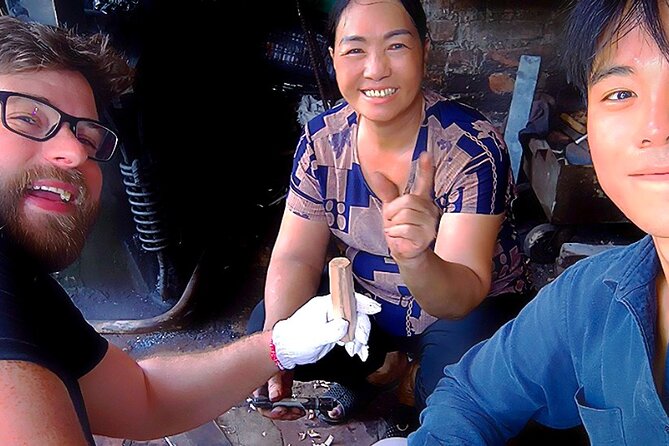
At $50 per person, this workshop looks like it should be just a souvenir stop. Instead, you get a lot for that price.
You are paying for several things that often cost extra in other tours: hotel pickup, English-speaking guidance, access to shop materials and equipment, and the finished product. You also get water included, plus the time of the master smiths and the structured steps from metal to a sharpened knife.
You should still weigh your own expectations. If you want a full DIY class where you control all stages, you might feel the workshop is more guided than self-taught. But if you want a fun, hands-on craft day with a take-home knife that looks professional and practical, the value lands well.
Another advantage is the practicality of the souvenir. A knife is not just decoration. Even if you do not cook daily, it is something you can keep, use, gift, or show off because it is tied to a real process you saw firsthand.
Who this workshop suits best
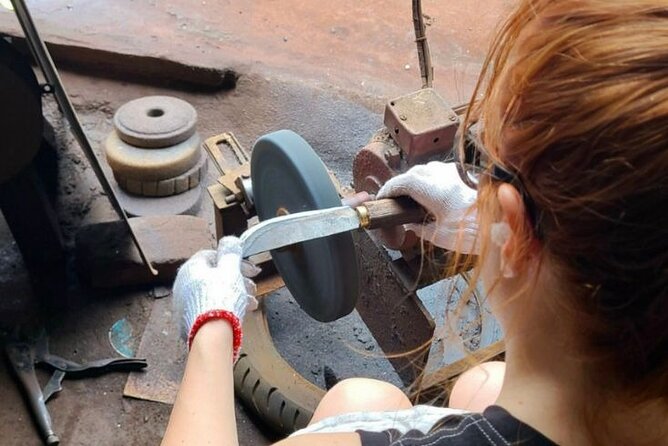
This is ideal if you like hands-on travel, craft traditions, and items with real function. It is also a great match for people who want something different from Hanoi’s typical city sightseeing.
It tends to work well for:
- Beginners who want clear instruction and do not need prior DIY experience
- Food and kitchen lovers who want a knife that feels earned
- Families and even teens, as some experiences note younger participants still found it exciting
- Anyone who enjoys meeting local people in their working environment
It may be less satisfying if you are extremely technical and want to spend long hours refining skills you already know. The workshop time is limited, and the maker team handles certain critical steps.
Booking checklist: what to do before you go
A few practical points will help your day go smoothly.
Wear comfortable shoes. You will stand and move through workshop spaces. Leave alcohol and drugs out of your plan since they are not allowed.
If you care about how your knife turns out, think about your design choice before you arrive. Many sessions let you pick from options and it helps to choose something that fits a beginner-friendly shaping and finishing plan.
Finally, bring a patient mindset. The day is hands-on, but it is still guided by safety and by the rhythm of a working forge.
Should you book the Hanoi knife making class?
I think you should book it if you want a memorable, practical craft experience near Hanoi, with strong English support and a real take-home knife. The workshop’s best feature is that you do enough of the process to feel ownership, while the master team handles the parts that require deep experience and careful tool control.
Skip it if your main goal is learning every step like a full training course. This is closer to a guided making experience than a long-form apprenticeship.
If your schedule allows, pick the start time that gives you breathing room afterward. You’ll come back with a sharp souvenir and a better understanding of why Da Sy forging still matters today.
FAQ
How long is the knife making workshop?
It lasts about 3 hours. Starting times vary, so you’ll need to check availability for the schedule that works for your trip.
What does the Hanoi knife making class cost?
The price is $50 per person.
What’s included in the price?
You get English-speaking instruction, a master and equipment, plus products from the workshop. A bottle of water (500 ml) is included, and you also get hotel pickup.
Do I get picked up from my hotel?
Yes. Pickup is included. You should wait about 5 minutes in the hotel lobby.
Can I choose the knife design before making it?
Yes. You are able to choose the type or design of knife you want to make, and you work through the processes involved in creating a simple knife.
Is it beginner-friendly?
Yes, it is set up for people who do not need prior skills. You do hands-on work with guidance, though some tasks may be handled by the master and certain machines are used for safety and precision.
What should I bring, and what is not allowed?
Bring comfortable shoes. Alcohol and drugs are not allowed.
Is there holiday surcharges or a cancellation window?
There is a surcharge of $10 on New Year and Tet holidays, Liberation Day or Reunification Day (30/4), International Workers’ Day (01/05), and National Day (02/09). You can cancel up to 24 hours in advance for a full refund.
More Workshops & Classes in Hanoi



More Tour Reviews in Hanoi
Not for you? Here's more nearby things to do in Hanoi we have reviewed












More Hanoi City Tours to consider.
 ★ 5.0Hanoi Jeep Tour: Food, Culture and Fun by Vietnam Army JeepTickets from $5515,222 traveller reviews
 ★ 5.0Full-Day Ninh Binh Highlights Tour from HanoiTickets from $797,761 traveller reviews
 ★ 4.7Ha Long Bay Day Cruise – Swimming, Meal, KayakingTickets from $417,415 traveller reviews
 ★ 4.6Water Puppet Show TicketsTickets from $77,029 traveller reviews
 ★ 5.0Hanoi Motorbike Tour: Food, Culture and Fun by Vintage MotorbikeTickets from $556,699 traveller reviews
 ★ 4.9Guided Food Tour with Train Street VisitTickets from $196,239 traveller reviews
 ★ 5.0Hanoi Cooking Class: Culture, Local Market & Meaning CSR ImpactTickets from $395,147 traveller reviews
 ★ 5.05 Traditional Dishes Hanoi Cooking Class with Market TripTickets from $354,890 traveller reviews
More useful Hanoi routes