
Review · HANOI CITY TOURS
Beginner Painting & Drawing Class in Hanoi – Art Tutor Hanoi
Sketching beats Hanoi noise. In a calm garden studio in Tây Hồ, this beginner class gives step-by-step help from English and Vietnamese artists, and it ends with a finished artwork you can take home. One thing to consider: this is mainly drawing, not a full acrylic and oil painting setup with canvases.
What I like most is the tone. You are not stuck in a loud paint-and-sip atmosphere. Instead, you get real guidance while you work through simple still-life objects at your own pace. That quiet focus is a rare break in a fast-moving city.
And the value is solid. For about $36 per person, you get materials, coffee or tea, and personal coaching for around two hours. If you want a specific canvas painting later, you would need to buy a canvas separately, since canvases are not included.
Key highlights you will actually care about
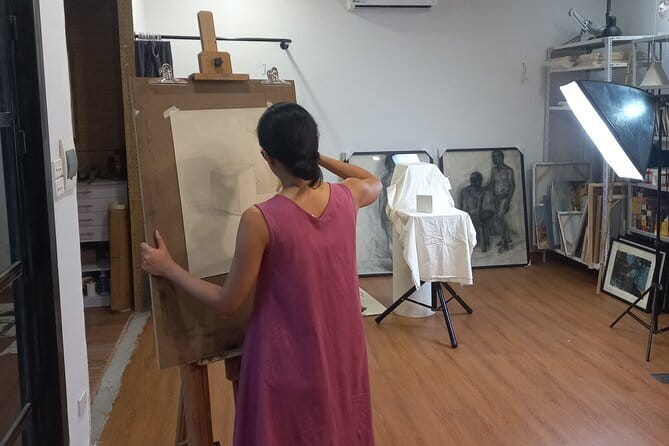
A quiet garden studio in Tây Hồ makes the class feel like a real reset, not a rushed workshop.
English and Vietnamese instructor support helps you follow directions quickly without guessing.
Beginner-friendly still-life drawing teaches you how to see shapes, not just copy lines.
You can work with multiple mediums like pencils, charcoal, and oil pastels, so you can choose the look you want.
A finished take-home piece gives you a meaningful Hanoi souvenir beyond photos.
Where this Hanoi art class fits into your trip
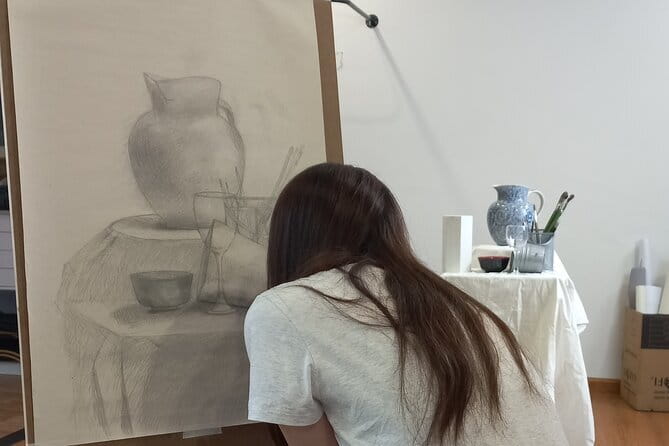
If your Hanoi days feel like a nonstop queue of scooters, street food smells, and sudden rain, this class is a breath of calm. It is built for beginners, which means you do not need to bring skill or confidence. You bring curiosity, and the instructors handle the structure.
This is not about producing a gallery masterpiece. It is about learning a process. By the end, you should have a drawing that looks intentional, with a style you picked, and a reason to remember the quiet side of Hanoi.
More Hanoi tours and experiences for the shortlist



The studio experience in a quiet Tây Hồ garden
The location is in Tây Hồ, tucked behind an address at Art tutor Hanoi. You are meeting at 82, ngách 264/15 Ngõ 374 Âu Cơ, Nhật Tân, Tây Hồ, Hà Nội 100000, Vietnam, and the activity ends back at the same meeting point.
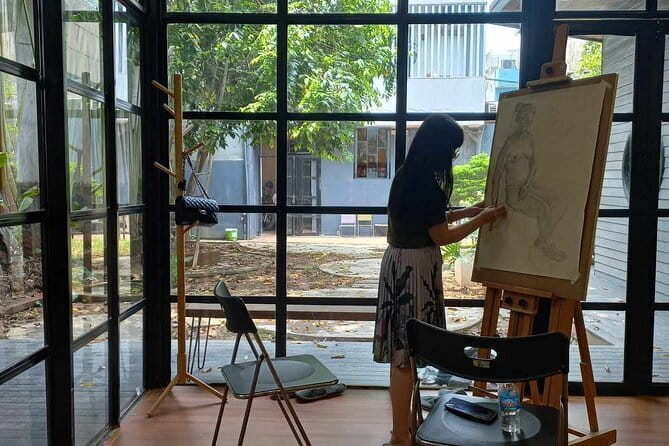
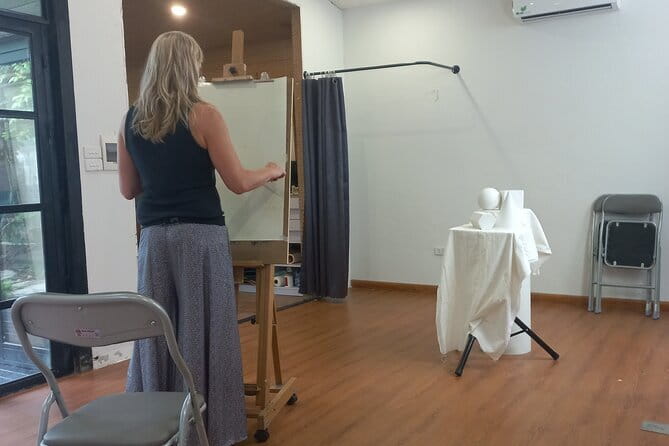
The big win here is the setting. A studio hidden in a quiet garden gives you the feeling you are stepping away from the city’s noise. For me, that matters because it changes how you concentrate. When you are not fighting distractions, you actually learn faster.
Expect a comfortable studio setup designed for hands-on work. The class is described as peaceful and beginner-friendly, with a calm vibe that suits solo travelers, couples, and friends who want to slow down together.
What you will learn: beginner still life, not an art exam
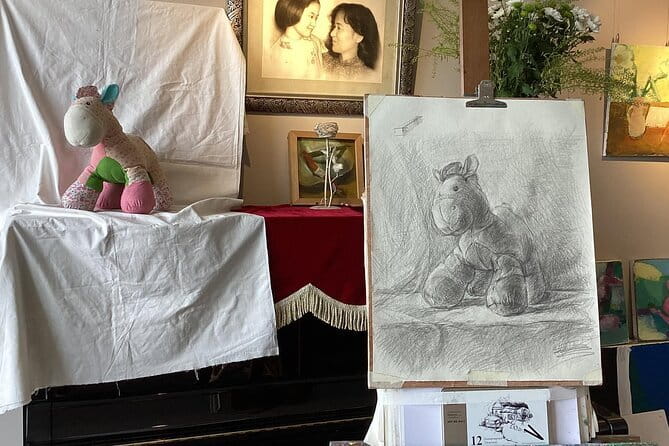
The class focuses on drawing simple still-life objects. That is the right place to start. Still life teaches you how to look at form, shadows, and proportions without the pressure of drawing something that moves.
You get step-by-step guidance from the instructors throughout the session. That means you are not just handed a sheet and told to go. You follow a sequence: how to map the shapes first, how to build tone second, and how to refine edges last.
You will use basic tools like pencils and charcoal, and you can also work with oil pastels. One review specifically mentioned that the content can include charcoal, pencils, and options that can look like oil painting, and that you can choose what to use. That flexibility is useful for beginners. If you try one tool and it feels wrong, you can adjust your approach.
Why still life works so well for first-timers
Still life is forgiving. Objects sit still, so you can spend time understanding what you see instead of racing to catch motion. It also gives you an easy win. Even a simple arrangement can produce a satisfying result once you get the lighting and shading basics right.
If you have never drawn before, the class format should help you avoid the most common beginner mistake: going too detailed too early. The step-by-step approach nudges you toward the right order.
Materials, coffee or tea, and what is included for the price
The cost is $36 per person, for about 2 hours. For that, you get a package that removes the usual “where do I buy supplies” stress.
Included:
- all basic art materials (paper, pencils, charcoal, oil pastels)
- coffee and/or tea
- a professional artist guide who works in English and Vietnamese
- personal guidance throughout
- your finished artwork to take home as a souvenir
That mix of materials and coaching is the value. Buying the right tools on your own in Hanoi would add up, and it would not include instruction. Here, you pay for the whole learning loop: equipment plus feedback plus a final product.






A note about canvases (so you are not surprised)
Canvases for acrylic and oil painting are not included. If you want to paint on a canvas, you would need to buy one separately, and the price is mentioned as under $15 each for sizes around 60 x 80 cm or smaller.
If you are coming expecting a canvas oil painting class, adjust your expectations. This experience is primarily about drawing and using mediums like charcoal and oil pastels in a workshop style.
What the 2-hour session feels like, step by step
Even without a long multi-stop itinerary, you will still experience a clear arc. You can think of it in phases.
1) Arrive and settle in
You meet at the studio address in Tây Hồ. From there, you move into the quiet space and get oriented. This part is short, but it matters, because you start calm and focused.
If you are traveling on a schedule, build in a little breathing room. A garden studio can be easier to miss than a storefront, especially if you are arriving right at the start time.
2) Pick your tools and style direction
The instructor guidance includes helping you choose what to work with. You will have pencils, charcoal, and oil pastels available, and that choice is part of the fun.
This is where beginners often feel the most freedom. You can lean toward pencil for clean lines, charcoal for stronger contrast, or oil pastels for color and a richer texture. One review also pointed out that you can choose among options like charcoal and pencils, and that the content can include different oil-painting style approaches.
3) Learn the drawing process for still-life shapes
You will work on simple still-life objects with step-by-step cues. The goal is to understand the object’s structure first. Then you add shadows and tonal depth.
The instructors provide real feedback during the process. That is a key difference from casual workshops where you mostly copy an example. Here, your drawing improves because you get correction and direction while you are still working.
4) Coffee or tea break while you create
Coffee and/or tea is included. You can use that pause to refocus and keep momentum. In a two-hour class, that small comfort makes the session feel less like a task and more like an afternoon activity.
5) Finish and take your artwork home
At the end, you leave with a finished drawing you can take home. That matters for souvenirs. Photos fade fast. A paper piece, done with your own hands, tends to survive and get remembered.
The instructor advantage: guidance that helps you actually improve
The class is led by professional artist guides who speak English and Vietnamese. That bilingual setup is a big help, especially for travelers who do not speak much Vietnamese.
The most praised aspect shows up clearly in the feedback: the advice is helpful. That is exactly what you want in a beginner class. You do not need a lecture. You need corrections at the right time, like when your proportions drift or when shading looks flat.
Also, the “not a paint-and-sip party” angle is real. The studio format is quiet, and the instruction stays centered on drawing. You should not feel like you are attending an activity where everyone drinks and socializes first, and learns a distant second.
Group size and booking feel: private, small, and focused
The experience is described as private, meaning only your group participates. That usually makes the instruction more personal. Even if you book as a solo traveler, the format can still feel calmer than a large mixed class.
Small groups are also mentioned as a reason people enjoy it. Smaller means the instructor can pay more attention to how your hand is moving and what you should adjust next.
You will also see that it offers group discounts, which can make it even better value if you are traveling with a friend or partner and want a shared memory.
Price and value: why $36 is reasonable here
At first glance, $36 for two hours can feel like a “small treat” price. In this case, the math looks fair because you are paying for more than table space.
You get:
- included materials (paper plus drawing tools)
- coffee and/or tea
- English and Vietnamese instruction
- a completed take-home piece
- personal guidance throughout
Compare that to the cost of buying your own supplies and then trying to learn from videos or a blank worksheet. You might spend similar money, but you would lose the immediate correction and support.
The optional canvas note is also part of the value picture. If you want to expand into painting later, you can do it. You just do not have to pay for canvas upfront when the class is focused on drawing skills.
Practical tips so you enjoy it from minute one
Here are a few things that help you get the most out of a beginner drawing class.
Wear comfortable clothes. You will be holding pencils and charcoal, and charcoal can smudge. Long sleeves are not required, but they can save your shirt from accidental marks.
Arrive with a simple mindset: you are learning the process. The point is not to match a model perfectly. It is to make a confident first attempt and understand how to improve on your next one.
Ask questions early. In a guided class, your questions are useful because the instructor can adjust the explanation to what you are seeing in your drawing.
Choose your medium with your personality in mind. If you like clean edges, go with pencil. If you want bold contrast, charcoal can feel satisfying. If you want a more colorful, expressive result, oil pastels can add personality quickly.
Finally, plan to take your artwork carefully. Since the piece is on paper, keep it flat and avoid bending when you leave the studio.
Who should book this class, and who might skip it
This is a great fit if you:
- want a beginner-friendly art activity in Hanoi
- enjoy quiet breaks from busy street life
- like hands-on learning with real instruction
- want a take-home souvenir you made yourself
- travel solo, as a couple, or with a small group
You might consider skipping if you:
- specifically want a full acrylic or oil painting class on canvas
- expect a long tour of Hanoi sites
- want an activity that is mostly social and minimal instruction
If you are unsure, this is still an easy choice for most people because it requires no previous experience, and you get guidance throughout.
Should you book Art tutor Hanoi’s beginner drawing class?
Yes, if you want a calm, structured creative break in Hanoi. The setting, the beginner-friendly still-life focus, and the English plus Vietnamese instruction make it a smart use of time, especially if you feel fried by the city after a day of walking and eating.
Book it if you care about learning something real, not just participating. The biggest advantage is the feedback. When someone helps you fix the drawing while you are still working, you leave with better results and less frustration.
One last sanity check: go in expecting drawing skills and paper-based results. If you want canvases and heavier painting, you can add that later, but this class is mainly about drawing with pencil, charcoal, and oil pastels.
FAQ
What is the duration of the beginner painting and drawing class?
It runs for about 2 hours.
How much does the class cost?
The price is $36.00 per person.
Is prior art experience required?
No experience is required. It is designed for beginners.
What materials are included?
The class includes basic art materials such as paper, pencils, charcoal, and oil pastels.
Is coffee or tea included?
Yes, coffee and/or tea are included.
Do I get to take my artwork home?
Yes, you take home your finished artwork as a Hanoi souvenir.
Are canvas and painting supplies included for acrylic or oil painting?
No, canvases for acrylic and oil painting are not included. Canvas is listed as under $15 USD each (about 60 x 80 cm or smaller).
Where is the meeting point and where does it end?
You meet at Art tutor Hanoi, 82, ngách 264/15 Ngõ 374 Âu Cơ, Nhật Tân, Tây Hồ, Hà Nội, and the activity ends back at the meeting point.
More Workshops & Classes in Hanoi



More Tour Reviews in Hanoi
Not for you? Here's more nearby things to do in Hanoi we have reviewed












More Hanoi City Tours to consider.
 ★ 5.0Hanoi Jeep Tour: Food, Culture and Fun by Vietnam Army JeepTickets from $5515,222 traveller reviews
 ★ 5.0Full-Day Ninh Binh Highlights Tour from HanoiTickets from $797,761 traveller reviews
 ★ 4.7Ha Long Bay Day Cruise – Swimming, Meal, KayakingTickets from $417,415 traveller reviews
 ★ 4.6Water Puppet Show TicketsTickets from $77,029 traveller reviews
 ★ 5.0Hanoi Motorbike Tour: Food, Culture and Fun by Vintage MotorbikeTickets from $556,699 traveller reviews
 ★ 4.9Guided Food Tour with Train Street VisitTickets from $196,239 traveller reviews
 ★ 5.0Hanoi Cooking Class: Culture, Local Market & Meaning CSR ImpactTickets from $395,147 traveller reviews
 ★ 5.05 Traditional Dishes Hanoi Cooking Class with Market TripTickets from $354,890 traveller reviews
More useful Hanoi routes