
Review · HANOI CITY TOURS
Vietnam War: Uncovering Hanoi’s Untold Stories
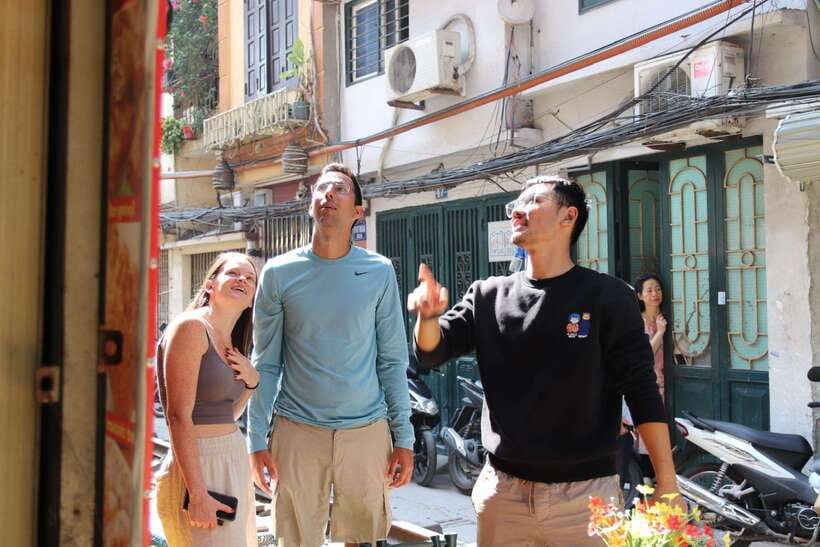
Hanoi has a way of hiding its hardest chapters in plain sight. This 2.5-hour Vietnam War walk connects everyday neighborhoods with the big political story, from North and South to unification on the Cold War edge. I like that the tone is human and relaxed, not a lecture, so you actually absorb what you’re seeing.
Two things I especially liked: you get real context first, with a calm start at 24 P. Chùa Vua before you hit the streets, and you also visit places most tourists skip, like Chợ Giời and the B52 memorial area. The group stays small, with a max of 10 people, which keeps questions flowing.
One thing to consider: the subject matter is heavy. If you prefer light sightseeing only, this may feel like an emotional workout, even with built-in breaks like a short taxi ride halfway and a stop designed for resting.
Key points I’d put on your shortlist
- Small group, up to 10 people, so you can ask questions and keep the pace comfortable.
- A calm, sit-down opener at 24 P. Chùa Vua, so the war story makes sense before you walk.
- Cho Gioi, the planned economy workaround, told through how people actually survived.
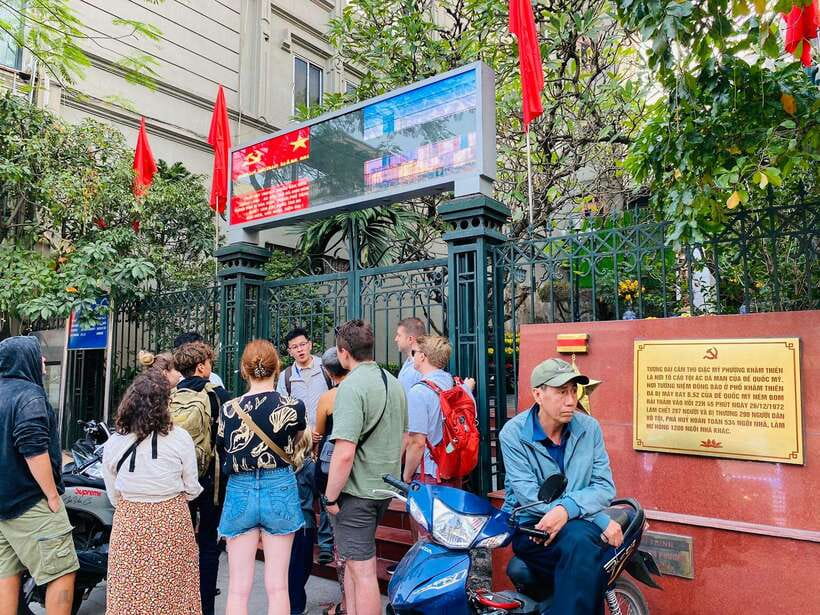
- Kham Thien B52 memorial, framed as learning and reflection, not just a photo stop.
- Duờng Tau and veterans’ stories, plus a place to rest after taking in hard history.
- 20% of profit donated to support victims of Agen Orange/Dioxin and children’s foundations.
Why this Hanoi War walk feels different from the usual route
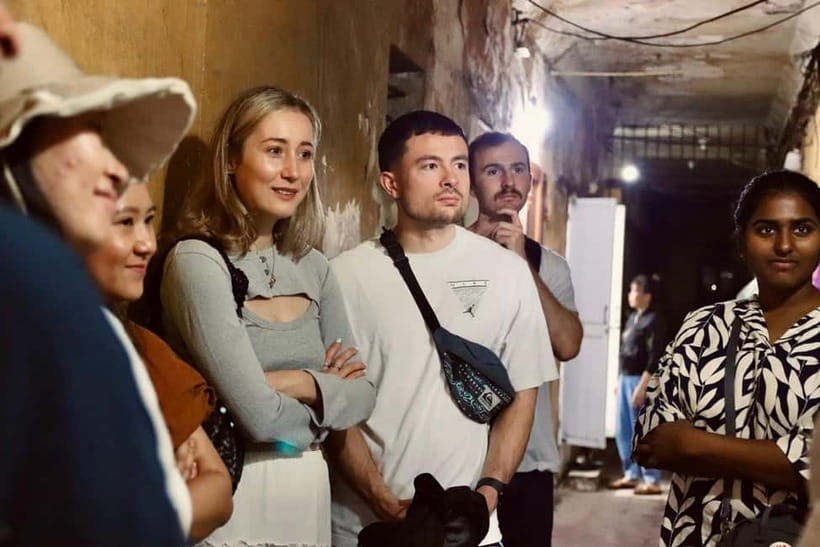
I’ve learned that in Hanoi, history isn’t only stored in museums. It’s also embedded in how neighborhoods function, where people traded, how families adapted, and what daily life looked like when politics shaped everything. This tour leans into that idea, walking you through areas far from the standard monument circuit.
The best part is the balance between the personal and the political. You’re not just hearing dates. You’re hearing how the planned economy affected real lives, how people navigated the North vs South divide, and how unification unfolded on a tense world stage.
And yes, it’s still a walking tour, so you’ll get your steps in. But they keep it humane, with coffee or tea, a short taxi ride halfway, and time to sit and talk early on.
You can also read our reviews of more tours and experiences in Hanoi.



The value question: $37 for 2.5 hours, plus transport and coffee
At $37 per person for about 2.5 hours, this isn’t just a low-cost sightseeing add-on. You’re paying for four things that add up in Hanoi: a guided narrative, visits to specific sites tied to the war’s aftermath, coffee or tea, and private transportation for parts of the route.
The private transport matters more than it sounds. Hanoi streets can be intense to cross, and a short taxi ride halfway through keeps you moving without turning the tour into a constant sprint.
The inclusion mix is also fair. Duờng Tau has an admission ticket included, while key stops like the B52 memorial and Chợ Giời are listed as free. So your money goes mostly toward the guiding and the route logic, not a stack of separate entrance fees.
The tour pace and how to prep (so it stays enjoyable)
This experience is designed for a moderate physical fitness level. That usually means: expect walking on uneven sidewalks at times, and plan for a few stretches that will feel warm or tiring if you’re not used to city walking.
You’ll start at 24B P. Chùa Vua, Phố Huế in Hai Bà Trưng and end around Phố Khâm Thiên in Đống Đa. The end point is helpful because you can easily walk back to the Old Quarter, which saves you from hunting for transport after the tour.
Practical tip: bring a water bottle even though coffee or tea is included. You’re outdoors, and the tour’s themes make it easy to forget you’re working up thirst.
The start at 24 P. Chùa Vua: context before streets
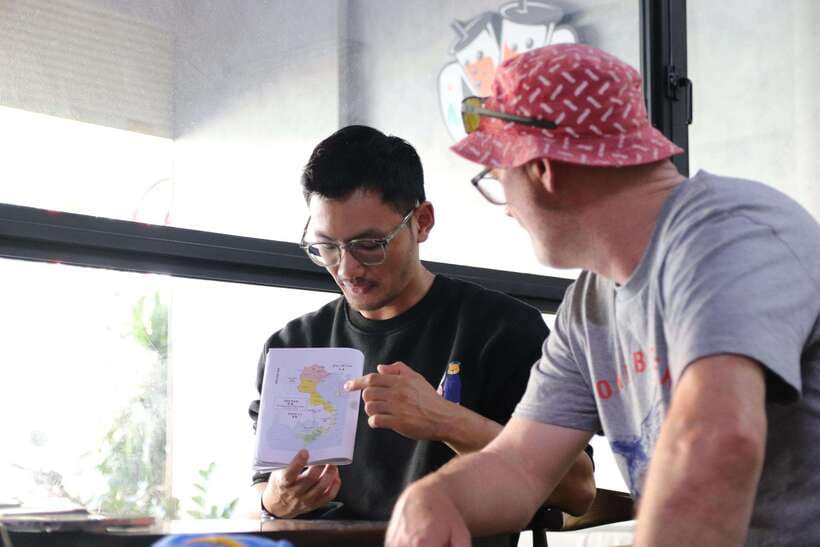
Most war-themed tours dump you into the scenery and hope the timeline lands. Here, the tour begins with a relaxed sit-down conversation at 24 P. Chùa Vua. The idea is simple: get the background first, so everything you see later has names, causes, and consequences.
This matters because the story is bigger than any one monument. You’re connecting the planned economy, the divide between the North and the South, and the unification story as Vietnam approached the Cold War era. When you have that framework, later stops stop feeling random.
Also, you’re not rushed out onto the street. That small detail changes the whole mood. It gives you time to ask your own questions and pick up what to watch for as you walk.
If you’re the kind of person who likes to understand the why behind the where, you’ll probably appreciate this structure. People have mentioned guides such as Thomas and Dung who explain early to give you context fast, so you don’t feel lost.
Duờng Tau: veterans’ stories and a place to rest
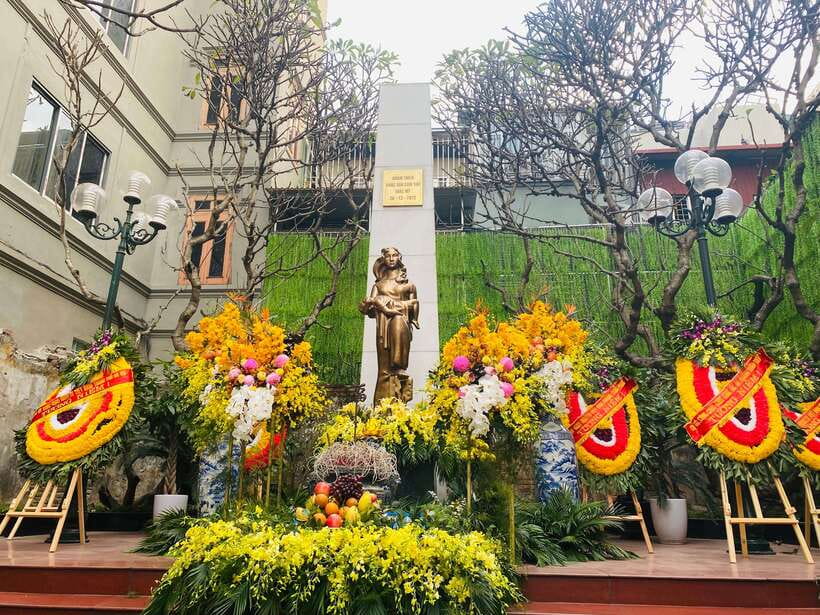
Duờng Tau is where the tour shifts from background to lived experience. You hear stories from veterans and learn about the lives of local people shaped by the war years and their aftermath.
What I like here is that it’s not only about grief. It’s also about how people kept going, how communities adapted, and how daily life continued under pressure. You’re given a moment to rest too, which is smart because emotional history is easier to hold when you’re not exhausted.
This stop runs about 30 minutes, and it includes an admission ticket. The format feels like a breather in the middle of a heavier narrative, not a rushed checkpoint.



Kham Thien B52 memorial: reflection that goes beyond the photo
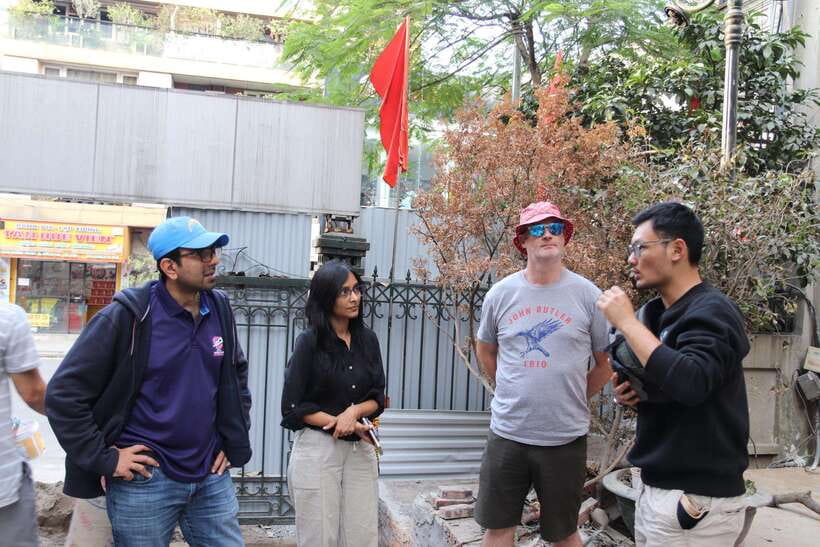
Next comes Kham Thien, focused on the B52 memorial. The framing is important: it’s presented not only as remembrance of tragedy, but as a lesson from history. In other words, you’re encouraged to think about consequences, not just mourn the past.
The visit is short, about 15 minutes, and it lists as admission free. That brevity can be a plus if you worry about being overwhelmed. It also means the guide has to be selective, which often results in clearer takeaways.
If you’re someone who needs context to process a memorial, this is a good match because you started earlier with the conversation at 24 P. Chùa Vua. The emotional meaning lands more when your mind already has the timeline.
Chợ Giời: the planned economy, the black market, and survival skills
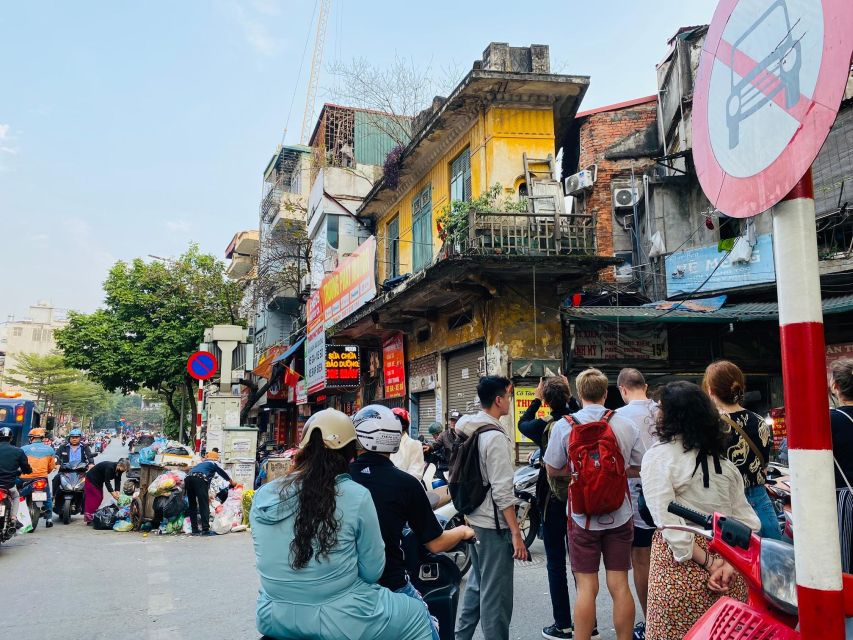
Then the tour turns to Chợ Giời, described as a historic black market. This is the stop that often changes how you understand the war’s aftermath.
Instead of focusing only on weapons or politics, you learn how local ingenuity created a secret economy when formal systems were strained. You connect the dots between the planned economy and everyday survival, which is a different kind of history lesson.
This stop is about one hour and is listed as admission free. It’s long enough for the guide to explain why the market mattered, but not so long that it feels like wandering. Expect conversation, explanations, and a closer look at a place shaped by real constraints.
A practical note: black market areas can be busy and visually intense. If crowds wear you out, use the time to focus on the stories and avoid trying to do extra shopping on your own.
The Hanoi Train Street community: seeing a living neighborhood, not a set
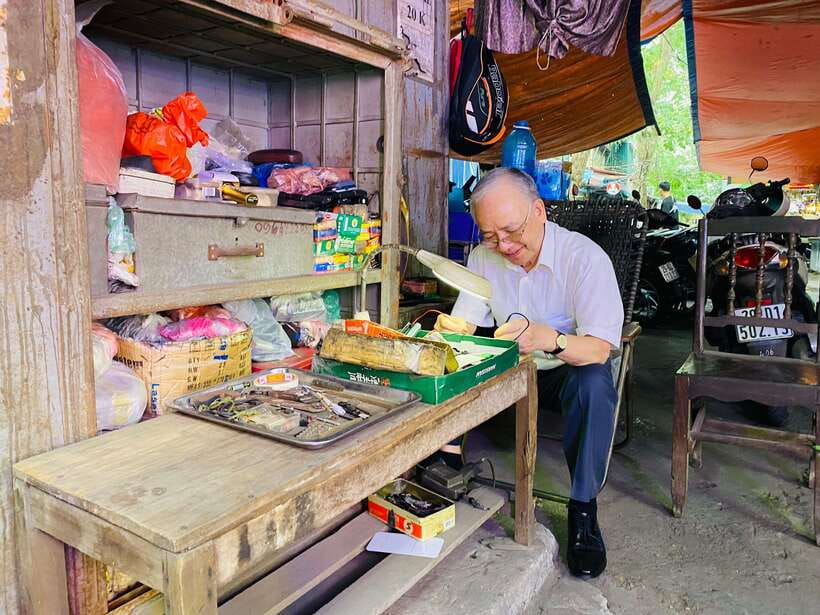
The tour also includes a look at the Hanoi Train Street community. This is one of those places that is famous online, but famous does not always mean understood.
Here, the point is less about chasing views and more about seeing how ordinary people live with their environment and how history and development collide in small spaces. Even if you’ve passed by the area on your own, having a guide connect it to the broader narrative helps you notice details you’d otherwise miss.
I recommend bringing a calm mindset at this stop. It’s easy to reduce it to a photo spot. When you treat it like a neighborhood, you’ll get more out of the walking and explanations.
Taxi halfway through: a small comfort that keeps the tour humane
You’ll take a short taxi ride halfway through. That’s not fluff. It keeps the route efficient and prevents the day from turning into a nonstop cross-town grind.
With a max group size of 10 travelers, the route can stay organized even with traffic. It also helps the guide keep everyone together, especially if you’re stopping to talk in quieter pockets.
Guides and the tone: conversation style, not a lecture
One of the strongest themes in the feedback is guide quality and tone. Names like Dung, Kien, and Thomas come up, and the common thread is clear: friendly, story-driven explaining that feels like a real conversation.
I like this approach because Vietnam War history can become a wall of information if it’s delivered like a classroom. A conversational style makes it easier to connect emotionally and logically at the same time.
It also helps families and mixed groups. A review mentioned a family with teens aged 13 to 20 enjoying it, which tells me the pacing and storytelling can work beyond just hardcore history buffs.
Donations and why they matter to you, not just the cause
This tour says 20% of profit is donated to two organizations: the Vietnam Association for Victims of Agen Orange/Dioxin and the Blue Dragon’s Children Foundation.
You do not need to turn this into a charity lecture during your visit. But it’s still a meaningful detail, because it means your ticket supports work tied to the consequences of the conflict, not only general tourism.
Who this tour suits best
This is a great choice if you:
- want more than monument photos and prefer neighborhood-based storytelling
- like history that connects to daily life, markets, and community adaptation
- appreciate a small group with time to ask questions
- feel curious about how Vietnam’s unification and Cold War-era tensions still echo in modern Hanoi
It may be a weaker fit if you:
- need a fully light, carefree itinerary
- dislike emotional topics, even when presented thoughtfully
- want a tour with lots of free time to explore on your own (this one is structured around learning)
Practical tips before you book
- Wear comfortable shoes. You’re walking, and the tour is built around multiple stops across distinct areas.
- Bring a small layer. Even in warm months, Hanoi can shift in temperature, and you’ll be outdoors for long stretches.
- If you care about questions, don’t wait. The conversation begins early at 24 P. Chùa Vua, so you can shape what you pay attention to.
Should you book Vietnam War: Uncovering Hanoi’s Untold Stories?
I think you should book this if your Hanoi trip includes more than sightseeing and you want to understand how the Vietnam War shaped the city’s people, systems, and neighborhoods. The combination of Duờng Tau, the Kham Thien B52 memorial, Chợ Giời, and the Train Street community gives you different angles on one big story.
It also offers strong value for the price because coffee or tea, private transportation, and short but purposeful visits are built into the timing. The donation detail is meaningful without being performative, and the small group limit makes it feel more personal than mass tourism.
If you’re the type who likes clear structure, a conversational guide, and history that explains what you’re seeing in real places, this is one of the best ways to do that in Hanoi.
FAQ
How long is the Vietnam War: Uncovering Hanoi’s Untold Stories tour?
The tour lasts about 2 hours 30 minutes.
What is the price per person?
It costs $37.00 per person.
What stops are included on the tour?
The tour includes Duờng Tau, Kham Thien B52 memorial, Chợ Giời, and it also includes the Hanoi Train Street community area.
Is food or drink included?
Yes. Coffee and/or tea is included.
Does the tour include transportation?
Yes. There is private transportation included, including a short taxi ride halfway through the walk.
Where do you start and end?
You start at 24B P. Chùa Vua, Phố Huế (Hai Bà Trưng) and end at Phố Khâm Thiên (Đống Đa). You can easily walk back to the Old Quarter.
What about cancellation and timing?
You can cancel for a full refund if you cancel up to 24 hours in advance. Free cancellation is available under that condition.
More Tour Reviews in Hanoi
Not for you? Here's more nearby things to do in Hanoi we have reviewed











More Hanoi City Tours to consider.
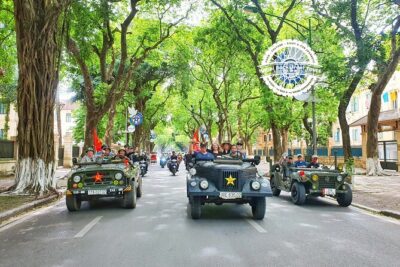 ★ 5.0Hanoi Jeep Tour: Food, Culture and Fun by Vietnam Army JeepTickets from $5515,222 traveller reviews
 ★ 5.0Full-Day Ninh Binh Highlights Tour from HanoiTickets from $797,761 traveller reviews
 ★ 4.7Ha Long Bay Day Cruise – Swimming, Meal, KayakingTickets from $417,415 traveller reviews
 ★ 4.6Water Puppet Show TicketsTickets from $77,029 traveller reviews
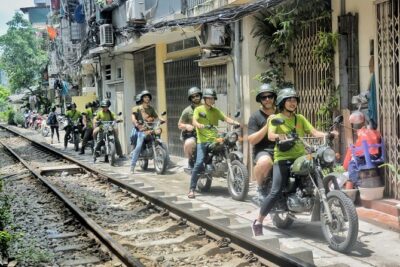 ★ 5.0Hanoi Motorbike Tour: Food, Culture and Fun by Vintage MotorbikeTickets from $556,699 traveller reviews
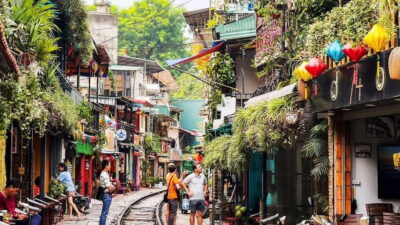 ★ 4.9Guided Food Tour with Train Street VisitTickets from $196,239 traveller reviews
 ★ 5.0Hanoi Cooking Class: Culture, Local Market & Meaning CSR ImpactTickets from $395,147 traveller reviews
 ★ 5.05 Traditional Dishes Hanoi Cooking Class with Market TripTickets from $354,890 traveller reviews