
Review · HANOI CITY TOURS
Incense Village, Hat Making & Lacquer Artisan Small Group Hanoi
Hanoi’s craft villages are a hands-on day trip, not a museum stop, and this one strings together lacquer, incense, and conical hat making in a small group. I like that you get to do real work in real workshops, then slow down for a meal in an artisan’s home. One thing to keep in mind is that the hat you make is part souvenir, part practical problem, because you’ll be carrying it around after you finish.
For me, the best value is the home-cooked Vietnamese lunch included on the full day, with both vegetarian and non-vegetarian options. I also appreciate the structure, since you hop between three craft communities without feeling rushed. The main caution is to clarify any extra costs if you’re choosing a shorter version or taking items home, since lacquer souvenirs can have a fee depending on size, and one guest found pickup expectations confusing.
Key highlights worth knowing before you go
- You make a conical hat that’s included, so you’re not just watching from the sidelines
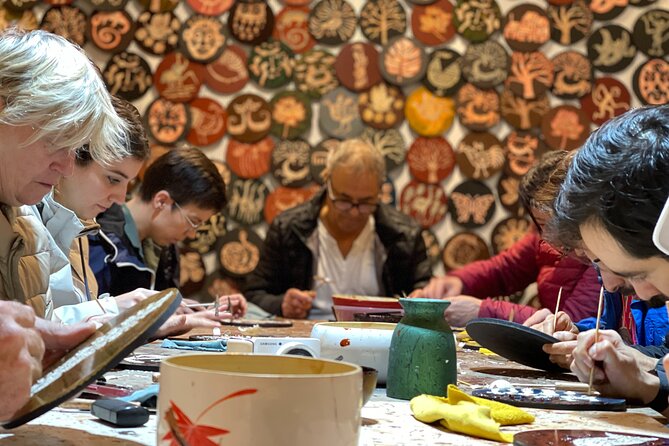
- Lacquer painting with an artisan at Ha Thai village, known for production going back centuries
- Three craft villages in one day: lacquer, hats, then incense production and dyeing
- Home-cooked lunch at an artisan home on the full day, with veg and non-veg choices
- Small group size (max 15) plus an air-conditioned vehicle for the long transfers
A full-day crafts loop from Hanoi, made for hands-on time
This trip is built around three Vietnamese craft neighborhoods, and the pacing works. You start with lacquer painting, move into traditional conical hat making, then end with incense production and dyeing. It’s the kind of day that feels busy on paper, but the workshop time gives you a break from city sightseeing.
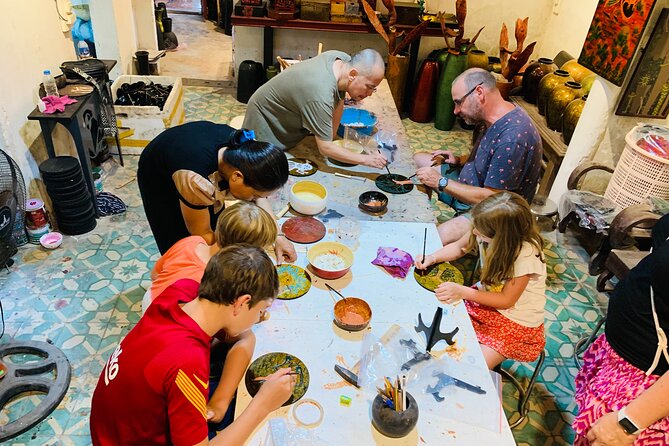
The biggest appeal for me is that it’s not just a cultural performance. You’ll be sitting at tables where craft tools and materials are already in use, and the process is explained as something practical, not theatrical. If you like learning by doing, this style fits.
You can also read our reviews of more tours and experiences in Hanoi.



Price and what $17.81 really buys you
At $17.81 per person, the value is strong for a full day with included meals and materials. You get air-conditioned transport, bottled water, all fees and taxes, and at least one take-home item, the conical hat.
Do read the fine print on take-home crafts. The lacquer piece used for the experience is for hands-on use only, and taking it home has a fee based on size. The hat is included as a full souvenir, but lacquer can turn into an add-on if you fall in love with your finished work and want it at home.
Also note the full day vs half day difference. Lunch is only included on the full day trip, so if you choose a shorter option, you’ll want to plan food on your own.
Getting started in Hanoi: meeting point and the pickup reality
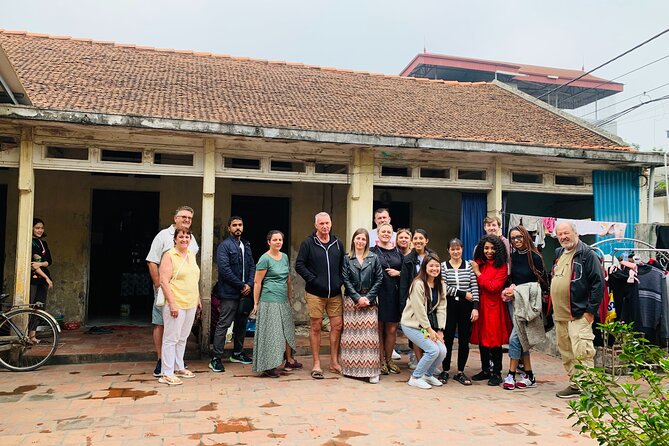
You meet at Phe La Coffee, 3B P. Lê Thái Tổ, Hàng Trống, Hoàn Kiếm, Hà Nội. The tour also offers pickup, which is great if you don’t want to navigate to the meeting point on your own. If you want the smoothest start, I’d message ahead and confirm whether pickup applies to your exact booking.
Small-group tours work best when everyone arrives on time. If your pickup is included, give yourself a little buffer, since workshop schedules do not wait around for a delayed van.
Ha Thai Village lacquer painting: where technique matters
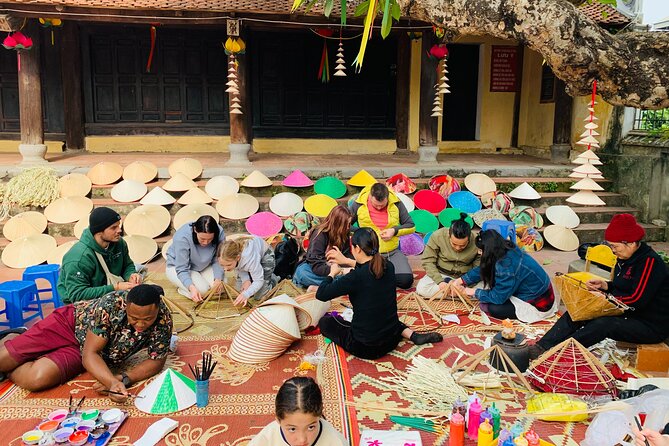
Your first stop is Ha Thai village, known for lacquerware production since the 17th century. You’ll meet a local artisan and get introduced to traditional lacquer technique, then do lacquer painting as part of the experience. This is the most “craft-focused” portion of the day, since you’ll be working directly with tools and surface prep concepts.
What I like about starting here is that lacquer teaches patience. Even if you’re not an artist, the process usually slows you down just enough to notice how materials behave. You also get a solid context for why lacquerware is valued, since it’s tied to long-term craftsmanship rather than quick souvenirs.
A practical consideration: lacquer can be messy, and workshops are real workspaces. Wear clothes you don’t mind getting dust or small marks on, and keep your phone secure during painting.
Chuong Village conical hat making: hands-on, slightly chaotic, and fun
Next comes Chuong village, famous for its conical hat making, with around 300 years of tradition. This is the stop where you make your own hat, not just watch it happen. Expect time to learn the structure, handle the materials, and follow the steps as you build something that actually resembles the hats used in daily life.
One detail I took seriously from feedback is that the hat isn’t just a quick photo prop. Once you’re done, you’re likely to wear it or carry it for the rest of the trip. If you’re planning more walking later in Hanoi, that’s a comfort factor, not an inconvenience, but plan for it.
If you’re traveling with kids, this is usually the star activity because it’s tactile and fast to understand. If you’re traveling solo, it’s also nice for people who feel awkward in big cultural tours, since you’re focused on the task, not performing socially.





Quảng Phú Cầu incense village: color, scent, and family-scale work
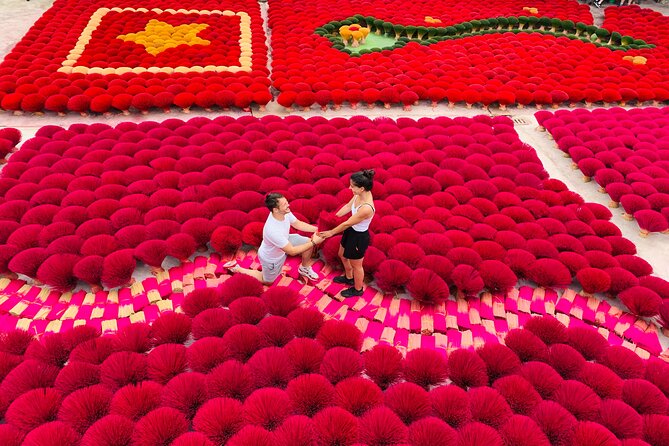
You then move to Quảng Phú Cầu, an incense village where production is done at a family scale. You’ll walk through the village center and observe how incense sticks are made. This part is shorter, about an hour, but it gives you a clear sense of how craft becomes routine.
The photo factor here is real. The dyeing and color bundles can look like an Instagram-style backdrop, but the real value is seeing the work process in context. You’re not just collecting images, you’re connecting the colors to the production steps.
If scents bother you, this is the one moment to be thoughtful. Incense villages are built around smell, and while you’re not likely to be stuck in a closed room, you’ll still notice the fragrance.
Làng làm hương đỏ: dyeing incense sticks and seeing a bigger factory
After Quảng Phú Cầu, you visit Làng làm hương đỏ, a stop focused on dyeing incense sticks and photographing the colorful incense bundles. Then the experience culminates with a tour of the village’s largest incense factory, where you can watch more industrial-scale production.
This is a nice contrast: you see household work, then you see larger production. I like that balance because it answers an unspoken question, how something small-family made becomes something widely produced. You come away with a better mental map of the supply chain.
Photos are encouraged, and the colors are the kind that look great even with simple phone cameras. Still, be respectful in workshops. People live and work here, so keep your movement slow and your flash off.
Lunch at an artisan home: the real reason this tour feels local
Lunch is home-cooked Vietnamese food at the artisan’s home on the full day trip. You can choose vegetarian or non-vegetarian options, and meals are described as well-served, with a variety that usually covers different tastes.
This matters more than many people expect. When you eat where you made things, you start to understand the day as lived experience, not just a guided activity. It also gives you a calmer pause between workshops, so you don’t feel like you’re sprinting from stop to stop.
If you’re picky, go for the option you know you can handle. The tour clearly offers both veg and non-veg choices, so use that to avoid surprises.
Getting back to Hanoi: Train Street drop-off is an option
Your return is timed for 17:30 to 18:00. You’ll come back to Hanoi and have the option to be dropped off at Train Street or another location of your choice.
That flexibility is practical. If Train Street is on your plan, you can roll right into evening walking. If you’d rather avoid crowds, you can ask for a drop-off closer to your hotel area.
Small-group dynamics and guide impact
This tour runs with a maximum of 15 travelers, which is an advantage. Smaller groups mean the artisan and workshop hosts can explain things without repeating themselves constantly. It also tends to make hands-on work easier, since there’s more room to see and learn at your station.
The guides are often singled out for being helpful and for keeping the day fun. Names that show up strongly include Nadia, Kevin, Louise, Jay, Leon, Vu, and Rachel, with comments about guides being attentive and even taking good photos. That matters because a craft tour lives or dies on clarity, especially when you’re learning steps you might not understand at first glance.
Practical tips that will make your day smoother
Here are the things I’d do to avoid the common little headaches with craft days like this.
- Wear closed-toe shoes with a flat sole. Workshops are active and you’ll be moving between rooms.
- Plan for the hat you make. Expect to carry it or wear it after your session.
- Use a small bag or crossbody so you can keep your hands free during painting and hat building.
- Ask about lacquer take-home fees early if you want your lacquer piece at the end. The fee is based on size.
- Bring cash for small extras only if you like breathing room. The core cost includes most fees, but craft tours sometimes add purchase options.
If you’re the type who loves learning through making, you’ll likely leave happier than you expected. Even if your hat isn’t perfect, it’s yours, and that changes how you remember the day.
Who should book this tour
This works especially well if you:
- Want hands-on craft time rather than sightseeing-only
- Enjoy Vietnam’s workshop culture, like lacquer and incense production
- Travel with kids, since the hat making and painting give everyone something to do
- Prefer a smaller group and a guided day that still feels personal
It may be less ideal if you hate smells or mess. Incense villages are fragrant, and workshops are never spotless. It’s also not the best fit if you want minimal walking or zero carry-ons for the day, because you’ll leave with your conical hat.
Should you book Incense Village, Hat Making & Lacquer Artisan?
I’d book it if you want a creative, structured day in Hanoi that includes real workshops, a meaningful lunch stop, and a genuine take-home souvenir. The included hat and the home-cooked lunch on the full day are the two biggest value anchors.
Before you confirm, I’d double-check two practical items: whether your version is full day or half day (because lunch changes), and how take-home lacquer pricing works if you plan to bring it with you. If you line those up, you’re set for a day that feels like work you can understand, not just something you watch.
FAQ
How long is the Incense Village, Hat Making & Lacquer tour?
The tour is approximately 9 hours.
Is lunch included, and is there a vegetarian option?
Lunch is included on the full-day trip as home-cooked Vietnamese food, and both vegetarian and non-vegetarian options are available. Meals are not offered for the half-day trip.
What can I take home from this experience?
You receive one conical hat per person as part of the experience. Lacquer is described as for experience purpose only, and taking it home may require an extra fee depending on the size.
Does the tour offer pickup, or is there a meeting point?
Pickup is offered, and the listed meeting point is Phe La Coffee at 3B P. Lê Thái Tổ, Hàng Trống, Hoàn Kiếm, Hà Nội.
How many people are in the group?
The tour has a maximum of 15 travelers.
Where does the tour go for the craft activities?
You visit Ha Thai village for lacquer painting, Chuong village for conical hat making, Quảng Phú Cầu for incense production, and Làng làm hương đỏ for dyeing incense sticks and a visit to the largest incense factory.
Can I cancel for free?
Yes, you can cancel up to 24 hours in advance for a full refund.
More Tour Reviews in Hanoi
Not for you? Here's more nearby things to do in Hanoi we have reviewed










More Hanoi City Tours to consider.
 ★ 5.0Hanoi Jeep Tour: Food, Culture and Fun by Vietnam Army JeepTickets from $5515,222 traveller reviews
 ★ 5.0Full-Day Ninh Binh Highlights Tour from HanoiTickets from $797,761 traveller reviews
 ★ 4.7Ha Long Bay Day Cruise – Swimming, Meal, KayakingTickets from $417,415 traveller reviews
 ★ 4.6Water Puppet Show TicketsTickets from $77,029 traveller reviews
 ★ 5.0Hanoi Motorbike Tour: Food, Culture and Fun by Vintage MotorbikeTickets from $556,699 traveller reviews
 ★ 4.9Guided Food Tour with Train Street VisitTickets from $196,239 traveller reviews
 ★ 5.0Hanoi Cooking Class: Culture, Local Market & Meaning CSR ImpactTickets from $395,147 traveller reviews
 ★ 5.05 Traditional Dishes Hanoi Cooking Class with Market TripTickets from $354,890 traveller reviews
More useful Hanoi routes