
Review · HANOI CITY TOURS
Hanoi: Centuries of Highlights in 1 Hour by Open-Top Bus
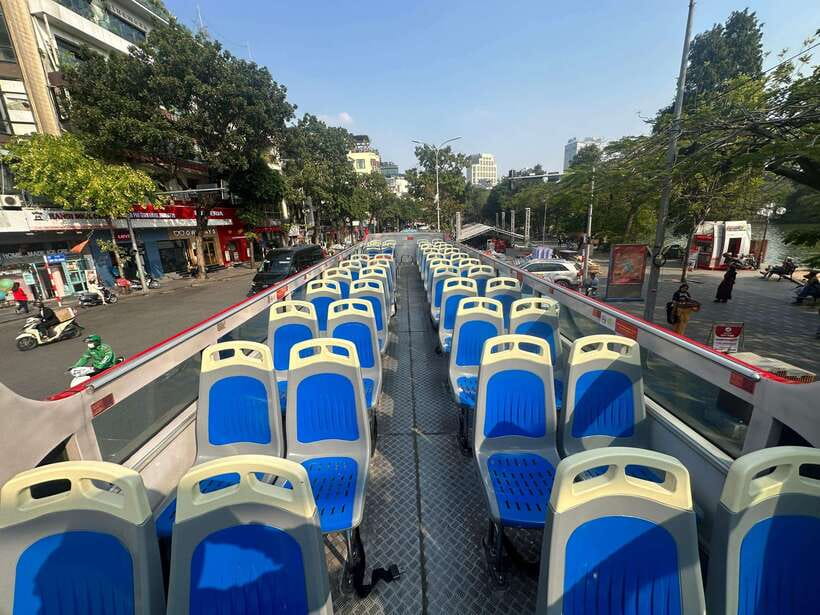
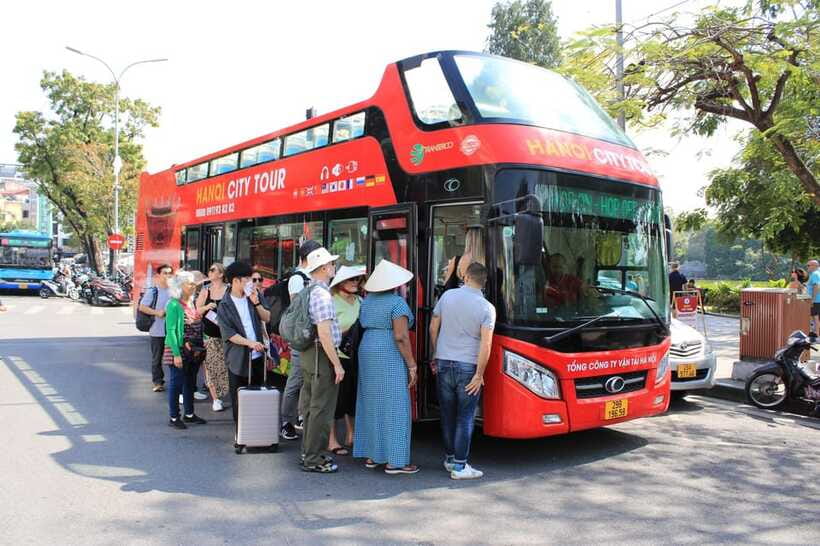
Hanoi in one hour feels like a cheat code. From a high, panoramic seat, you get sweeping views as the bus rolls past iconic landmarks and strings together the city’s long timeline with audio commentary in 8 languages. I like that you cover a lot fast. One catch, though, is that the commentary can be unreliable at times, and the tour is a non-stop loop, not a true hop-on hop-off ride.
This is a solid first pass at Hanoi if you want orientation and big photo opportunities without paying for multiple admissions. The ride loops back toward the city center, and it ends at the Hanoi Opera House, which is a nice place to keep exploring at your own pace.
Key Highlights to Know Before You Go
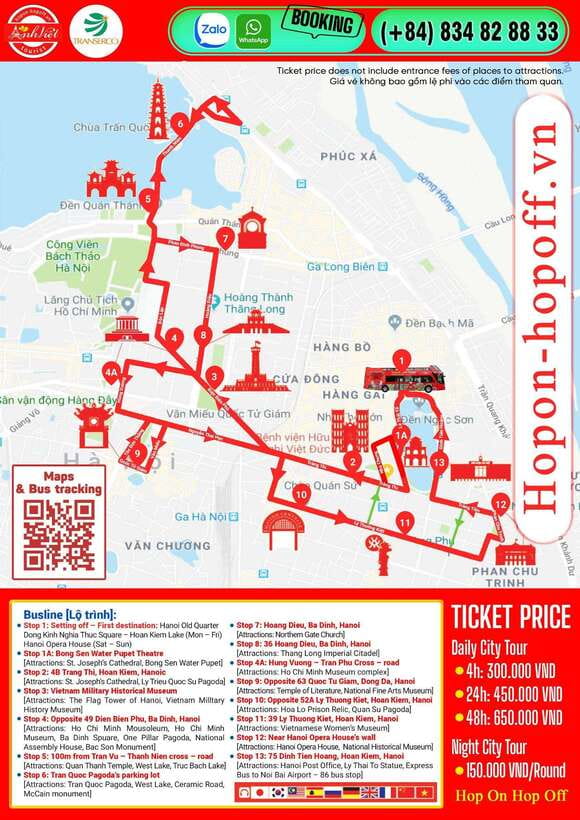
- A one-hour, non-stop panorama loop that hits more than 20 famous sights without the hassle of hopping in and out.
- Ba Dinh Square and the Ho Chi Minh Complex from above, giving you an easy “first look” at one of Vietnam’s most important areas.
- Hoan Kiem Lake and St Joseph Cathedral views, perfect for grabbing context before you walk the Old Quarter.
- Thang Long Imperial Citadel and Temple of Literature area pass-by, so you can understand Hanoi’s layers of power and learning.
- Free extras that matter in the field, like water, a conical hat, and a rain coat, plus onboard Wi-Fi.
- Audio guide in many languages, but plan to be flexible if the sound is not synced perfectly.
One Hour, 20 Plus Stops: How the Hanoi Loop Works
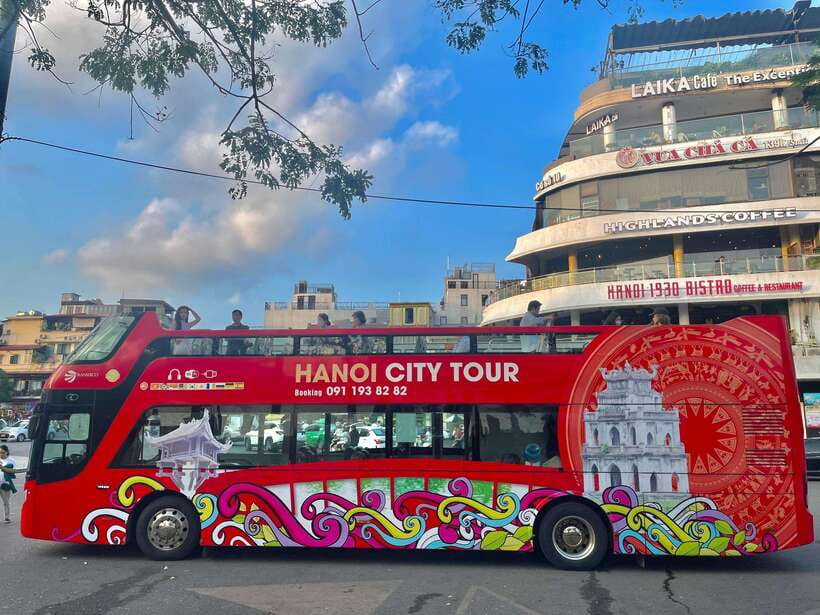
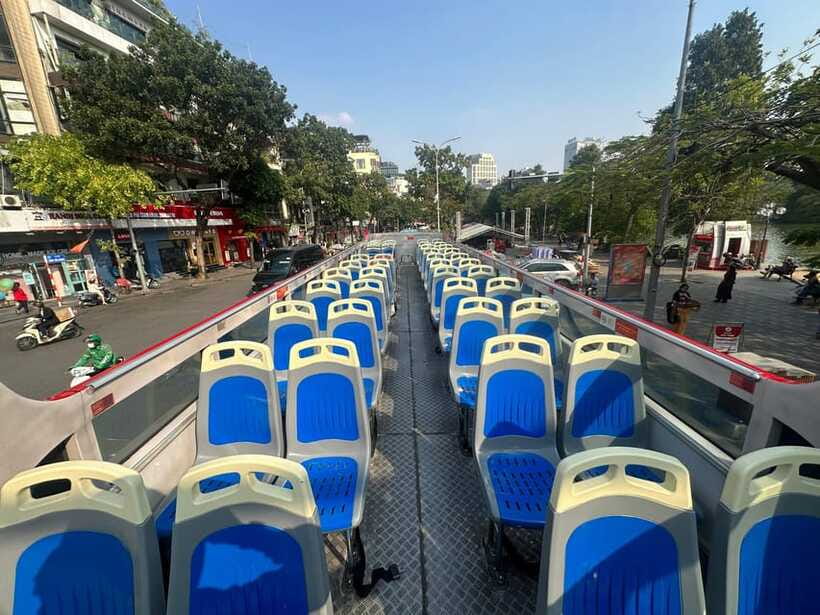
This tour is built for people who have limited time but still want the main story of Hanoi. The bus runs on a tight loop that lasts about 1 hour, and it is designed so you can see a lot of different neighborhoods in a single pass. You sit up high on the open-top bus, which is a big deal in Hanoi, because streets can feel chaotic at ground level. From above, you read the city like a map.
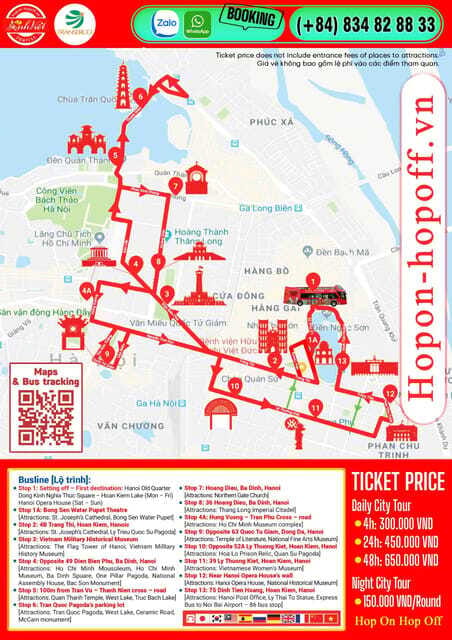
The route is packed with landmarks you already recognize, even if you do not know their history yet. You pass sites tied to Vietnamese independence and government at the Ba Dinh area, then swing back toward the older religious and cultural zones. Along the way you also get “Hanoi in layers” visuals, from historic buildings to museums and civic structures.
Two practical things I like about this format. First, you get a ready-made route, so you do not have to plan every turn. Second, you get a steady stream of commentary while you ride, which helps your brain connect what you see with what it means.
The main drawback is also practical: this is non-stop. The tour is not set up for you to jump off to take long walks or to return to the same stop later. You get access once during the loop, and if you step off, you cannot climb back on for the rest of the circuit. If you know you want to enter buildings, you will still need a separate ticket plan.
You can also read our reviews of more tours and experiences in Hanoi.



Where You Start, Where You End: Dong Kinh Nghia Thuc Square to Opera House
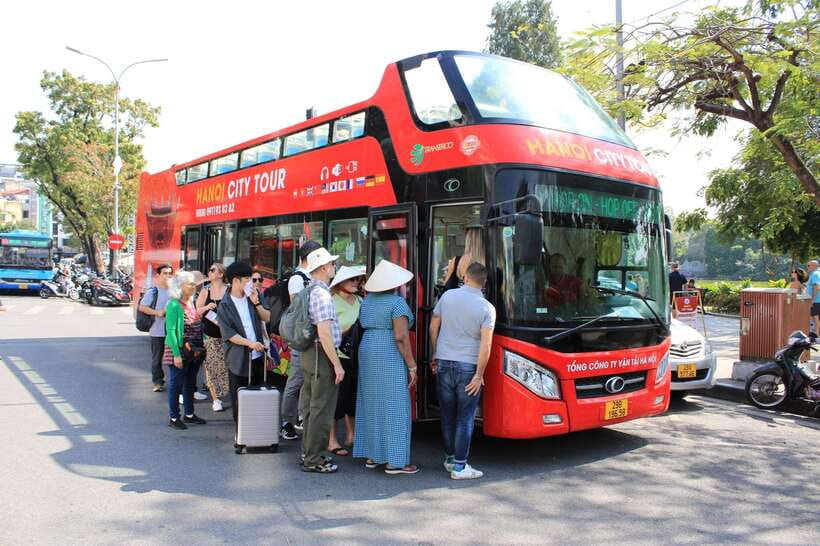
Your experience starts near the center, at Dong Kinh Nghia Thuc Square, 7 Dinh Tien Hoang. On Monday to Friday, you meet at this square up to 7:00 pm. For the Friday night run, plus Saturday and Sunday, pickup is at the Hanoi Opera House from 7:30 pm.
I find that meeting points can make or break a short tour like this. One detail to watch: it may involve swapping or checking your mobile ticket at a counter near the lake area before you board. On my list of “don’t waste time” tips for Hanoi, this is one. If you are asked to change your ticket or barcode at a counter, give yourself a few extra minutes, because the counter area can be a short walk from the posted meeting spot.
The ride ends at the Hanoi Opera House, which is a good tactical win. You finish in a major landmark area where you can continue on foot into nearby streets, or use transport to reach the Old Quarter and museums you still want to see up close. Finishing at a central, recognizable place also helps if you are coordinating with friends.
If you are aiming for photos, think about your own rhythm. The bus is on the move, so you will not linger at each site. Have your camera ready during the approach to big landmarks, and do not wait until you are right next to the building.
Ba Dinh Square and Ho Chi Minh Complex: The Big-City View
One of the highlights here is a panorama view of Ba Dinh Square and the Ho Chi Minh Complex. From an elevated seat, you can take in the scale of this part of Hanoi without getting stuck in slow traffic near the gates.
Why this matters for first-time visitors is simple. Ba Dinh is not just another attraction. It is a major reference point for Vietnam’s modern history and national identity. Seeing it from the bus gives you immediate spatial understanding. You learn how the open spaces and monumental buildings relate to the surrounding streets.
What you likely get on the pass is a sweeping look rather than a deep visit. So treat it like the orientation stage. If you want to go inside specific areas later, you can plan that based on what you saw here. That is the real value of a fast loop, it helps you decide what to prioritize afterward.
If you are short on time, this portion helps you avoid the common mistake of only seeing Hanoi as Old Quarter streets and lake scenery. You get the “official Hanoi” perspective too, which makes the rest of the city feel more connected.
Old Quarter Buzz, Hoan Kiem Lake, and St Joseph Cathedral Views
Hanoi often sells itself on two things: the lake and the Old Quarter vibe. This tour hits both, and from above you can frame your photos and your walking route.
You pass Hoan Kiem Lake, and you also catch big sightlines related to the Hanoi Old Quarter atmosphere. Even when you do not get out, seeing the shoreline and the surrounding road layout gives you a better sense of where the Old Quarter sits in relation to the rest of the city.
You also ride past St Joseph Cathedral, which is one of those landmarks you recognize instantly once you see the façade. From the bus, you can take in the building’s position in the broader street grid. It is not the same as standing on the square itself, but it is enough to help you decide if you want to return later for a closer view.
I like that this part of the ride balances scenic charm with easy wayfinding. When you later walk, you will feel like you already know where you are. That confidence can save you hours, especially if you are trying to fit markets, coffee stops, and a museum visit into one day.
One warning if you care about audio matching what you see. Some riders have experienced audio issues, so if you notice the commentary lagging behind the sights, focus on the visuals first. The landmarks are obvious enough that you will not feel totally lost, but you might miss a bit of the story if you rely on perfect audio syncing.
Hanoi’s Faith and Power Signs: Flag Tower, Quan Thanh Temple, Cua Bac Church
Hanoi’s streets show different layers of belief and civic identity, and this bus loop gives you a quick survey. You pass by the Hanoi Flag Tower, Quan Thanh Temple, and Cua Bac Church, among others.
The Flag Tower area helps you understand the city’s government-linked landscape. It also signals that Hanoi is not just a romantic walking city. It has ceremonial spaces and formal zones that shape daily rhythms.
Quan Thanh Temple adds a cultural and religious angle. A temple can feel small if you only ever see it from the sidewalk. From the bus, you get a clearer sense of its place within the wider neighborhood. That helps you appreciate how religious sites anchor community life, even when modern roads cut around them.
Then you get Cua Bac Church, which provides contrast. Christian architecture here sits in a very Vietnamese urban setting, and from above you can see how the church fits into surrounding streets. That mix is one of the reasons Hanoi works so well for people who like history but also enjoy street-level character.
If you want a simple strategy: use this portion to decide what kind of follow-up you want. If you love religious architecture, put a closer visit on your next day. If you prefer civic history, plan your deeper time around the national areas you glimpsed earlier.



Temples, Pagodas, and Education: Tran Quoc, Thang Long Imperial Citadel, Temple of Literature
This is where the tour turns from “wow sights” into “I get the story now.”
You pass key sites including Tran Quoc Pagoda and the Imperial Citadel of Thang Long area, along with Temple of Literature. Even without entering, you can understand the theme. Hanoi has been a center of learning, governance, and spiritual practice for centuries.
Tran Quoc Pagoda is visually distinct, and seeing it from the bus helps you understand why this is such a well-known spot. Pagodas tend to draw attention not just for their design, but for their connection to the city’s water and atmosphere. From above, you can pick out the location cues that later make it easier to find the pagoda again on foot.
The Imperial Citadel of Thang Long is a big one. The bus view is a reminder that Hanoi’s history is not a single era. It is layered, with different periods leaving visible marks. When you later read or visit, you will recognize the zone faster because you already saw where it sits.
Temple of Literature continues the education theme. It is one of the places people tend to plan for a closer look because it carries strong cultural meaning. Seeing it from the bus helps you judge how much time you want to spend. If the grounds interest you, you can commit a proper visit later. If not, you still come away with the mental map of Hanoi’s learning heritage.
This is also a good time to remember the tour’s limits. The loop is about passing by, not going deep inside each stop. So treat these views as your shortlist builder. You might spot a temple you want to return to at a quieter hour, or a historic site that deserves more time than you first planned.
Hoa Lo, Women’s Museum, and the Modern City Story

The route also includes pass-by coverage of Hoa Lo Prison and the Vietnam Women’s Museum, along with other central institutions like Hanoi Opera House and the Hanoi Post Office area.
This portion changes the mood. It is not only old temples and classic streets. It is Hanoi as a city shaped by modern history and by institutions that document social change.
Hoa Lo Prison is a high-impact name. Even from a bus window, it prompts reflection because it represents a painful chapter. You do not need a full visit during this one-hour loop. But seeing the site can help you decide if you want the heavier, deeper context during your next hours in the city.
Vietnam Women’s Museum adds a different kind of focus. It highlights stories beyond the usual political monuments. From the bus, it is a quick window into the idea that Hanoi has museums that aim to tell broader social narratives.
Why I think this makes the tour valuable for your planning: it helps you avoid spending all your time only on the postcard version. In one hour, you get a mix of civic power, religion, and museum-level history. That mix is what makes the rest of your days feel more intentional.
Opera House Finale: How to Keep Exploring After the Loop
When the bus finishes at the Hanoi Opera House, you are set up to continue without starting from scratch. The Opera House is central, recognizable, and close enough to help you transition into walking, or into whatever transport you prefer next.
I like finishing at a landmark like this because it reduces decision stress. You do not end in some random edge of town where you still have to figure out how to get back. You end at a place people already use as a reference point.
After the loop, you can use your new mental map to choose your next stop. If you noticed a cathedral you want a closer photo of, you now know which direction to head. If you saw a museum you care about, you can plan to return with more time and proper tickets.
If the audio guide was a bit off during the ride, no problem. Use the bus loop as your visual anchor, then rely on in-person signage and your own reading once you arrive. The tour is primarily an orientation tool, and the Opera House landing makes it easy to pivot into a deeper day.
Audio Guide Reality Check: Don’t Panic if It Glitches

This tour includes an audio guide with commentary in multiple languages, including English, French, German, Spanish, Russian, Japanese, Korean, and Vietnamese. That is a strong feature for visitors who want context but do not want to hire a separate guide.
Still, the ride has a few real-world audio issues. Some riders have reported missing audio at boarding, and others have reported crackling noise or commentary that did not line up perfectly with what the bus was passing at the moment. That can be frustrating if you are counting on the narration to stay perfectly timed.
Here is how to protect your experience without overthinking it:
- At boarding, check that your audio is actually working and that you can hear it clearly.
- If the audio is crackly or unclear, switch to watching the landmark first and treat the commentary as optional extra rather than the main source.
- If you notice the narration lagging behind, you can still benefit from the visual cues, because the landmarks are recognizable and the loop covers major areas.
This is one of those “great idea, mixed execution” cases. The tour is still useful, but you should go in with flexible expectations and not assume everything will be perfectly synced.
Price and Value: Why $7 Can Feel Like a Deal
At $7 per person for a one-hour, panoramic loop, the value comes from compression. Instead of paying for multiple rides, or spending your day trying to find the right streets, you get a guided pass over a large set of major sights in a compact time window.
Also, the included add-ons make the price feel more comfortable in Hanoi conditions. You get free water, a conical hat, and a rain coat. Hanoi weather can change quickly, and having that gear ready can save you from last-minute stress.
You also get a city map and free Wi-Fi. The map is especially handy after the loop, because it helps you connect the route you saw from the bus with the places you want to walk next.
One thing you should not assume: entrance fees are not included. That means you are not buying a ticket to go inside everything. You are buying the ride and the pass-by context. If you want to see museums or enter historic sites, plan for extra costs and extra time.
Still, for the price point and the number of landmark passes, this tour can be a smart way to spend an hour, especially if you are juggling a full itinerary.
Who This Tour Fits Best, and Who Should Skip It
I think this works best for you if you are:
- A first-time visitor who wants a fast orientation.
- A time-crunched traveler who needs to see Hanoi’s major sights without packing every day with walking.
- Someone who likes structure, because the loop gives you a clear route and audio context while you ride.
It might not be the best match if you:
- Want a traditional hop-on hop-off plan where you can step out for an extended stop and come back later.
- Rely heavily on perfectly synced audio narration and cannot handle glitches.
- Are traveling with items that are not allowed on the bus, like oversize luggage, baby strollers, mobility scooters, bikes, or alcohol.
Also, remember it is a single pass loop. If you are the kind of traveler who always wants to stop for a photo for 10 minutes, you might feel rushed. A workaround is to use the bus loop for your first look, then book or plan your on-foot revisit afterward.
Should You Book This One-Hour Hanoi Open-Top Bus Tour?
If you want a quick, affordable snapshot of Hanoi’s top highlights, I would book it. It is one of the easiest ways to build a mental map of the city, especially with the included audio options, free water, and weather gear.
But if your ideal day is slow, flexible, and built around long stops, choose a style of tour that lets you hop out and back in. And if you are sensitive to audio issues, go in knowing you might need to rely on visuals more than narration.
My best advice is simple: use this hour for orientation. Then spend your next hours going deeper, on your own terms, at the sights that truly grabbed you from the bus.
FAQ
How long is the Hanoi bus tour?
The tour lasts 1 hour for the full loop.
Is this a hop-on hop-off tour?
No. It is a non-stop loop and you get access one time. If you get off, you cannot get back on.
Where do I meet for the tour?
You meet at Dong Kinh Nghia Thuc Square, 7 Dinh Tien Hoang (Monday to 7:00 pm Friday). From 7:30 pm Friday, plus Saturday and Sunday, pickup is at the Hanoi Opera House.
What is included in the ticket price?
The ticket includes the bus tour, a city map, free water, a conical hat, a rain coat, free Wi-Fi, and an audio guide. It also includes bus insurance.
Are entrance fees included?
No. Entrance fees are not included.
What languages are available on the audio guide?
The audio guide includes Chinese, English, French, German, Japanese, Korean, Spanish, and Vietnamese.
Is the bus wheelchair accessible?
Yes, the tour is wheelchair accessible.
More Tour Reviews in Hanoi
Not for you? Here's more nearby things to do in Hanoi we have reviewed












More Hanoi City Tours to consider.
 ★ 5.0Hanoi Jeep Tour: Food, Culture and Fun by Vietnam Army JeepTickets from $5515,222 traveller reviews
 ★ 5.0Full-Day Ninh Binh Highlights Tour from HanoiTickets from $797,761 traveller reviews
 ★ 4.7Ha Long Bay Day Cruise – Swimming, Meal, KayakingTickets from $417,415 traveller reviews
 ★ 4.6Water Puppet Show TicketsTickets from $77,029 traveller reviews
 ★ 5.0Hanoi Motorbike Tour: Food, Culture and Fun by Vintage MotorbikeTickets from $556,699 traveller reviews
 ★ 4.9Guided Food Tour with Train Street VisitTickets from $196,239 traveller reviews
 ★ 5.0Hanoi Cooking Class: Culture, Local Market & Meaning CSR ImpactTickets from $395,147 traveller reviews
 ★ 5.05 Traditional Dishes Hanoi Cooking Class with Market TripTickets from $354,890 traveller reviews