
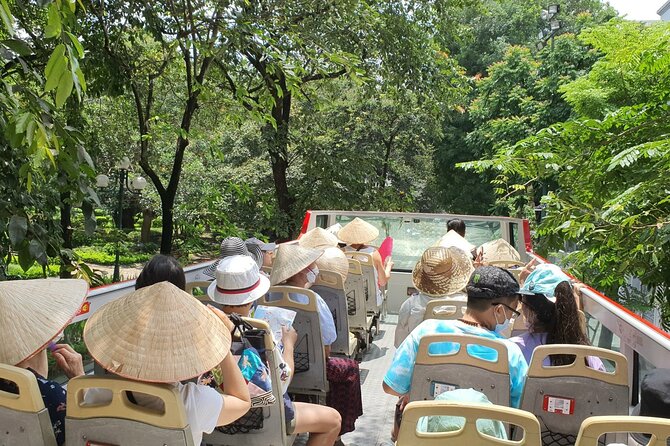
Review · HANOI CITY TOURS
Full-Day Hop On Hop Off Bus Tour in Hanoi
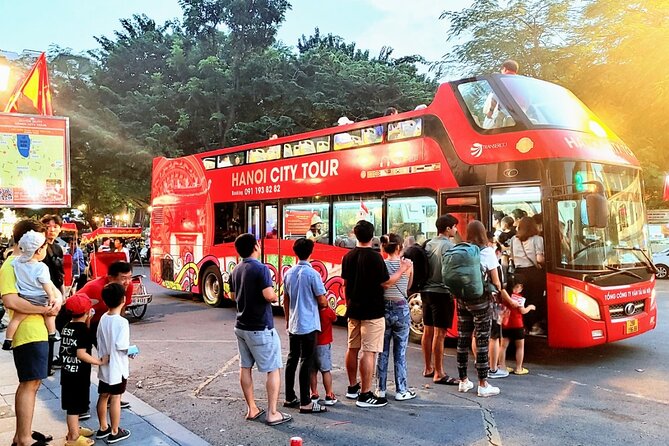
This bus is your Hanoi safety net. If it’s your first time in town, the hop on hop off loop gives you an easy way to shape a full day around what you care about, not what fits on a tight schedule. I like the air-conditioned ride with onboard WiFi, and I love that you can stack big sights with no extra entry fees at places like St. Joseph Cathedral and One Pillar Pagoda.
One thing to factor in: the experience can be a little less smooth than the concept sounds. Ticket checks at the office may take time, and the bus timing and audio can be imperfect, so I suggest building in a little buffer and walking time.
Key Things To Know Before You Ride

- A full-day loop built for choices, not a one-and-done checklist.
- Comfort perks on board, including air-conditioning, WiFi, bottled water, and rain gear.
- Free stops you can use to save money, especially St. Joseph Cathedral and One Pillar Pagoda.
- Paid attractions stack fast, so decide in advance what you truly want to enter.
- Some stops mean short walks, so wear shoes you can move in.
- Route and timing can change, because traffic, holidays, and weather happen in Hanoi.
Price and What You Really Get for $20
The ticket price is $20 per person for an approximately one-day hop on hop off ride in Hanoi, offered in English. That price is best understood as paying for transportation, onboard comfort, and the convenience of getting from one end of the sightseeing zone to the other without constantly negotiating rides.
Here’s what you get for that base ticket: air-conditioned vehicle, WiFi on board, conical hat and rain coat, insurance for passengers on the bus, a city map, and bottled water. The operator also supports plastic reduction by providing a 20-liter water container and paper cups, so bring a reusable bottle to refill.
What’s not included matters just as much. Several top sights charge entry fees in Vietnam dong, and those fees are listed as not included. If you plan to go inside every paid stop, your day can get pricey quickly. If you’re happy with exterior views at a couple of places and pick a few museums and temples to enter, this ticket can feel like a smart value.
More Hanoi tours and experiences for the shortlist
- Ninh Binh Full-Day Tour from Hanoi to Hoa Lu, Tam Coc & Mua Cave Via Boat & Bike
★ 5.0 · 4,384 reviews


Where You Start: Dong King Nghia Thuc Square Meeting Point

Your starting point is the Dong King Nghia Thuc Square, No 7 Dinh Tien Hoang, where there is a ticket box for the tour. This is the kind of location where you’ll want to arrive a bit early so your first hop is painless.
Also, I’d plan for some real-world friction at the beginning of the day. One experience reported a slow ticket verification process at the booking office, with delays around half an hour while staff confirmed the booking. It’s not the end of the world, but if you’re trying to start at a very specific time, arrive early and stay calm.
Using the Hop On Hop Off System Like a Pro
This is a hop on hop off format, so you can get off, sightsee, then get back on later. For me, the win is control. You’re not forced to keep pace with other people, and you can stop for a photo, a temple visit, or a museum without turning the whole day into a sprint.
You will still need to manage pacing. Some destinations require a bit of walking from the bus stop. If you’re traveling with kids, have mobility concerns, or you just don’t want to do extra walking, keep your priorities tight. Pick a couple of “must-enter” stops and use the rest for quick visits and photos.
Be aware that route timing can be inconsistent. I’d treat bus schedules as flexible. Hanoi traffic, public holidays, and weather can change the route or reduce frequency, so give yourself breathing room rather than expecting perfect on-the-minute departures.
St. Joseph Cathedral: A Free French Colonial Landmark
One of the simplest wins on this route is St. Joseph Cathedral, an old centerpiece of Hanoi’s French colonial era. It was built in 1884, with opening connected to the December 1886 timeframe, and it resembles the style of Notre Dame de Paris. It’s also noted as the oldest church in Hanoi.
The best practical part: there’s no entrance fee. That means you can step in, take photos, and get a feel for the scale without adding costs. It’s also a good stop if you want a quick cultural break before moving into more intense sites later, since churches are often calm compared to museums and history attractions.
Flag Tower and the Hanoi Citadel Area: What You’re Paying For
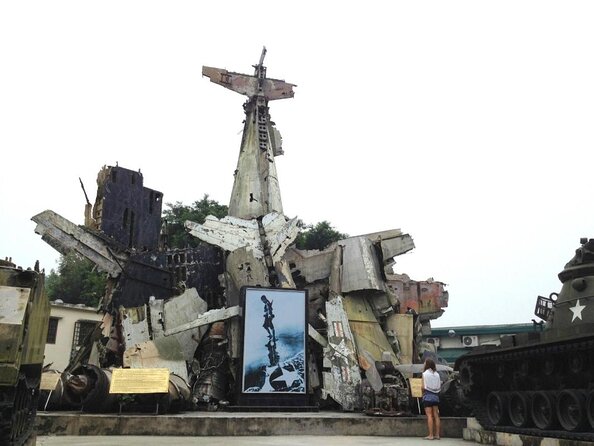
The tour includes the Vietnam Military History Museum stop, but the description you’ll encounter focuses on the Flag Tower of Hanoi. The key detail here is survival. The flag tower is described as one of the rare architectural works in the Hanoi Citadel that was fortunate enough to not be destroyed during French domination administration between 1894 and 1897.
This is exactly the kind of site where you want to understand why it matters. A structure like this isn’t just pretty. It’s a physical marker of what endured, which helps you read the city as more than a list of buildings.
This stop has an added cost if you want to access it: 30,000 VND for the flag tower is listed as not included. If you’re trying to keep spending down, you may still enjoy the exterior and nearby viewpoints, then decide on entry based on your time and budget.






Ba Dinh Square and Ho Chi Minh’s Mausoleum (Entry Fee Applies)

The tour heads to Ho Chi Minh’s Mausoleum, located in the center of Ba Dinh Square. This is a major political and historical anchor in Hanoi. The description also calls out that Ho Chi Minh read the Declaration of Independence on September 2, 1945, which helps place the site in the larger story of modern Vietnam.
If you want to go inside, budget for the entry fee listed as not included: 25,000 VND for the mausoleum. Since it’s a paid stop, I recommend deciding early how much time you want to spend here, because the rest of your day can easily balloon if you add too many ticketed attractions.
One Pillar Pagoda: A Free Temple You Can’t Skip
The One Pillar Pagoda is one of Hanoi’s iconic spiritual sites, and the tour includes it with a big advantage: no entrance fee. The structure is the whole story, a temple laid on one pillar. The original pagoda is described as built in 1049, with additions and perfection in 1105.
If you only do a few indoor or close-up temple stops in your day, this is a smart one. It’s iconic, easy to recognize, and it gives your sightseeing a different texture than museums.
A practical note: even when a place is free, you may still spend time waiting or moving through crowds. Treat it as a “time-boxed” stop, and you’ll enjoy it more rather than feeling rushed.
Tran Quoc Pagoda and Quan Thanh Temple: Old Faith, Big Meanings
The route includes Tran Quoc Pagoda, described as the oldest pagoda in Hanoi, originally constructed in the sixth century during Emperor Ly Nam De’s reign (from 544 to 548). That makes it over 1,500 years old, and that kind of age changes the way you look at the grounds, even if you’re not into architecture.
Entry is listed as not included: 5,000 VND for Chua Tran Quoc. If you’re doing a careful budget, this is one of the cheaper paid stops on the list, so it’s often a reasonable choice.
Then you’ll also have Quan Thanh Temple, dedicated to Tran Vu, the Taoism deity of the North. The tour notes the serpent and turtle symbolism, plus the idea that the temple is one of the Four Sacred Temples built to protect the capital from malevolent spirits. That context is helpful, because it gives you a reason to notice details instead of just walking past them.
Quan Thanh Temple has an entry fee listed as 10,000 VND, not included. If you’re already temple-tired, you can still get value from the explanation and focus on a shorter visit.
Yen So Park Area and Cua Bac Church: A French-Designed Catholic Presence
One stop pairs the Yen So Park area with Cua Bac Church. Cua Bac Church is described as a Roman Catholic church built in 1932 by the French administration of Indochina, as part of Hanoi’s urban plan supervised by Ernest Hébrard.
This is a good stop for two reasons. First, it adds variety to a day that can otherwise stay locked on pagodas and war history. Second, it links Hanoi’s modern city planning with the religious architecture that still shapes neighborhoods today.
Entry fees are not listed for this church in the not included section, so you’re likely visiting it for free or on a no-ticket basis. Since the tour data doesn’t spell out admission, I’d treat it as a mostly exterior and photo stop unless you see a ticketing gate when you arrive.
Thang Long Imperial Citadel: Big Focus on Independence
The Imperial Citadel of Thang Long is included as a major stop, and the description is surprisingly clear about what to notice. It was built in the 11th century by the Ly Viet Dynasty, marking the independence of the Dai Viet. It was constructed on the remains of a Chinese fortress from the 7th century, on land reclaimed from the Red River Delta.
If you like sites where you can picture the layers, this stop is worth entering. You’re not just looking at a wall. You’re looking at a city’s changing story, from earlier fortifications to later Vietnamese independence.
This is a paid stop: 30,000 VND for the Imperial Citadel of Thang Long is listed as not included. For value, I’d consider entering if you have at least a little time and if the idea of layers and continuity appeals to you.
Temple of Literature: Confucius and Vietnam’s First National University
Next up is the Temple of Literature, also known as Van Mieu. It’s dedicated to Confucius and also hosts the Imperial Academy, described as Vietnam’s first national university. The temple was built in 1070 under Emperor Ly Thanh Tong.
This is one of those stops where a quick visit works, but an entered visit works better. The more you connect Confucius, education, and the Imperial Academy idea, the more meaningful the architecture and layout feel. Even if you don’t read Vietnamese signage, the overall concept helps.
The entry fee is listed as not included: 30,000 VND for Temple of Literature and National University. If you’re deciding between this and another paid museum later, I’d pick based on your interests. If you want a calm, reflective stop, this is it.
Hoa Lo Prison: The Heavy Stop You Should Plan for
Hoa Lo Prison is included, and it’s one of the more emotionally loaded stops on the route. The tour describes the site as a prison used by French colonists for political prisoners, and later by North Vietnam for U.S. prisoners of war during the Vietnam War. American POWs called it the Hanoi Hilton.
The tour also notes that the prison was demolished in the 1990s, though the gatehouse remains as a museum. That detail is important. You may not be walking through the whole historic layout, but you will be seeing what’s preserved, and the stories still land.
Entry is listed as not included: 30,000 VND for Hoa Lo Prison. I suggest planning your mood for it. If you’re exhausted, it can feel harder. If you’re rested, it becomes a powerful context stop that gives you a clearer lens on modern Vietnam.
Vietnamese Women’s Museum: Social Stories Through Artifacts
The tour includes the Vietnamese Women’s Museum, established and operated by the Vietnam Women’s Union, opening to the public in 1995. The description highlights a collection of more than 40,000 materials and artifacts, plus permanent exhibits and themed exhibitions using an approach linked to social anthropology.
This isn’t just about one era. The tour description says themed projects target vulnerable women and disadvantaged children. If you like museums that connect personal stories with bigger social change, this is the kind of stop that can stick with you.
Entry is listed as not included: 40,000 VND for the Vietnamese Women’s Museum. That price can feel steep compared with temples, but it may be worth it if you want a broader, people-focused perspective.
Hanoi Opera House and the Post Office by the Lake
Two French-era civic landmarks close out the route with a more “city center” feel.
The Hanoi Opera House, also called the Grand Opera House, was erected by the French colonial administration between 1901 and 1911. The tour notes it as one of three opera houses the French built in Indochina, with Haiphong Opera House and the Municipal Theatre in Ho Chi Minh City as the other examples.
Then comes the Hanoi Post Office, also listed under a stop at 75 Dinh Tien Hoang. The description calls it more than 100 years old and the symbol of the capital. It was designed and built by Henri Vildieu from 1894 to 1899, and it’s known for the familiar nickname Post office by the lake. This is a great final stop if you want a photo moment and a reminder that Hanoi’s French planning left real architecture behind.
Practical Tips for Your Day on the Bus
This tour is built for moving across town without a full-time driver, but you still need to travel smart.
First, pack for weather. You’ll receive a conical hat and rain coat, but you’ll still feel better if you wear breathable layers and keep small wipes or tissues handy.
Second, bring a reusable bottle. The operator supplies a large water container and paper cups to reduce plastic waste, but the instruction is clear: bring your own reusable bottle to refill.
Third, don’t plan only on audio. One report said the audio was insightful but not always in sync with where the bus actually was. I’d treat the audio as helpful background, then look out the window for stop landmarks.
Finally, keep your expectations flexible. The operator warns that traffic congestion or road closures can lead to delays, reduced frequency, or route alterations. You’ll enjoy the day more if you decide that you’re doing a sightseeing circuit, not a timed checklist.
So, Should You Book This Hanoi Hop On Hop Off?
I’d book this tour if you’re visiting Hanoi for the first time and you want an easy overview day. The base ticket value comes from comfort perks, WiFi, a map, and the fact that key sights like St. Joseph Cathedral and One Pillar Pagoda are free to enter. That combination helps you build a full itinerary without nickel-and-diming every stop.
I’d think twice if you’re extremely schedule-sensitive or if you want flawless execution. There are reports of delays related to ticket verification and issues with bus cleanliness, broken windows, or audio not working on some vehicles. The route can also shift on weekends, and timing can slip due to traffic.
If you’re flexible, arriving early, and picking a few paid attractions to enter, this is a practical way to see a lot of Hanoi in one day without burning time chasing transport.
FAQ
How much is the Full-Day Hop On Hop Off Bus Tour in Hanoi?
It costs $20.00 per person. The tour runs for about one day.
Is the tour offered in English?
Yes, it is offered in English.
Do I get WiFi and water on board?
Yes. WiFi is included on the bus, and bottled water is provided. The operator also supplies a 20-liter water container for refills, and you can use the provided paper cups.
What amenities are included with the ticket?
Included are an air-conditioned vehicle, WiFi on board, all fees and taxes (for the tour), conical hat and rain coat, insurance for passengers on the bus, a city map, and bottled water.
Are any stops free to enter?
Yes. St. Joseph Cathedral and One Pillar Pagoda are listed as having no entrance fee.
Which attraction entrance fees are not included?
The not included list covers: Hanoi Flag Tower (30,000 VND), Ho Chi Minh Mausoleum (25,000 VND), Chua Tran Quoc (5,000 VND), Quan Thanh Temple (10,000 VND), Imperial Citadel of Thang Long (30,000 VND), Temple of Literature and National University (30,000 VND), Hoa Lo Prison (30,000 VND), and Vietnamese Women’s Museum (40,000 VND).
Is hotel pickup or drop-off included?
No. Hotel pickup and drop-off is not included.
Can the bus route or schedule change during the day?
Yes. The operator notes that route and schedule can change due to traffic issues, public holidays, weather conditions, or unforeseen circumstances.
What if weather is poor or I need to cancel?
The tour requires good weather. If it’s canceled due to poor weather, you’ll be offered a different date or a full refund. There is free cancellation up to 24 hours in advance for a full refund.
More Full-Day in Hanoi
- Ninh Binh Full-Day Tour from Hanoi to Hoa Lu, Tam Coc & Mua Cave Via Boat & Bike
★ 5.0 · 4,384 reviews



More Tours in Hanoi
- Ninh Binh Full-Day Tour from Hanoi to Hoa Lu, Tam Coc & Mua Cave Via Boat & Bike
★ 5.0 · 4,384 reviews

More Tour Reviews in Hanoi

Not for you? Here's more nearby things to do in Hanoi we have reviewed










More Hanoi City Tours to consider.
 ★ 5.0Hanoi Jeep Tour: Food, Culture and Fun by Vietnam Army JeepTickets from $5515,222 traveller reviews
 ★ 5.0Full-Day Ninh Binh Highlights Tour from HanoiTickets from $797,761 traveller reviews
 ★ 4.7Ha Long Bay Day Cruise – Swimming, Meal, KayakingTickets from $417,415 traveller reviews
 ★ 4.6Water Puppet Show TicketsTickets from $77,029 traveller reviews
 ★ 5.0Hanoi Motorbike Tour: Food, Culture and Fun by Vintage MotorbikeTickets from $556,699 traveller reviews
 ★ 4.9Guided Food Tour with Train Street VisitTickets from $196,239 traveller reviews
 ★ 5.0Hanoi Cooking Class: Culture, Local Market & Meaning CSR ImpactTickets from $395,147 traveller reviews
 ★ 5.05 Traditional Dishes Hanoi Cooking Class with Market TripTickets from $354,890 traveller reviews