
Review · HANOI
Vietnam in 17 Days | Stunning Beauty & Rich Culture |Top Packages
Vietnam hits hard in 17 days, in the best way. This small-group-style tour strings together iconic sights with a few classic Vietnam “you have to see it” moments, from Halong-Lan Ha to Sapa trekking and then down to the Mekong Delta.
I really like two things most. First, the planning feels tight without feeling rushed, and the team support is clearly a priority, including help from agents such as Tran Son and Hang. Second, you get a big chunk of the trip taken care of: flights, guides, transport, entrances, and plenty of meals, which helps keep your budget predictable. The main drawback to consider is the pace. You will move cities often, and some days start early, so if you want long, lazy mornings every day, this route may feel like a lot.
Key Highlights to Know Before You Go

Halong-Lan Ha cruise includes morning deck time with Tai Chi and a chance to catch sunrise views.
Sapa trekking is built around real villages like Lao Chai and Ta Van, not just a photo stop.
Fansipan plus Cat Cat Village adds variety from high-altitude views to traditional hillside life.
Overnight train segments reduce lost time so you can spend days sightseeing instead of just traveling.
Your on-the-ground team stays reachable with fast communication praised in past trips, especially via Tran Son and Hang.
Why This 17-Day Vietnam Route Works for Most People

This is the kind of itinerary that makes sense if you want the “big Vietnam” hits in one go. You get north, the mountains, central Vietnam classics, then the coast and the south, without having to stitch multiple separate tours together yourself.
The value is not just the sightseeing list. It is also the logistics muscle. You are moving by car, boat, train, and domestic flights, yet the schedule keeps handing you the next step in a way that is hard to DIY without lots of time and local help.
That said, it is still a fast-moving trip. If you like changing plans daily, you might feel slightly boxed in. If you like clear structure, this will feel like a relief.
You can also read our reviews of more tours and experiences in Hanoi.



Hanoi Start: Airport Pickup and Two Easy Pacing Moments
Day 1 is straightforward: you land at Noi Bai International Airport and get picked up, then transferred to your accommodation. If you land tired, that first human handshake matters more than people think.
In the afternoon, you get free time in Hanoi. This is useful because Hanoi is one of those cities where you either take the first day to reset, or you burn energy trying to cram it all in.
By the end of the next day, the tour pivots to big scenery and an overnight train. If you enjoy eating light and sleeping early, Hanoi’s timing will work well.
Halong-Lan Ha Cruise Days: Tai Chi, Sunrise Views, and a Boat Day Done Right

The Halong-Lan Ha section starts with a pickup from Hanoi to Ha Long, then a port transfer at Tuan Chau. From there, you board a cruise that moves through two areas: Lan Ha Bay and Halong Bay.
This part is appealing because it is not only a “sit and take photos” cruise. You get a full schedule rhythm: lunch on board, sightseeing time, plus additional stops such as visiting places listed in the plan like Ba Trai Dao areas. The exact pacing can vary based on conditions, but the structure is there.
Day 3 begins early with Tai Chi on the deck. If the weather cooperates, you can watch the sunrise from the sundeck. After that, you return to Hanoi and shift gears again toward the train.
One consideration: boat days can be cooler or breezy. Bring a light layer even if Hanoi feels warm earlier in the trip.
Overnight Trains to Sapa: Efficient Travel, Expect a Real Night

After returning to Hanoi, you head to Hanoi Train Station in the evening and ride overnight. The next morning you arrive at Lao Cai Train Station and transfer to Sapa.
Then, a similar pattern happens in the other direction later. After Sapa, you return to Lao Cai, board an overnight train back to Hanoi, and then reset in a hotel in the capital.
Why you will likely like this approach: it saves you a day of pure travel. You get a night “spent” moving, and the daytime stays available for scenery and villages. The trade-off is simple. Overnight train rides can be hit-or-miss depending on your sleep style.
If you know you sleep lightly, pack an easy sleep kit and plan to nap later. If you are a solid sleeper, this will feel like a smart use of time.
Sapa Trek Loop: Lao Chai and Ta Van Village Time

In Sapa, you transfer to the town first, store luggage, and then head out on a trek that focuses on Lao Chai and Ta Van villages. This is one of the best parts of the trip for people who like culture that feels lived-in.
You are walking in the Muong Hoa Valley area, which is exactly the kind of setting where your photos will look better because the place is doing the work for you. The goal is not to speed-run the villages. The plan gives you time to experience daily life with ethnic minority communities.
What I like about this structure: you get both scenery and human scale. It is not only viewpoints. It is also the road between viewpoints.
A small practical note: the trek days can be physically demanding. Wear shoes you trust and expect uneven ground.



Fansipan Morning and Cat Cat Afternoon: A High-View Plus Old-Hill Combo

Day 5 is a two-part day. You start with a morning trip toward Fansipan, described as Indochina’s highest peak. The payoff here is big views and that “we really went up there” feeling.
Then in the afternoon, the tour shifts to Cat Cat Village. You get another trekking window plus a look at traditional life in a hillside setting.
This combo works well because it balances extremes. One moment you are thinking about height and distance, the next you are dealing with the textures of village life.
If you love photography, you will get chances at both scales: wide shots from the mountain area and closer portraits in the village. If you get tired easily, plan to take breaks without guilt. The route is scenic enough that stopping is part of the experience.
Back to Hanoi, Then Down to Da Nang: Flights That Keep the Trip Moving

After you arrive back in Hanoi from the Sapa train, a driver meets you and you transfer to a 3-star hotel where you can rest for a few hours. This kind of reset day is key on a trip like this, because you cannot keep going at full intensity without a breather.
Then you fly to Da Nang. The tour includes airport pickup and transfer to your hotel, plus free time to explore Da Nang. Later, the day includes another transfer at night to a cruise (the schedule notes this transfer step, but not all fine details are specified).
The biggest advantage of using domestic flights here is time. Without them, you would spend too much time in transit and not enough time seeing the places that make this route worth it.
Hue and the Imperial World: Imperial City, Khai Dinh Tomb, and Thien Mu Pagoda
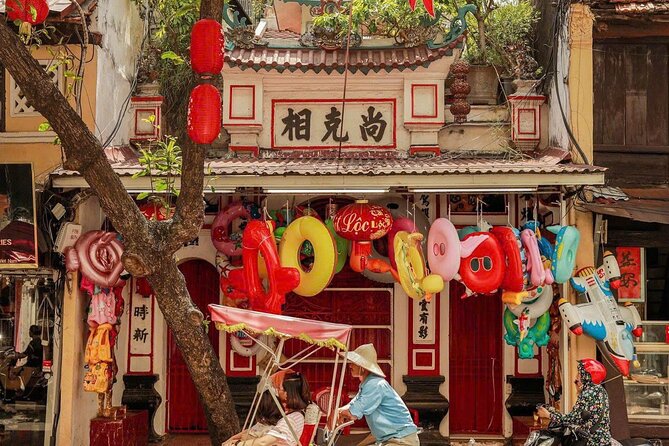
Central Vietnam days are where the itinerary feels most “classic Vietnam.” You depart Da Nang early for Hue, then visit the Imperial City, which is UNESCO World Heritage listed.
After that, you move to the Tomb of Khải Định (also referred to as Ứng Mausoleum). The plan calls out its blend of Vietnamese arc and design influences, which is exactly why this stop works for more than one kind of traveler. Even if you do not love museums, the architecture can still land.
Then comes Thien Mu Pagoda on the Perfume River. It is a quiet contrast after the imperial sites, and the seven-story pagoda is an easy landmark to anchor the day.
The payoff here is pacing through different types of history and space. You go from grand court power to a more personal, sculptural tomb setting, then to a calm river-temple atmosphere.
Hoi An Walking Time and Market Energy
You finish the Hue day by moving into Hoi An for a walking tour. The plan includes time for Hoi An’s local market area, with your tour focused on neighborhood life and local color.
If you only ever associate Hoi An with lanterns, the market stop can be a welcome reminder that this town still functions like a real place. You are not only looking at historic facades. You are seeing daily rhythms.
This is also a good time to shop for small items, try snacks, and just wander without a mission for a little while.
Marble Mountains and Coconut Forest: Nature Plus Culture Without the Hard Climb
On the next major shift, you cover Marble Mountains and the Non Nuoc Village at its base. The tour frames it as a sightseeing block built around Ngu Hanh Son.
Then you transfer to Cam Thanh and the Bay Mau Coconut Forest. This stop is interesting because it is tied to an eco-system setting, with green waters and local rhythms tied to the shoreline area.
What makes these stops worth your attention is the variety. After temples and old-world structures, you get rock formations, craft-linked village time, then water and trees.
It is a nice “reset” between the bigger cultural days, and it keeps you from feeling like you are only stacking sights back-to-back.
Da Lat Plateau Reset: Countryside Day and Slower City Time
After Da Nang, you take a flight to Da Lat. In the afternoon, you settle in, then overnight in the city.
Day 9 is a one-day countryside tour focused on nature and viewpoints, with the outline calling out a Pongour Fa… waterfall stop. Day 10 is more of a low-pressure day: relax, stroll gardens, and take a slower approach to city life.
I like this part because Da Lat is one of those places where the temperature and pace help your body recover. If you feel worn out after trains and packed sightseeing, this is the spot where your energy can come back.
Your schedule also gives you a buffer between action days. That is not an accident. It keeps the overall loop from becoming one long sprint.
Nha Trang: A Free Day Built for Water Lovers and People Who Prefer Downtime
You transfer from Da Lat to Nha Trang, check in, then get a free day. The plan explicitly lists optional ways to spend your time, including snorkeling or diving among coral reefs, hiking nature trails, and spa or rest options.
That structure matters. Instead of forcing every day into one fixed “tourist activity,” you can match your day to your energy level and interests.
If you want water time, this is a good day to plan for it. If you prefer calm, you can still get a win by enjoying the beach and simple meals without rushing from stop to stop.
Ho Chi Minh City and Cu Chi Tunnels: A Reality Check in the Afternoon
The route then flies from Nha Trang to Ho Chi Minh City. You arrive in the morning, then head out to Cu Chi Tunnels in the afternoon.
Cu Chi Tunnels are a war-era network of underground passages. The plan emphasizes learning about resilience and resourcefulness, so this is not a “quick photo” stop. You should go into it ready to pay attention.
Why this works in the middle of the trip: after mountains, bays, and markets, Cu Chi changes your perspective. It grounds the story of Vietnam in something heavier and more human.
My Tho and the Mekong Delta: Fruits, Honey Tea, and Village Music
From Ho Chi Minh City, the tour transfers to My Tho by limousine van, then shifts into Mekong Delta exploration.
The highlight here is village time with a local family home. You get tropical fruits, honey tea, and honey wine while listening to traditional Vietnamese music performed by villagers. This is the kind of stop that feels like an actual shared moment, not only a sightseeing checkbox.
Then the day continues with more local exploration stops, though the outline does not list every one in detail. Still, the key experience is clear, food plus music plus village interaction.
One practical thing: Mekong days can be hot and humid. Plan to take water breaks and wear breathable clothing.
Mui Ne: Fairy Stream, Sand Dunes, and a Long Day That Pays Off
The Mui Ne day starts with pickup from your hotel area in Ho Chi Minh City, then a road transfer to the destination area.
The plan includes Fairy Stream (Suoi Tien), described as a mini version of Red Canyon. Then you move through White Sand Dunes with a fishing village stop, so you get both scenery and a look at daily coastal life.
Red Sand Dunes come next, and the day is framed around a jeep adventure on the dunes experience. The schedule also notes a return timing window, leaving Mui Ne around 5 pm and returning to Ho Chi Minh City around 8 pm.
This is a full-day energy burn. It also tends to be one of the most memorable visual days of the trip because the colors and textures look different from place to place.
Price and Value: What $1,959 Gets You (and Why That Matters)
At $1,959 per person, this trip can feel like a lot until you look at what’s included.
Your package includes domestic flight tickets, accommodation in a private room, an air-conditioned vehicle, a tour guide, and entry fees for the included sights. It also includes many meals, with 13 breakfasts, 10 lunches, and 4 dinners covered.
That meal count is not a small detail. On long multi-city routes, buying food every day adds up fast, and it can slow you down when you are trying to keep to a schedule.
What is not included is also important for your budget planning: tips, alcoholic drinks, soft drinks, and personal expense. Those are normal add-ons, but they are worth planning for ahead of time so the total cost does not surprise you at the end.
In my view, this is priced for people who want a “guided, handled, and timed” experience. If you are the type who likes to plan every last detail and negotiate your own transport, you may be able to do it cheaper. But if you want less stress and strong structure, the math starts to look fair.
Who This Tour Fits Best (and Who Might Feel Cramped)
This tour is a great match if you want variety and you like having a plan. It suits couples, families who want a structured route, and anyone who prefers small-group coordination with a maximum of 12 people.
It is also a good fit if you want mountains, bays, temples, beaches, and river life without starting from scratch at each step.
If you hate early starts, long days, and changing cities often, you might find the pace heavy. Also, overnight trains are not for everyone, especially if you know you do not sleep well on moving transit.
Should You Book Authentic Adventures Vietnam?
If you want an organized Vietnam highlight reel with enough flexibility to breathe on free days, I think you should book it. The strongest proof is not one stop. It is the way the whole loop is handled, with consistent organization and praised responsiveness from people like Tran Son and Hang.
I would book this itinerary if you like meeting multiple sides of Vietnam in one trip, and you are comfortable paying for smooth execution. I would skip it if your ideal travel style is slow, local, and unstructured every day.
In short: if you want your days to run well and your photos to come with context, this is a smart pick.
FAQ
Is pickup included at the start of the trip?
Yes. The tour notes pickup after you arrive at Noi Bai International Airport, plus transfers between major legs throughout the journey.
What is the duration and approximate trip length?
The tour is listed as 16 days (approx.), with an overall theme of a 17-day Vietnam package.
What does the price include?
The package includes domestic flights, accommodation in a private room, an air-conditioned vehicle, a tour guide, and entrance fees for included sightseeing. Many meals are included as well.
Are meals included?
Yes. Breakfast is included 13 times, lunch is included 10 times, and dinner is included 4 times.
Is entrance fees included?
Yes. All entrance fees for included sightseeing destinations are included.
What is not included in the tour price?
Tips, alcoholic drinks, soft drinks, and personal expenses are not included.
How large is the group?
The tour has a maximum of 12 travelers.
How does cancellation work?
Free cancellation is offered, and you can cancel up to 24 hours in advance for a full refund. Changes within 24 hours of the start time are not accepted.