
Review · HANOI
Incense + Hat Villages/ Temple of Literature, Hoa Lo Prison
Incense smoke and paper hats beat museum days. This Hanoi day out is built around real-life making, where you watch incense being produced and you actually decorate a conical hat you can take home. You can keep it to a half-day, or stretch it into a full day with Vietnam’s first university and the prison museum tied to the Hanoi Hilton story.
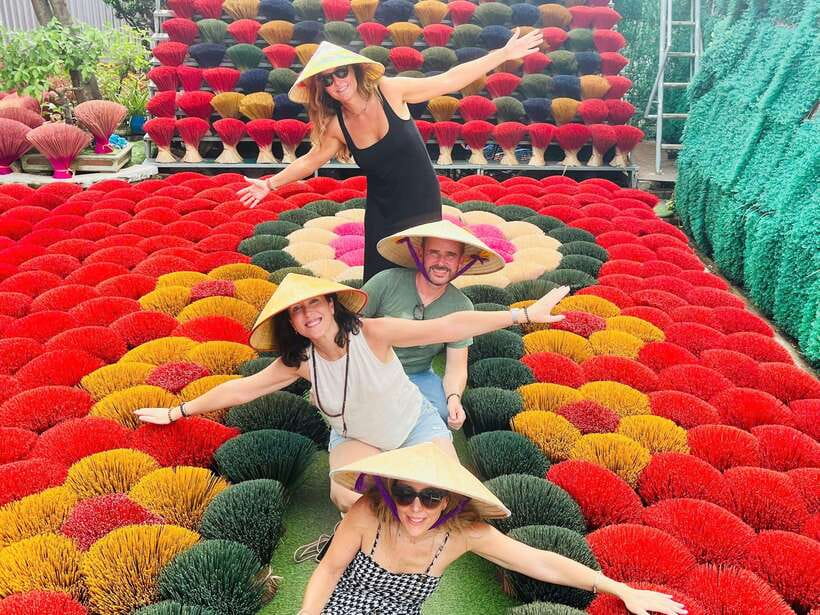
What I like most is the hands-on payoff. At the Chuong area, you get time to draw or paint directly on your hat, and that one souvenir feels earned, not rushed. I also like the incense format, from family-scale steps in Quang Phu Cau to a look at production at a nearby factory, with chances to see the colorful incense bundles up close.
One thing to plan for: you will do a fair bit of walking, and the full schedule can feel long. Wear comfortable shoes, and if you choose the half-day option, plan to eat beforehand since lunch is not included.
Key highlights you will care about
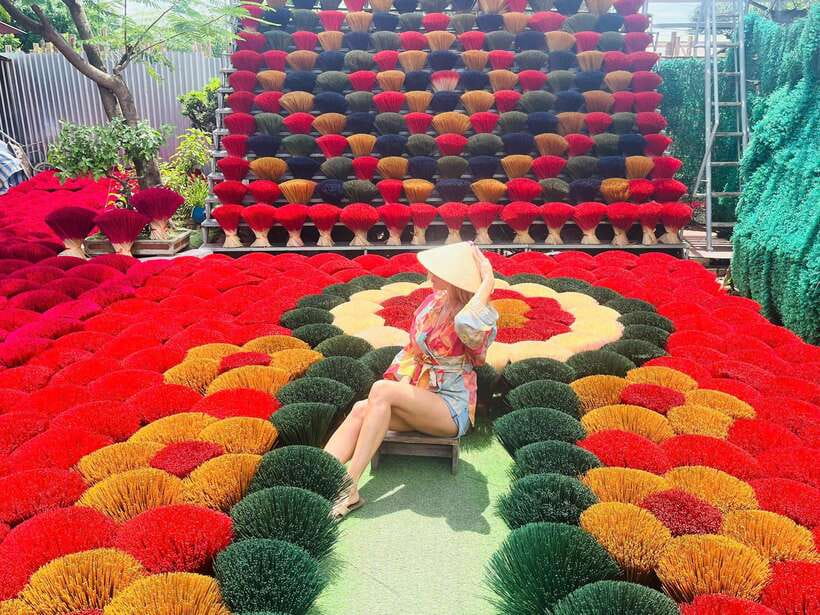
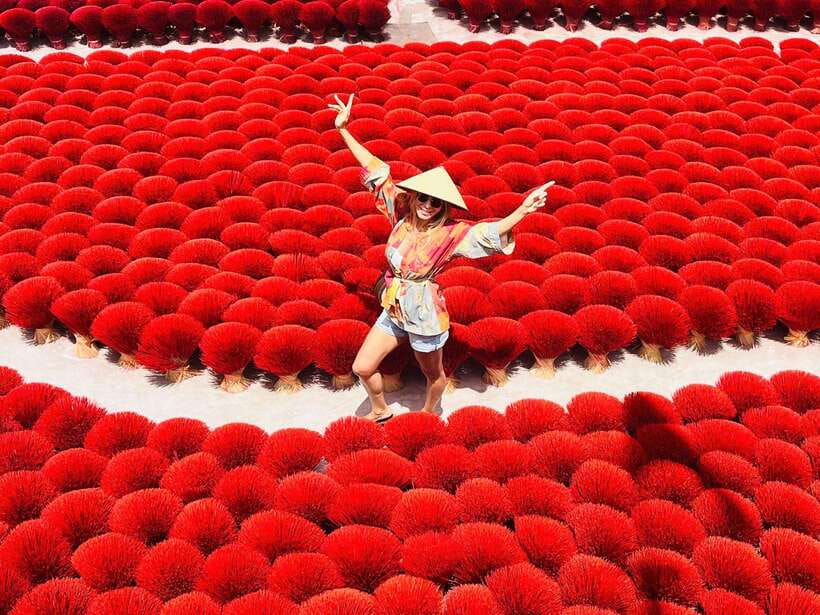
- Quang Phu Cau incense village: watch incense making, including dyed sticks and colorful bundles
- Chuong conical hat workshop: draw or paint your own hat, then take it home
- Temple of Literature timing: a guided visit that fits neatly after lunch on the full-day plan
- Hoa Lo Prison Museum storytelling: guided tour that connects French colonial history to later U.S. POW history
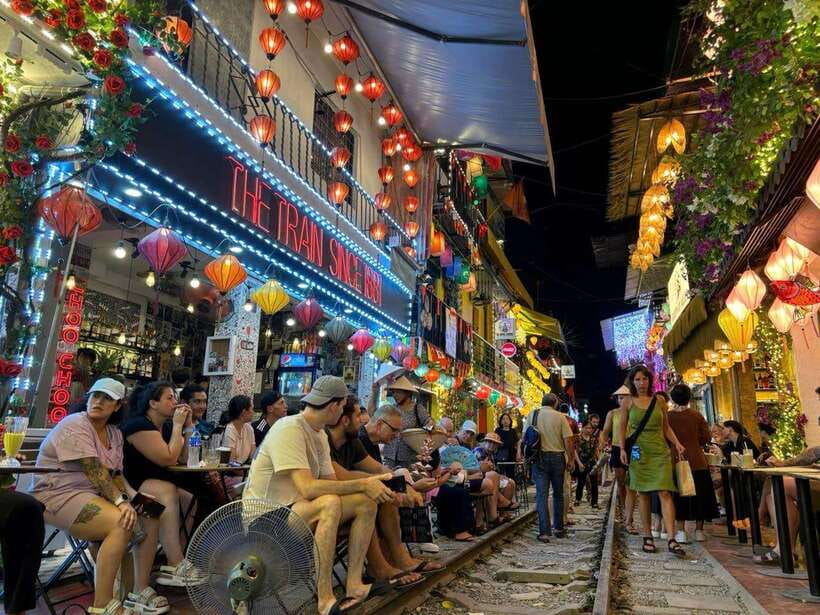
- Train Street option: you can get dropped off, or wait on the bus if you prefer not to go in
- Guide quality: many guides are praised for good English, photo help, and keeping the group moving smoothly
Quang Phu Cau and Chuong, the craft stops that actually teach
This tour hits a rare sweet spot: you get Vietnamese village craft that is practical and visual, not just a showroom. The structure is simple. You start with incense making in Quang Phu Cau, then shift to conical hats in Chuong, so you are comparing two traditional trades back to back.
You also get a guided rhythm that makes the day smoother than wandering on your own. Pickup and drop-off are set for Hanoi’s Old Quarter area, and transportation between sites is handled for you. That matters because these villages sit outside the center, and craft stops can take longer than you expect when you are asking questions and taking photos.
You can also read our reviews of more tours and experiences in Hanoi.



Quang Phu Cau incense village: from dyed sticks to a working factory
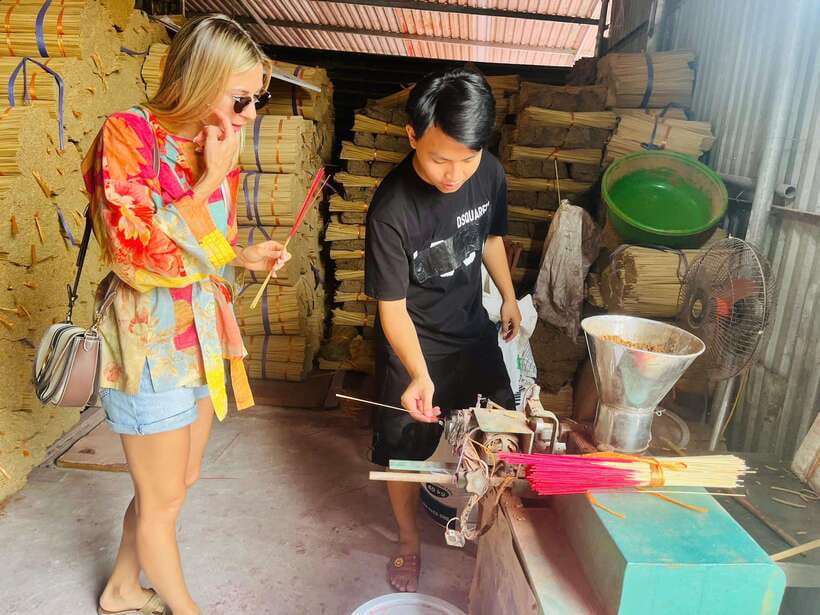
Quang Phu Cau is the place to go if you want to understand incense as a craft, not a vague smell. You’ll start with a walk at the center of the village and see incense being made on a family scale. This is where the small details count, because you can watch how the work is organized and how the ingredients turn into sticks.
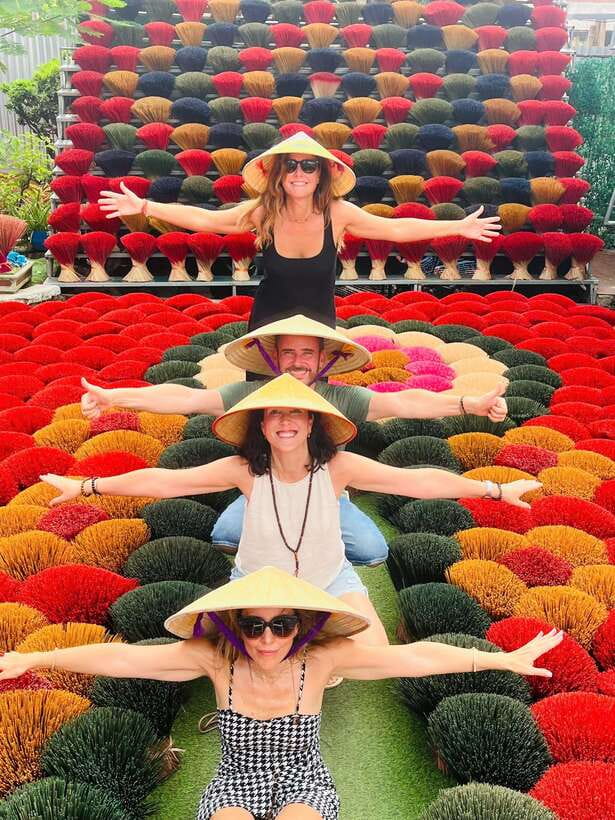
A highlight here is meeting a family that specializes in dyeing incense sticks. You’ll see colorful bundles and the outdoor showroom feel, which makes it easier to spot the differences in finished products. The visit also includes time to observe the broader process, and you’ll get guide explanations on how incense is made from scratch.
If you want more than watching people handcraft, there’s a next step: a tour of a nearby factory. This part is useful because it shows how the same basic idea shifts when production scales up. It also gives you a more balanced picture of work in the area, since you learn about the manual workers’ lives as part of the process.
One practical note: incense villages are active places. You may want to keep your phone protected and watch your footing in any workshop areas. The tour includes entrance fees, so what you pay is largely tied to the making experiences and the guided access, not extra line-tickets.
Chuong conical hat village: hands-on drawing time, then you take it home
Chuong conical hat village is where the tour turns from watching to doing. The area is known for conical hat making for centuries, and you’ll meet local artisans to see how hats are produced. The workshop portion is the payoff, since the hat you decorate becomes a real souvenir.
You get more than a quick photo stop. You’ll observe the process, then you’ll have a chance to draw on your own hat. Depending on your group and timing, this can turn into a fun little competition with yourself, since you’re basically designing on curved paper. Even if you are not an artist, it is simple enough to create something you’ll actually want to keep.
Guides can make a difference here, and you’ll see that pattern in how people talk about their experience. Several guides are praised for being friendly and for helping with photos, and some are even noted as having artistic skills that help visitors decorate confidently. On a day full of crafts, that support is worth something.
You also get one conical hat per person included. That removes the usual Hanoi worry about souvenir pricing and bargaining. You can still buy extra items if you want, but you are not forced into it as the core value of the trip.
Temple of Literature on the full-day plan: short visit, big symbolism
If you choose the full-day option, the Temple of Literature comes after lunch and before Hoa Lo Prison. It is Vietnam’s first university, established in the 11th century, and you’ll walk and visit with a guide. The schedule gives you enough time to take it in without turning it into a half-day side quest.
What makes this stop valuable for many people is the contrast with the morning crafts. Incense and hats are about living production. The temple grounds shift you into a place tied to education, scholarship, and the way Vietnam studied and trained ideas for centuries.
Because the time is limited on the tour, I suggest you keep your goals simple. Pick a few key areas your guide highlights, take your photos, and listen for the context that explains why certain spaces matter. A guided route helps here, because the temple can feel like a lot of gates and courtyards if you are not sure what to look for.
Hoa Lo Prison Museum: the stories behind Hanoi Hilton

Hoa Lo Prison Museum is emotionally heavy, but it is also structured in a way that helps you follow the timeline. The tour explains that the prison was originally used by French colonists for political prisoners. Later, during the Vietnam War era, it was used by North Vietnam for U.S. prisoners of war, which is where many people connect it to the name Hanoi Hilton.
The guided tour is about 70 minutes in the full-day schedule. That length is important, because you get enough time to understand the context rather than seeing the prison as only a set of cells and artifacts. A guide also helps you avoid getting lost in details that might otherwise feel disconnected.
Because you will be listening while walking, plan your pace. Bring your focus, not just your curiosity. If you’re sensitive to strong war history themes, go in prepared for that.
Also, remember that this is not meant to be a quick photo stop. If you want good pictures, you’ll still get moments, but the point of the visit is the guided storytelling and historical explanation.



How the timing and Train Street option affects your day
Hanoi days can feel like logistics puzzles, so it helps that this tour lays out clear blocks. The half-day group tour has two main options, a morning run from about 7:45 to 13:30 and an afternoon run from about 11:45 to 17:30. The full-day option is longer, starting around 7:30 pickup and running until roughly 16:00 to 16:30.
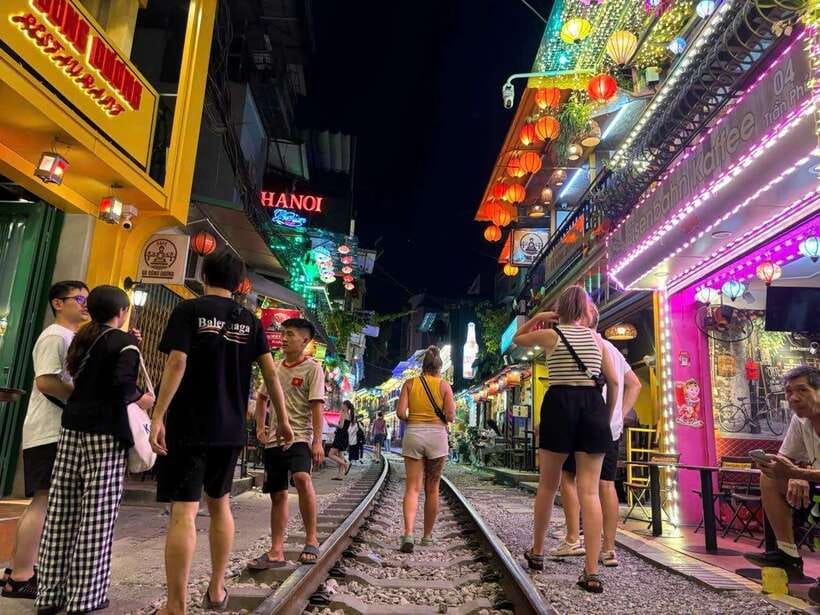
Transportation is included, with pickup and drop-off designed around hotels in the Old Quarter area. After the tour ends, there is a drop-off option at Hanoi Train Street. If you do not want to visit it, you simply wait on the bus, then you can move on by taxi back to your hotel on your own.
This matters because Train Street can add time and crowds to your afternoon. If you are curious but short on patience, I’d treat it as a flexible extra. The tour gives you the option, which is better than forcing it.
If you do want Train Street, the convenience is real. You can get there at the end of a structured day rather than figuring out the area alone. Just remember you have already walked through craft villages and museums, so energy management becomes the real skill.
Price and value: what $11 buys you in real experiences
The price listed is about $11 per person, and value here comes from what is actually included. You’re not paying only for transport and entrance fees. You also get guided time, entrance fees covered, a water bottle, and, on the craft side, a conical hat per person.
On the full-day option, lunch is also included as a home-cooked meal. On the half-day option, lunch is not included, so you should eat beforehand or bring snacks if you get hungry during the afternoon.
Here’s the honest way to think about value. If you care about Vietnamese craft and want a structured way to see two traditional trades in one day, this price can make a lot of sense. If you only want one quick photo stop, you would likely overpay compared with a DIY plan.
But if you like learning how things are made, watching the steps, and bringing home a tangible souvenir, the included workshop time is where the money turns into something you feel in your hands.
What you will do, step by step, in plain language
A good way to picture this tour is to break it into four phases.
First comes incense: you walk through Quang Phu Cau, learn how incense is made from scratch, meet people who dye sticks, and see the colorful finished bundles. Then you transition to the hat workshop at Chuong, where you observe making and decorate your own hat.
If you’re on the full-day schedule, phase three is Temple of Literature, a guided walk tied to Vietnam’s first university. Phase four is Hoa Lo Prison Museum, focused on historical storytelling from French colonial use to U.S. POW history and the Hanoi Hilton nickname.
By the end, you have both a sensory souvenir (incense shop items you can buy at the village) and a made-by-you souvenir (the conical hat).
Who this tour suits best, and who should think twice

This is a strong fit if you want hands-on Vietnamese culture and practical learning. It is also a good choice for first-time visitors to Hanoi who want a full day with clear stops, rather than a scattered plan.
It can work for families too, since the craft elements tend to be visual and interactive. In the experiences people shared, guides were praised for staying organized and helpful, including for multi-generational groups. That kind of guidance reduces stress when you have different pacing needs.
Think twice if you need wheelchair access. The tour is not suitable for wheelchair users. You also should be ready for walking on uneven surfaces in village areas and a museum walk on the prison stop.
My booking call: should you book this one?
If you want a Hanoi day that mixes hands-on craft with guided history, I’d book it. The incense and hat villages are the main event, and they come with real workshop time plus a take-home item. The full-day add-ons, Temple of Literature and Hoa Lo Prison, give you context that turns the trip from shopping into understanding.
Choose the half-day if you want crafts without committing to a longer schedule, and make sure you eat before you go since lunch is not part of that option. Choose the full-day if you want the extra value of two major historical stops and a included home-cooked lunch.
FAQ
FAQ
How long is the tour?
The duration is listed as 330 minutes to 1 day, depending on which option you choose (half day or full day).
What are the main tour options?
You can choose a half-day group tour focused on conical hat and incense villages, with Train Street optional at the end. You can also choose a full-day option that combines incense and hat villages with the Temple of Literature and Hoa Lo Prison.
Is lunch included?
Lunch is included only if you select the full-day tour option. The half-day option does not include lunch.
What can I make or take home?
You get one conical hat per person, and you can decorate it during the visit. You can also buy incense souvenirs at the villages, since the tour includes visits to places where incense products are sold.
Can I skip visiting Train Street?
Yes. If your drop-off includes Train Street, you can wait on the bus instead of visiting it, then continue from there.
Where does the pickup happen in Hanoi?
Pickup is available at hotels in Hanoi’s Old Quarter area. If your hotel is outside the Old Quarter, you are asked to come to office No. 27 Hang Bac Street, Hoan Kiem District.
What language is the guide?
The tour includes an English-speaking live guide.
Is the tour wheelchair-friendly?
No. The tour is not suitable for wheelchair users.