

Review · SAPA TREKKING TOURS
6-Days Ha Giang Loop & Sapa Trekking Package
Limestone cliffs and trail time, in one trip. I love the Ha Giang Loop scenery and the way the route is built around real trekking instead of constant car time. One thing to consider, this is a fairly active mix with bus rides, so you should be ready for a bit of fatigue.
I also really liked the slower pace of staying in traditional homestays, where you eat with the family and get a taste of daily village life. The motorbike days add energy, including good equipment and helpful guidance if you want to ride yourself.
The only drawback is that the itinerary packs a lot into 6 days, so your rest and recovery time will be limited on travel-heavy days.
Quick hits on this Ha Giang Loop and Sapa trekking combo
- Small group size, up to 12 travelers, which usually means less waiting and more attention
- Trekking-focused days (about 5 to 15 km), so you spend more time walking than being chauffeured
- Homestay living in Ha Giang, often in a stilt house setting with shared meals
- Motorbike easy rider element on the Ha Giang side, with guidance and good gear
- Muong Hoa Valley villages in Sapa, including Lao Chai, Ta Van, and Giang Ta Chai
- Clear sightline stops, from Quan Ba Heaven Gate to Ma Pi Leng Pass
Why this combo feels different than a drive-by “sightseeing” trip
Most north Vietnam tours split into two types: mostly seats on a bus, or mostly hiking in the hills. This one tries to blend the best parts of both. In Ha Giang, you get the dramatic roadside views, then you swap the engine sounds for your own footsteps on trekking days in the region that surrounds Sapa.
I like that you are not just checking off names. The trip description is built around hiking days that can run roughly 5 to 15 km. That matters because you actually move through the valleys and village edges, rather than stopping every 15 minutes for photos.
Still, it is a combination tour, so it is never totally relaxed. You will move between regions by bus, and the pace can feel brisk if you are used to easy, city-based travel.
You can also read our reviews of more hiking tours in Hanoi

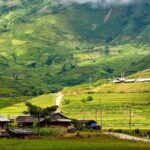

The Ha Giang Loop segment, where the roads set the tone
Ha Giang is all about scale. From the high points, you see winding limestone mountains cut into valleys, and terraced fields that look like they were painted onto steep slopes. This is exactly what you should expect from the loop portion, with scenic pass viewpoints that give you big panoramas.
On the way into the karst country, you start with Quan Ba Heaven Gate, a high viewpoint over Tam Son valley. There is also a small cafe at the top, which is a small but useful detail. It gives you a real pause to reset, not just a quick roadside stop.
Then you shift toward the Dong Van Karst Plateau Geopark area. This region is known for severe limestone scenery, and the stops are chosen to help you understand why it got recognized at a UNESCO level. You also get a pass road experience, including Thẩm Mã Pass on the Happiness Road, which is a classic stretch of winding route between Yên Minh and Đồng Văn along QL4C.
If you want a “read the map with your eyes” kind of trip, this is it. The roads don’t just take you from A to B. They frame the terrain so you get oriented fast, and that makes the later hikes feel more meaningful.
One note: on a road-heavy day, you can expect fewer long, slow breaks. Pack water and simple snacks you can handle easily, because mountain weather can shift fast and timing can be tight.
Dong Van and Vuong Palace, mixing scenery with a human story
The Ha Giang Loop here includes Dinh Vua Meo, also known as the Vuong Palace. It is set in Sa Phin Valley and tied to Vuong Chinh Duc, known as the Hmong King. The value of including a place like this is that it grounds the scenery in people and power, not just rocks and viewpoints.
Dong Van itself is described as a highland district with rugged limestone and terraced fields, essentially the heart of the UNESCO-recognized karst area. Even if you only spend part of a day there, the location is a reminder that this region is lived-in, not staged.
Practical tip: when you visit a historical site like this, take 10 minutes to look for how the architecture fits the valley, then zoom out and compare it to the mountain backdrop around you. It is an easy way to “get” the geography and culture at the same time.
Ma Pi Leng Pass and Mèo Vạc, the day you feel the dramatic altitude
Ma Pi Leng Pass is the kind of stop that makes your brain go quiet. The pass runs about 20 km along the Happiness Road between Đồng Văn and Mèo Vạc, and the tour timing gives you a focused window to enjoy it. You get an actual viewpoint feel, not just a blur through a window.
Then you move to Mèo Vạc, described as a remote mountain district along the Happiness Road, surrounded by steep valleys and towering peaks. That description matters because it hints at why the region looks so different from flatter parts of Vietnam. You are not in a place where the terrain politely levels out.
This is also where you start to understand the tour’s rhythm. The roads deliver the main wow moments, and then the next portion shifts toward quieter village time.
Du Gia homestay life, where the trip slows down for real
After the pass day, the tour reaches Du Gia and checks you into a homestay. This is one of the best value parts of the whole experience because it is not a “we slept here, next” situation. The description emphasizes community-based hosting, typically traditional wooden houses, shared meals, and a chance to relax with the family.
There is also a strong cultural detail in the homestay experience: bathing with Red Dao herbal medicine. That is not something you should expect on every Vietnam itinerary, and it is worth taking seriously, since it is part of how people in the region treat wellness and tradition. Even if you decide not to do the bath, the fact that it is included in the homestay description signals a deeper engagement than a standard hotel stop.
In Du Gia, you can also expect the day to end with a slower pace. The itinerary notes time to shower, relax, then dinner with the family. That is exactly what your legs want after mountain road days and any earlier trekking.





Du Gia Waterfall and Lung Tam weaving, small stops that add texture
Next up, Du Gia Waterfall is on the schedule. It is described as a multi-tier waterfall about 6 m high. The point of a waterfall stop on a loop tour is simple: it gives you a different kind of scenery break from limestone cliffs. You get movement, sound, and a chance to stretch your legs without committing to a long hike.
Then you head to Lung Tam Village in Quản Bạ, known for H’mông weaving. The description calls out linen and brocade craft with meticulous detail. This is one of those stops that can be short, but it adds real texture. Instead of only looking at what the land looks like, you see what people make from it.
If you are buying anything, go gently. Try to understand what the item represents first, then decide. The best souvenir is one that you can explain in one sentence, because it connected to a person and a skill you actually saw.
Ha Giang to Sapa by bus, the “transfer night” to plan for
The tour ends the Ha Giang loop at around 15 to 16 pm at a hostel in Ha Giang, then you take a bus to Sapa, arriving mid night. This is one of those practical realities you should plan for, not fight.
What I think works well here is accepting that your first half-day in Sapa might be more about getting your bearings than chasing every viewpoint. You’ll still have trekking time later, but you should treat this transfer as a reset, not as part of your sightseeing energy.
Also, keep your essentials easy to access. If you get moved late at night, you don’t want to be digging through a backpack for the one thing you need immediately.
Muong Hoa Valley villages, terraced fields and village pathways
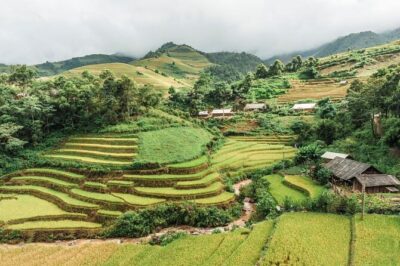
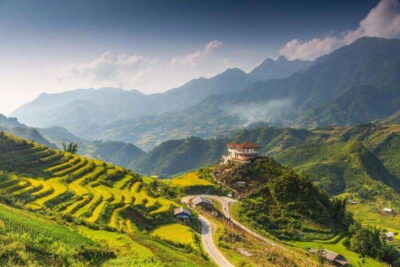
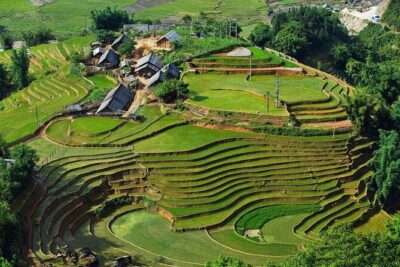
Once in Sapa, you shift into village trekking. The Muong Hoa Valley is famous for terraced fields, and the route focuses on multiple ethnic communities, including H’mông, Giay, and Red Dao groups. The value here is that you are not just walking past scenery. You are moving between places with different village rhythms and home styles.
You start with Y Linh Ho, described as a tranquil settlement about 5 km southwest of Sapa, with both H’mông and Dao communities. Then you move toward Lao Chai, about 7 km southeast of Sapa, known for terraced rice fields and Black H’mông culture.
After that comes Ta Van Village, about 3 km from Lao Chai. Ta Van is described as home to H’mông, Giay, and Red Dao groups. This matters because it helps you understand why you might see clothing styles and house layouts that look different within a small geographic area.
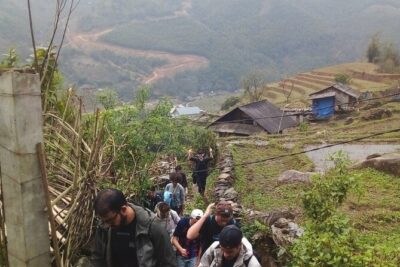
One very practical point from the trekking emphasis: there can be steep sections. The hiking is often described as mainly downhill at times, but steepness can still make your knees complain. If you have trekking poles, bring them. If not, you can still use careful foot placement and slow down on descents.
Giang Ta Chai Red Dao trek, bamboo and terraced walking
Your final trekking stop is Giang Ta Chai Village, a Red Dao village about 5 km from Ta Van in Muong Hoa Valley, sitting on terraced land. The description highlights trails through bamboo groves and across steep, terraced countryside. This is where you often feel the “slow travel” intent most clearly, because it is harder to rush through bamboo and fields than it is to rush through viewpoints.
This is also where the trip earns its name as a meaningful trekking experience, not just a sightseeing checklist. You are walking through spaces people work and live in, and the scenery changes as you go, especially with terraced plots.
If you are the type who likes getting off the main photo spots, this day is probably one of the best memories for you.
Price and value: does $380 make sense for what you get?
At $380 per person, this tour is not a bargain in the ultra-budget category, but it can still be good value if you price it like a real trip. The package includes transportation, entrance fees, and a full meal setup: 5 breakfasts, 5 lunches, and 3 dinners. It also includes the core travel legs between Hanoi, Ha Giang, and Sapa.
There are two additional value clues in the details you get. First, the group size is capped at 12 travelers, which usually helps quality of guidance and timing. Second, you are not paying extra just to be driven around. The plan includes trekking on the ground, plus the homestay component in Ha Giang.
What you should watch for is the “not included” items. Tips and personal expenses can add up anywhere. And because the trip mixes motorbike days and trekking days, you may want to bring or buy practical gear on your own, like water, sunscreen, and any foot comfort items.
If you want a mix of big-view Ha Giang roads and hands-on village trekking in Sapa, this price can feel fair. If you want pure relaxation or mostly flat, easy walks, it may be more than you bargained for.
Who this tour fits best (and who should think twice)
This tour is a great match if you want:
- Active days with real walking (about 5 to 15 km per day)
- A homestay night where you share meals and time with a local family
- A mix of motorbike scenery in Ha Giang plus village trekking in Muong Hoa
- A small group experience, capped around 12 people
You might want to think twice if:
- You have knee issues or you cannot handle steep descents
- You prefer mostly hotel-based comfort and lots of downtime
- You hate long travel windows, since you will transfer by bus at least a couple of key moments
If you are traveling with the mindset of slow, attentive movement, you will likely enjoy it more than someone trying to “maximize landmarks” every hour.
Should you book this 6-day Ha Giang loop and Sapa trek?
If your ideal north Vietnam trip includes scenic passes, village walking, and real homestay time, then I would seriously consider booking. The strength here is balance: road drama in Ha Giang, then trail time and community villages in Sapa.
Do it only if you’re ready for an active schedule. You will be tired at times, but that is part of the trade. The reward is that you see these places from ground level, and you spend enough time with the communities to feel like you learned something, not just passed through.
If that sounds like your style, this is a strong package from Saparis Horizon Travel for the money.
FAQ
Where does the tour start and when?
The meeting point is in the Old Quarter, and the start time is 8:30 am. From there, you begin an overnight journey by sleeper bus to Ha Giang.
How do you get between Hanoi, Ha Giang, and Sapa?
You travel by sleeper bus from Hanoi to Ha Giang (about 6 hours). Later, you take a bus from Ha Giang to Sapa (about 6 hours), arriving mid night, and then a bus from Sapa to Hanoi (about 6 hours).
Is motorbike riding included, and can I drive myself?
The tour is described as combining an easy rider experience with motorcycling equipment. One review also states that if you have an international driving licence, you can drive yourself.
How much trekking is involved?
The tour focuses on trekking 5 to 15 km per day. The hike can include steep sections, even when it is mainly downhill at times.
What type of accommodation do you get in Ha Giang?
You stay in community-based homestays, typically traditional wooden houses and sometimes described as stilt houses. The homestay experience includes shared meals with the family.
What meals are included?
Breakfast is included (5), lunch is included (5), and dinner is included (3). Entrance fees are also included.
What is the group size limit?
The tour has a maximum of 12 travelers.
What is the cancellation and refund situation?
Free cancellation is offered. You can cancel up to 24 hours in advance for a full refund, and cut-off times are based on local time.
More Hiking & Trekking Tours in Hanoi


More Tour Reviews in Hanoi
Not for you? Here's more nearby things to do in Hanoi we have reviewed









More Sapa Trekking Tours to consider.
 ★ 5.0Sapa 2 Days 1 Night From Hanoi – Overnight in Ta Van VillageTickets from $592,669 traveller reviews
 ★ 5.0Hanoi – Sapa 2 Days 1 Night Overnight At HomestayTickets from $89899 traveller reviews
 ★ 4.6Sa Pa: Muong Hoa Valley Trek and Local Ethnic VillagesTickets from $23864 traveller reviews
 ★ 5.0Sapa: Fansipan Cable, Cat Cat Village & Moana Instagram TourTickets from $30777 traveller reviews
 ★ 4.8From Hanoi: 2-Day Sapa Trekking Trip with Homestay & MealsTickets from $71704 traveller reviews
 ★ 5.0Sapa 3 Days 2 Nights Trekking Tour (1 Night In Ta Van Village, 1 Night In Hotel)Tickets from $139699 traveller reviews
 ★ 4.9Sapa: Eco Adventure Terrace Fields and Local Villages TrekTickets from $27636 traveller reviews
 ★ 5.03-Day Trekking Adventure of Sapa from Hanoi – Stay Ta Van VillageTickets from $109611 traveller reviews
More useful Hanoi routes