Review · HANOI
21-Day Beauty of Vietnam, Cambodia And Thailand
Limestone, temples, and beach days in one sweep. What makes this trip interesting is the way it strings together big-moment sights and slower breaks, from a Ha Long Bay boat day with kayak time to the major temple hits of Cambodia and then down to beach living in Thailand. For me, the pacing works because you get set transport and tickets handled, so your free time actually feels free instead of stressful.
I also like the way the trip logistics are wrapped up with included flights and an English-speaking guide plus a 24/7 hotline support line. That is real value on a 21-day, four-region route where you are constantly moving between airports and neighborhoods. One consideration: hotel quality depends on whether you pick the 3-star or 4-star option, and the itinerary includes several travel days, so pack light and be ready for some long transit stretches.
Key highlights worth planning around
- Ha Long Bay boat day plus kayak time, and the chance to see a pearl farm village area
- UNESCO Temple of Literature early in Hanoi, before you jump into the Hoi An rhythm
- My Son Sanctuary paired with an old-town walk in Hoi An, so you see both ruins and living heritage
- Mekong Delta village stay in Ben Tre (Mekong Home) with a cycling morning
- Angkor Thom plus Ta Prohm and Angkor Wat in a focused, ticket-included temple block
- Bangkok’s royal sites and Wat Pho massage plus canal cruising and market stops
Price and logistics: what $2,950 buys you
At $2,950 per person for about 21 days, this is not a budget-only style trip. The good news is that the price carries a lot of the heavy lifting: you get hotels (with a 3-star or 4-star choice), meals (breakfasts, plus lunch and dinner counts are included), modern transport, expert guidance, most sightseeing admissions, and multiple flights between key cities with checked luggage allowances.
That matters because Vietnam, Cambodia, and Thailand are easy to travel across, but they are not always easy to travel through without losing time. Here, your airport transfers are included, your ground transport is handled, and you do not have to coordinate day-by-day logistics across four legs of the journey.
The group size also stays small, with a maximum of 15 travelers. That is a sweet spot for tours like this. Big enough for energy, small enough to find the guide when you need them, and to keep questions from getting lost in a crowd.
If you like the idea of “big sights plus some downtime,” this setup fits. If you want total control with zero structure, you might prefer a self-planned route instead.
You can also read our reviews of more tours and experiences in Hanoi.

Hanoi arrival: getting oriented fast on day one
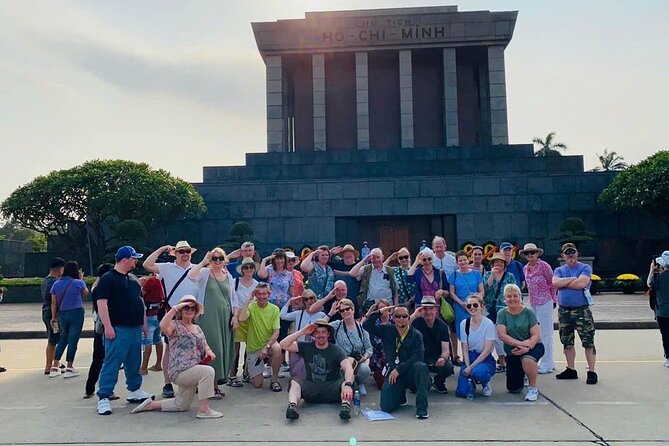
You land at Noi Bai International Airport, and a private driver meets you with your name on a signboard. That single detail helps a lot on arrival day, because Hanoi can be busy and confusing when you first get off the plane. You are escorted to your accommodation in central Hanoi, then you have time to either explore at your own pace or simply rest after flying.
This tour also leans on a simple model: you get a clear starting point, then you get breaks to absorb the city. Hanoi is a place where the neighborhoods matter. Even if your time is limited, you can use your first evening to find a comfort zone, grab a meal, and decide what you want to prioritize in the days ahead.
One practical thing I’d do in your shoes: save offline maps and keep your “must see” list short for day two. With this itinerary, you are moving quickly into Ha Long Bay right away, so you want Hanoi time to feel purposeful rather than rushed.
Ha Long Bay: limestone cruising with kayak time and a pearl farm stop
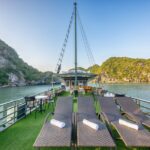
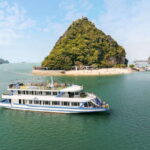
Ha Long Bay is one of those destinations that always looks good on screen, but the real value is how the day is structured for variety. After breakfast, you depart around 8:00am, then board a vessel for lunch while you cruise among limestone islands.
Later in the program, you return for a second day on the bay. You start with breakfast onboard, then continue with sailing time that includes a stop at a pearl farm village area. Even if you have seen images of Ha Long Bay before, a pearl farm village stop adds context. It turns the bay from a photo moment into a place with real livelihoods.
Also, kayak time is included. That is a big deal for people who want more than sitting and sightseeing. On a day like this, standing at the rail for hours can blur together. A kayak break gives you a slower, closer look at the water and island edges.
My advice: wear quick-dry clothes and plan for sun. Two days on open water means the weather can change how comfortable you feel, so bring something to protect yourself and keep moving.
UNESCO Hanoi stops and the flight to Hoi An: history, then lantern town
The day after the bay starts with UNESCO at the Temple of Literature and National University. This is Vietnam’s early education story in stone and courtyard form. It’s also a smart way to start before you spend time outdoors again. You get a cultural anchor, then you shift gears.
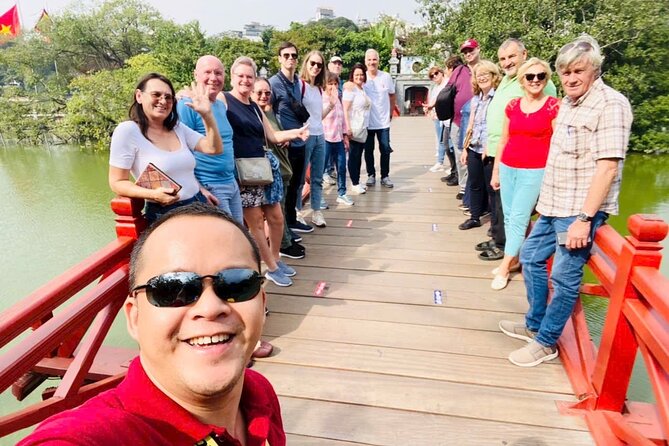
Next, you visit the Vietnam Museum of Ethnology. The pairing with nearby stops around Hoan Kiem Lake and the Ngoc Son Temple area helps you connect city life with broader ethnic heritage in Vietnam. If you want to understand why people dress and celebrate in distinct ways across regions, this museum stop is one of your best chances in Hanoi.
After that, you fly from Da Nang to Hoi An. The move itself is part of the trip’s value. You are cutting travel time rather than slow-rolling between coast and north.
Hoi An arrives as a totally different pace. Here the itinerary gives you walking time plus an evening rhythm. The next day includes a hands-on old-town circuit, which is where Hoi An becomes real instead of just pretty.
My Son Sanctuary and Hoi An on foot: seeing heritage in two modes
My Son Sanctuary is UNESCO-listed, and it’s not just another temple stop. It is a different kind of ruin experience than you get at Angkor. The structure and layout feel more intimate, and the site works well paired with a later day of city wandering.
After you visit My Son, Hoi An becomes the “everyday heritage” counterpoint. On foot, you cover a cluster of major sights: the local market, the Old House of Tan Ky, the Fujian Assembly Hall, and the Japanese Covered Bridge. This is a good set because it mixes trade-era buildings, community spaces, and the kind of street-level history that tells you how people lived.
Then you get a free day in Hoi An, which I consider essential on a multi-country trip. It gives you time to slow down and do one or two things really well, like shopping for textiles, finding a quiet café, or just watching the street scenes without being herded.
One caution: Hoi An can be hot and bright. If your free day feels too intense, plan a mid-afternoon break. Use the morning for walking and save the later hours for rest.
Ho Chi Minh City plus the Mekong Delta: Ben Tre and cycling on Oc
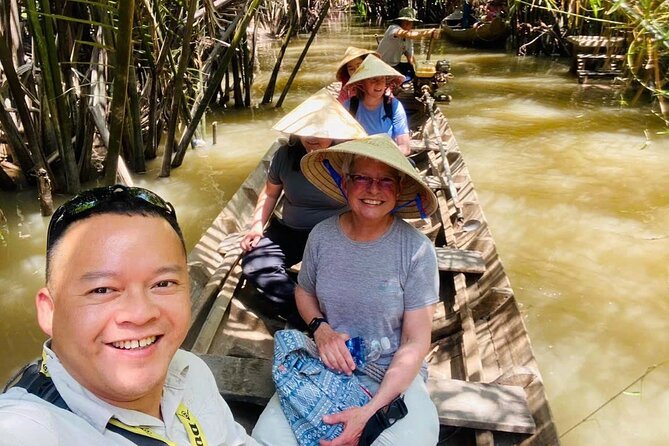
You fly to Ho Chi Minh City, then you get a free day to explore on your own. That open time matters here because Ho Chi Minh City has a different tempo than Hanoi and a different mood than the coast.
The Mekong Delta day is where the itinerary becomes more personal. You transfer to Ben Tre and check in at a family-style riverside property, Mekong Home, set in tropical gardens on the Mekong river bank. This is not a sterile hotel-only kind of experience. It is designed as a stay that connects you to the region’s rhythm.
Then you get a cycling trip on the island of Oc. It’s scheduled for about 2-2.5 hours, on a concrete track with fruit trees and coconut trees, plus a stop at a local market area on the way. That mix of movement plus market life gives the day an active feel.
Afterward, you return to Ho Chi Minh City for an overnight. For many people, that makes the delta experience feel complete. You get nature and daily-life views in one stretch, but you still end up back in a big city with more dining and transport options.
Practical tip: if you do not love bikes, you can still enjoy the day, but you should pace yourself. Cycling time is part of the plan, so wear comfortable shoes and bring a hat or sunglasses.
Siem Reap and Angkor: Angkor Thom, Ta Prohm, and Angkor Wat in one arc
Siem Reap is your launchpad to Angkor, and this tour places your big temple day on a single itinerary block that includes major sites and ticket admissions.
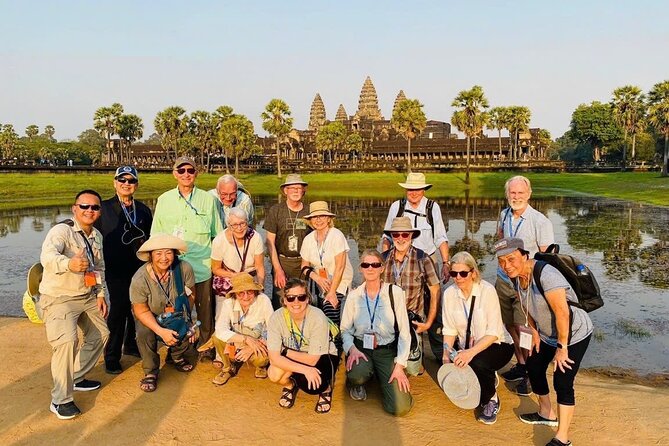
You start with Angkor Thom, the ancient capital area, then move on to Ta Prohm, known for dramatic trees growing through temple structures. After that comes Angkor Wat in the afternoon. Angkor Wat is the huge focal point, and you can feel why it is famous. It is also one of those places where arriving with some mental energy helps. If you rush, you miss how the spaces relate to each other.
The structure here is smart: it avoids scattering the temple hits across too many days. Instead, you get one long temple day with distinct atmospheres, then a free day to do what you want in Siem Reap.
That free day is useful for people who want to shop, hunt for street food, or book an add-on activity like a cooking class or a massage option. If you like taking photographs, Siem Reap gives you plenty of chances to wander after the big day.
My suggestion: for Angkor days, plan water, sun protection, and comfortable footwear. The temples are rewarding, but the walkways can be demanding.
Bangkok: Grand Palace, Wat Pho massage, canal boat cruising, and markets
After Cambodia, you shift to Bangkok, and the itinerary gives you a full day that hits the “classics.” You start with the Grand Palace and then the Temple of the Emerald Buddha (Wat Phra Kaew). From there, you go to Wat Pho, including time at the Temple of the Reclining Buddha and the birthplace of Thai massage. The itinerary includes a 30-minute massage visit at the Wat Pho Traditional Massage School.
That pairing is more than sightseeing. It connects the architecture world to the body-care world. If you have been doing temples all trip, a Thai massage interlude is a smart reset.
After lunch, you take a boat trip on the Chao Phraya River, passing canals (khlongs), then you stop at Wat Arun. This makes the day feel less like only “walk and look.” You get a change of perspective from the water.
The next day adds a very Thai set of market and culture stops, including the Damnoen Saduak floating market, plus visits connected to Amphawa and the Maeklong railway market (Hoop Rom Market) where stalls move when trains pass through. The itinerary also includes stops at Holy Rosary Church with stained-glass light effects, plus Wat Bang Kung with its serene setting and Thai boxing statue area.
This is a dense schedule. The upside is that Bangkok becomes more than a royal-site checklist. You see food and markets, river life, and a mix of religious architecture.
If you get tired, use the in-between moments. Bangkok is easier when you keep hydration and rest in mind, especially after a long stretch of travel.
Phuket and Phi Phi: beach relaxation with a snorkeling-style day
Phuket is your final country landing, and the itinerary makes it a true relaxation phase rather than another run of monuments. After traveling to Phuket, you get time for free beach days plus an excursion to Phi Phi.
Phi Phi Island is scheduled as a half-to-full day tour. You transfer to the Royal Phuket Marina, head out, then arrive around 10:30 for stops that include Bamboo Island time for white sandy beach relaxation and snorkeling or swimming. There is also time built in for you to enjoy the water, not just stare at it.
Then you get another day in Phuket that is left open for beach time and swimming. That matters because after Angkor and Bangkok, most people want an easy landing. Phuket is where you can stop collecting and start recovering.
For your last day, the plan includes breakfast and time for local markets before transfer to Phuket International Airport. That gives you a practical last-minute window to buy souvenirs without needing to squeeze shopping into another packed day.
The small choices that make this tour feel smooth
A tour like this works when you use it correctly. Here are the practical things I would prioritize based on how the trip is set up.
Free time is real, but you need your own way to move. Several days are intentionally not scripted, like Hoi An and Ho Chi Minh City, plus Siem Reap and Bangkok. A reviewer tip that I like: plan to have reliable data on your phone. When you can check maps and look up places instantly, your free hours feel calm instead of uncertain.
Support matters across borders. The tour includes 24/7 hotline support, and reviews mention specific help from the team, including WhatsApp support by Jenny and assistance by David during the trip. That kind of human support is not just “nice to have” on a multi-flight route.
Pick your hotel level on purpose. You choose between 3-star and 4-star accommodation options. If you want a quieter room after long days, paying for the higher tier can be worth it. If you mainly want clean beds and sleep, the lower tier might be fine.
Pack for sun and walking. This trip includes lots of outdoor time, including two days at Ha Long Bay, temple walking at Angkor, and market days around Bangkok. Comfortable shoes and sun protection are not optional.
Travel days are part of the experience. Flights are included between Hanoi and Da Nang, Da Nang and Ho Chi Minh City, Ho Chi Minh City and Siem Reap, Siem Reap and Bangkok, and Bangkok and Phuket, each with luggage allowances. Still, you should plan your energy accordingly on the days you shift locations.
Should you book this Vietnam, Cambodia, and Thailand tour?
Book it if you want a guided, ticket-included route that connects Hanoi, Ha Long Bay, Hoi An, My Son, Ho Chi Minh City, the Mekong Delta, Siem Reap and Angkor, Bangkok, and Phuket in one organized flow. It is a strong match for travelers who like clear structure, don’t want to handle airport transfers and admissions, and still want free days to wander.
Skip it or consider an alternative if you hate moving around every few days, or if hotel comfort matters more to you than guided logistics. Also think twice if you want every day to be fully self-directed, because several key days are set with scheduled sights and travel legs.
If you like big icons plus real-life market and river moments, this itinerary is built for you. And if you take one practical tip seriously, make it this: bring a data-ready phone plan so your free hours across Vietnam, Cambodia, and Thailand feel easy.
FAQ
What cities does the tour start and end in?
It starts with pickup in Hanoi, Vietnam (at Noi Bai International Airport) and ends at Phuket International Airport in Phuket, Thailand.
Is airport pickup included?
Yes. The tour includes hotels to airports transfers, and it also offers a private driver meeting you at Noi Bai International Airport with your name on a signboard.
Are flights included in the tour price?
Yes. Flights are included between several legs, including Hanoi to Da Nang, Da Nang to Ho Chi Minh City, Siem Reap to Bangkok, and Bangkok to Phuket. A flight from Ho Chi Minh City to Siem Reap is also included.
Does the tour include meals?
Yes. Dinner is included, lunch is included (9 lunches listed), and breakfasts are included (20 breakfasts listed). Vegetarian and vegan options are available on request.
Are sightseeing tickets included?
Yes. The tour includes all sightseeing tickets according to the itinerary, including sites like the Temple of Literature, Temple of the Emerald Buddha, Wat Pho, and Angkor attractions listed in the plan.
Is there any kayaking or boat time on Ha Long Bay?
Yes. The tour includes a boat and kayak experience in Ha Long Bay.
What happens on the free days?
You get several free days in places like Hanoi, Hoi An, Ho Chi Minh City, Siem Reap, and Bangkok. The itinerary leaves these open for you to explore on your own.
Does the tour have a small group size?
Yes. The maximum group size is 15 travelers.
Do I need a visa, or is it included?
Visas are not included. The data says visas to Vietnam, Cambodia, and Thailand can be obtained on arrival.
What about cancellation?
Free cancellation is offered if you cancel up to 24 hours in advance of the experience start time for a full refund.