Review · HANOI
18-day Itinerary Vietnam – Cambodia -Thailand | Best 2026-27
Three countries, one organized rhythm. This 18-day Vietnam, Cambodia, and Thailand route keeps you moving between big highlights, with hotel pickups and drop-offs doing the heavy lifting. You also get a rare mix of classic city sights, UNESCO stops, and real nature time, including an overnight Ha Long Bay cruise and a planned Phi Phi islands day.
What I like most is the way it reduces logistics stress. You are not spending your energy negotiating transport, hunting for tickets, or piecing together schedules city by city, because a tour guide and air-conditioned vehicle handle the core travel blocks.
The main thing to consider is pace. You will fly between countries and regions, start early on a few big days, and rely on weather for the water and island portions.
Key points you will care about

- Max 10 people means more manageable group energy while still keeping the trip organized.
- Ha Long Bay overnight cruise includes a sunrise-style morning in Lan Ha Bay, not just a quick day stop.
- Angkor Thom, Ta Prohm, and Angkor Wat are covered in a tight, temple-focused sequence.
- Cai Rang floating market happens early, when the boats and trading feel most active.
- Phuket plus Phi Phi islands gives you beach time with a full-day island run from Royal Phuket Marina.
- Mr. Tran as a named point person is consistently highlighted, which helps when questions pop up during planning.
A simpler way to go Hanoi to Phuket without the daily planning headache
This tour’s biggest advantage is that it strings together major destinations with a schedule that already makes sense. Instead of treating each city like a mini adventure in navigation, you get set pickup times, transfers, and guided sightseeing blocks.
That is not just convenience. It also changes how the days feel. You have clearer mornings and afternoons, and when you get free time, it is real time you can use on your own, not time spent solving problems.
The tour includes a private room for your accommodation, which is a big step up from the typical group-survival feeling of shared beds. Add in the air-conditioned vehicle, and the long hops between stops feel less punishing, especially in hot or rainy stretches.
You can also read our reviews of more tours and experiences in Hanoi.

Price and value: what $2,859 buys you (and what it does not)
At $2,859 per person for an 18-day trip, the value depends on what you would otherwise pay to assemble everything yourself. Here’s what is actually included:
- Domestic flights (this matters because air travel is one of the hardest pieces to coordinate well)
- Accommodation in a private room
- Entrance fees for included sightseeing
- Tour guide
- Air-conditioned vehicle
- Meals: Breakfast 18 times, Lunch 10 times, and Dinner 2 times
Also included are pickup and drop-off services, plus mobile tickets for the tour.
What is not included is fairly standard: tips, alcoholic drinks, soft drinks, and personal expenses.
So what does this mean for you in real life? You avoid the common money traps:
- paying separately for guides at every stop,
- double-paying for admissions because tickets are not clearly arranged,
- and losing time when transport plans fall apart.
The one caution I would flag is that “included” meals are not the same thing as “every meal covered.” On the days marked as leisure time, you will still choose where to eat, which can be part of the fun, but you should plan for it.
Hanoi arrival: easy onboarding and a clean first night
You land in Hanoi and get a welcome transfer straight to your hotel. That matters more than it sounds. Hanoi can be busy and a little chaotic, especially if you arrive tired, so getting set up without figuring out transit is a smart start.
Day 1 leaves the rest of the day open for exploring at your own pace. You also get a base that is described as near public transportation, which is useful if you want an extra option beyond walking and guided blocks.
On Day 2, you begin with pickup from the Old Quarter, with the morning start aimed around 8:00 to 8:30. That early planning is a theme in this itinerary, and it helps keep the water and temple days from slipping.
Hanoi to Hạ Long Bay: Tuan Chau cruise + Lan Ha sunrise morning
This is where the trip turns from city hopping into full-on scenery time.
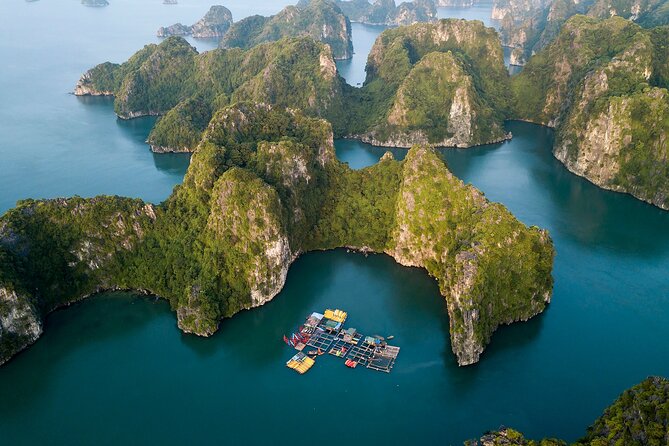
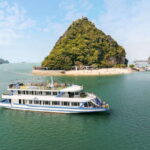
On Day 2, you transfer to Tuan Chau port and board the cruise experience. You get a welcome drink and check-in once you are onboard. Then the boat travels through several areas described for Ha Long Bay, including the Gia Luan area, Thoi Quyt island, Ke Ga, and Finger, all in the southeast portion of the bay.
Day 3 is the highlight for many people, because it includes an early start. You join a Tai Chi session on the sundeck, watch the sunrise atmosphere over Lan Ha Bay, and then have breakfast while enjoying the morning views. Later, you return to Hanoi in the afternoon, with arrival back around 17:00.
What to expect from a practical standpoint:
- You are trading sleeping in for a morning that is often the most photogenic part of the cruise.
- You will want to bring a layer, since mornings on the water can feel cooler than the cities inland.
- Since weather is a real factor for cruises, plan to be flexible.
Temple of Literature, then flight south to Da Nang and Hoi An
Day 4 mixes culture and logistics. You start with the Temple of Literature, a UNESCO site, and then you move to the airport for your flight to Da Nang. From there, you are transferred to your Hoi An hotel.
This timing is clever. It gets you out of Hanoi while you still have the energy to enjoy the UNESCO stop, and it puts you in the historic-region rhythm without making the flight feel like the whole day.

Hoi An and My Son: UNESCO history plus old-town wandering time
Day 5 is a strong combo day:
- My Son Sanctuary (UNESCO) in the morning
- Hoi An Market for a walking tour in the afternoon
- Japanese Covered Bridge, one of the area’s most recognizable icons
On Day 6, you get a slower pace with breakfast and then leisure time to explore the Old Town of Hoi An on your own.
This is a good balance on this itinerary. A lot of multi-country tours feel like a nonstop assignment. Here, Hoi An gives you enough breathing room to enjoy details at your own speed, like side streets, small shops, and the kind of street life that is hard to appreciate when a schedule forces you to move every few minutes.
Ho Chi Minh City essentials and Cu Chi: history with structure
After flying from Hoi An to Ho Chi Minh City, Day 7 gives you arrival time and then free time to explore.
Day 8 is the organized history block, with several major stops:
- Saigon Notre Dame Cathedral
- Saigon Central Post Office
- War Remnants Museum
- Lunch time
- Cu Chi Tunnels in the afternoon
The value here is not just the sights, it is the order. You see landmark architecture, then you move into war history, and then you close with the tunnels that tie the story to the ground-level reality.
Keep in mind that War Remnants Museum and Cu Chi can be emotionally heavy. If you are sensitive to war topics, build your day with that in mind and give yourself some quiet time afterward.
Mekong Delta with My Tho, Ben Tre, and Can Tho, then Cai Rang at sunrise
Day 9 takes you into the Mekong Delta from My Tho. You start with a boat journey along waterways, then continue to Ben Tre, described for coconut groves. You also take a boat ride along narrow canals and visit local workshops.
Then you move toward Can Tho, check into your accommodation, and unwind after a day built around water travel and village-scale activity.
Day 10 starts very early for Cai Rang Floating Market. You get pickup around 6:30am and visit during the busiest time. You cruise through small canals, then return for lunch and head back to Ho Chi Minh City.
Why this portion is worth doing on a tour: floating markets require timing, and early starts matter. Doing it as part of a guided schedule means you show up when it is working, not when it is winding down.
Siem Reap and Angkor: big temples, then a quieter jungle circuit
On Day 11, you transfer to the airport for your flight to Siem Reap. The rest of that day is leisure, which gives you time to adjust before the temple days.
Day 12 is the classic Angkor sequence:
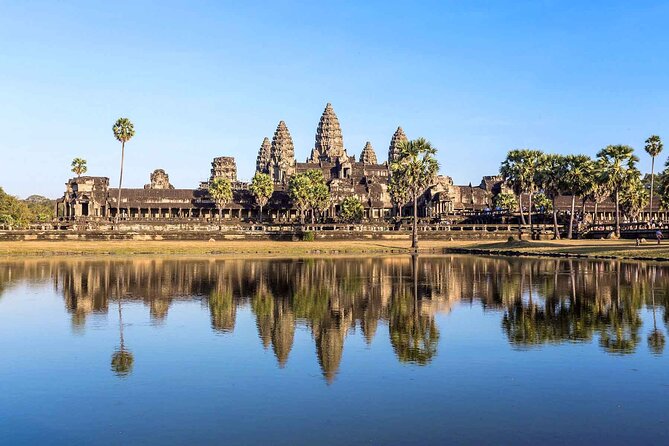
- Angkor Thom in the morning
- Ta Prohm
- Angkor Wat in the afternoon
Day 12 also gives you built-in pacing. You start with the ancient capital area, then move to Ta Prohm’s distinctive setting, and then end with the biggest temple complex of all, Angkor Wat.
Day 13 pushes beyond the typical highlights. You depart Siem Reap at 8:00am and drive about 1.5 hours to Koh Ker, described as remote and in the jungle. You explore the Koh Ker Temple complex, then later return toward Siem Reap with stops at Prasat Neang Khmau and Prasat Pram, plus lunch near Beng Mealea and a visit to Beng Mealea.
This is one of the best value choices in the whole itinerary. You still get the world-famous temples, but you also spend real time somewhere less crowded, with ruins that feel more like exploration than sightseeing.
Phuket relaxation, then Phi Phi Islands: beach time plus planned island stops
Day 14 ends the Cambodia phase with breakfast and leisure in Siem Reap, then a transfer to the airport for your flight to Phuket. Once you arrive, the rest of the day is yours.
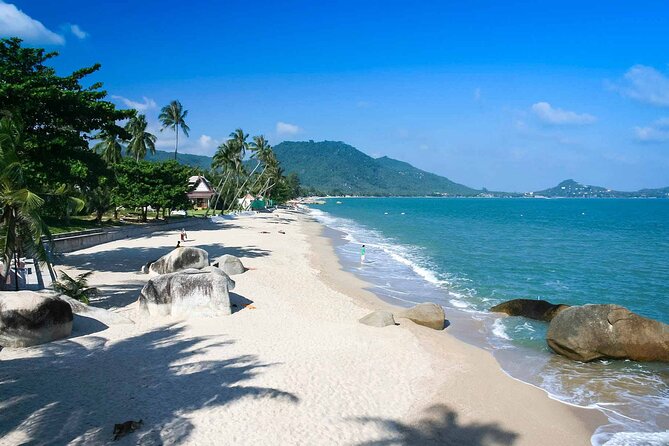
Days 15 and 17 are built around beach downtime. The plan explicitly frames Phuket as a place to relax, sunbathe, and swim, with time to find Thai food or seafood on your own.
Then Day 16 becomes the action day:
- You head out from Royal Phuket Marina
- Go to Phi Phi Island areas, with Bamboo Island as the morning beach and snorkeling stop described for white sand and crystal-clear water
- Lunch buffet on Phi Phi Don
- Afternoon visits including Viking Cave, Monkey Beach, and Pileh Lagoon on Phi Phi Le
- Return to Royal Phuket Marina and drop-off at your hotel
What to know before you commit to a full-day island plan: you will be out for hours, you will likely get sun-baked, and water time depends on sea conditions. Bring sun protection and a swimsuit you do not mind wearing again the moment you get dry.
Pace check: long travel days, early starts, and weather dependence
This itinerary is not slow travel. It is efficient, which is why it works as an 18-day cross-country loop.
You fly multiple times: Hanoi to Da Nang, Hoi An to Ho Chi Minh City, Ho Chi Minh City to Siem Reap, and Siem Reap to Phuket. Flights reduce land travel time, but they also mean your day can hinge on airport schedules.
You also get early mornings:
- pickup in Hanoi for the Ha Long drive,
- sunrise-style timing on the cruise morning,
- and an early Cai Rang market start around 6:30am.
Finally, the water-based days depend on conditions. The cruise and island timing can shift if weather is poor, so keep your expectations flexible.
Should you book this Vietnam, Cambodia, Thailand tour for 2026 to 2027?
If you want a trip that feels organized without feeling like you are trapped in a bus all day, this one makes sense. It is best for you if you:
- prefer structure for major sights like Angkor Wat and Cu Chi,
- like the idea of private room comfort while keeping group size small (max 10 people),
- want flights and entry fees handled instead of DIY planning,
- and are excited by a true highlight mix, from an overnight Ha Long Bay cruise to Phi Phi beach time.
If you hate early mornings, and if you want total independence, you may find the pace too packed. But if you are okay trading a little spontaneity for smooth transitions, you will probably love how much ground you cover without the usual scramble.
In short: this is a strong choice for people who want an easy, high-impact Southeast Asia route, with a named local contact and a plan that keeps the big stuff moving in the right order.
FAQ
How long is the tour?
The tour is about 18 days.
Where does the tour start?
It starts in Hanoi, with a welcome transfer to your hotel on the first day.
What is the group size?
The maximum group size is 10 travelers.
Does the tour include hotel pickup and drop-off?
Yes, pickup and drop-off are offered for easier travel.
What major countries and cities are included?
It covers Vietnam, Cambodia, and Thailand, including Hanoi, Hạ Long Bay, Hoi An, Ho Chi Minh City, Siem Reap, and Phuket.
What meals are included?
Breakfast is included 18 times. Lunch is included 10 times, and dinner is included 2 times.
Are entrance fees included?
Yes, all entrance fees for the included sightseeing destinations are included.
What is not included in the price?
Tips, alcoholic drinks, soft drinks, and personal expenses are not included.
Does weather affect any parts of the trip?
Yes. The experience requires good weather, and if it is canceled due to poor weather, you will be offered a different date or a full refund.