Review · HANOI
15-Day Vietnam Itinerary All in One | Travel Package 2026-2027
One plan, three regions, zero guesswork. This north-to-south Vietnam trip is interesting because you move with local guides and smooth transfers, not a pile of tickets and apps. I especially like the Ha Long Bay sunrise deck moment and the Pu Luong mix of waterfall walks and bamboo rafting, all built into a single flow. The main drawback is the pace, a lot of days start early and a couple are built around flights and long road transfers.
What makes it work for real life is the structure. You are in a small group capped at 10, you get a private room, and the tour team is the one herding the logistics, including airport and hotel pickups. I also appreciate that the support comes with specific attention, in past client feedback the agent Son and the Authentic Adventures team handled bookings and pickup timing and stayed in contact if anything needed fixing.
Finally, the price of $1,759 per person can be good value because it bundles the big costs that usually eat your time and budget: lodging, domestic flights, air-conditioned transport, tour guide, entrance fees, and most meals. Tips, alcohol, and personal expenses are on you, so budget a little extra for that.
Key points worth clocking before you book

- Max 10 people: small enough for questions, big enough to feel like a group trip.
- North-to-south routing: Hanoi to Ho Chi Minh City with the contrasts built in, not added later.
- Ha Long + Ninh Binh + Pu Luong in sequence: you get dramatic scenery days back-to-back, with less backtracking.
- Adventure, but not only hard-core: easy trek options and calm activities like bamboo rafting and cycling through villages.
- Da Nang and Hoi An are covered well: pagodas and Marble Mountains in the morning, lantern-lit Hoi An at night.
- Support that actually responds: past travelers highlighted agent Son and the Authentic team for handling flight and transfer details.
Hanoi to Ha Long, the trip’s best trick is how little you have to plan

Day 1 is your arrival day in Hanoi, with pickup from Noi Bai International Airport to your chosen accommodation. That matters because Hanoi can feel chaotic if you are tired from a flight, and the trip’s value is partly about taking that first-stress moment out of your hands.
You also get that “start strong” rhythm on Day 2. Pickup in Hanoi’s Old Quarter happens around 8:00 to 8:30, then you head toward Ha Long Bay. In a lot of DIY trips, this is exactly where people lose time, because they waste hours figuring out transport, ticket lines, and meeting points.
One small thing to keep in mind, the early starts are not optional. This is a schedule-heavy tour, and if you want long mornings with no plans, you may feel the edges.
You can also read our reviews of more tours and experiences in Hanoi.



Ha Long Bay cruise with the early deck routine (Tai Chi at sunrise)
Days 2 and 3 put you on the water in Ha Long Bay. After reaching Tuan Chau port around midday, you board the transfer boat and check in to your cabin, with a welcome drink when you arrive. Then you get the cruising portion through areas like Gia Luan, Thoi Quyt island, Ke Ga, and Finger islets.
The real standout here is Day 3’s early start. The itinerary includes Tai Chi on the deck while you watch the surroundings, and if the weather is favorable, you can watch the sunrise as well. Even if you are not a Tai Chi person, it is a nice way to slow the day down before the next land transfers kick in.
Practical note: sunrise plans depend on weather. This tour is built for good conditions, and the operator notes that poor weather can trigger a date change or a full refund if activities are canceled due to conditions.
Ninh Binh: Hang Mua, Trang An boat tour, and Hoa Lu in one tight run
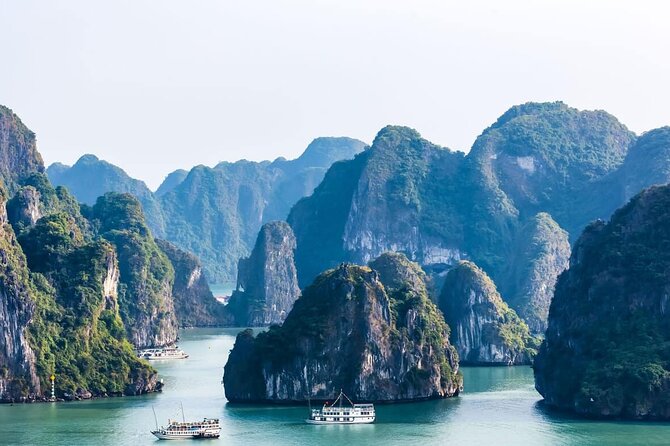
After Ha Long Bay, the route shifts gears in a big way. Day 3 drops you into Ninh Binh with an arrival check-in, then later you visit Hang Mua, also called Mua Caves. It is a popular viewpoint, and the appeal here is that you get a clear sense of what makes this region famous: karst formations and dramatic sight lines without having to hike for days.
Day 4 is the main Ninh Binh day and it is packed in a smart order. You start with breakfast, then do the Trang An boat tour, one of the signature experiences in the area. Then you move to Hoa Lu Ancient Capital for lunch and an afternoon visit, including the historic 10th and 11th century capital site.
The timing is efficient: after Hoa Lu, you still have energy for the next transition. Day 4 includes departure from Ninh Binh to Pu Luong at around 14:30, with arrival around 17:30, about 150 km. That cuts down on extra hotel shuffles, which is where many self-planned trips lose their “budget but exhausting” appeal.
Pu Luong Nature Reserve: waterfalls, bamboo rafting, and those walking breaks
Pu Luong takes over for Days 4 through 6, and this is where the trip adds real variety, not just more sightseeing. On Day 4 evening, you arrive, check in, eat local dinner, and get time to rest. That matters because the following days include multiple outdoor activities.
Day 5 starts with Hieu Waterfall. The hike is described as a walk to discover a hidden waterfall inside the reserve. You also get time to cool down in a green, quiet setting compared to the cities.
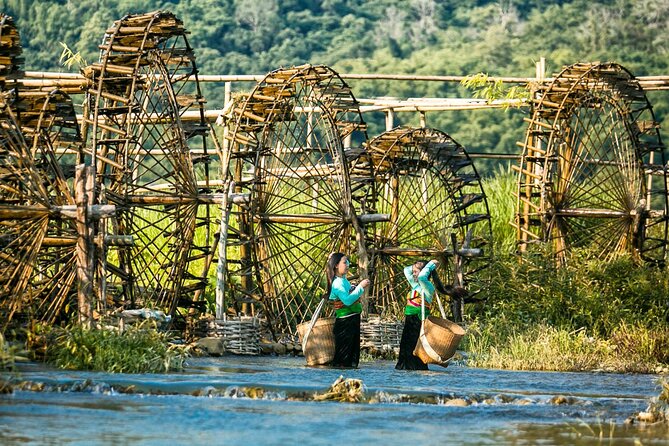
Later that same day, you add the bamboo rafting experience. The route puts the bamboo rafting as part of an afternoon nature block, and you also get the sense that this is the kind of activity you remember because it is slow and hands-on, not just another photo stop.
Day 6 continues the active day. You start with breakfast, then do a 6 km trek planned for around 3 hours with trails suitable for all, passing by rice terraces and remote villages. If you are traveling with kids or older adults, this is one place to pay attention. The trek length is not tiny, but the itinerary specifically frames it as suitable for all, which usually means there are pacing options and you are not forced into a hard climb.
Mai Chau: cycling through Thai villages and the Chieu Cave hike
Day 6 sends you to Mai Chau around mid-afternoon, and Day 7 builds the experience further. On Day 6, you cycle through Thai ethnic group villages with views over rice fields and village life, plus a slower pace that feels like a counterpoint to the Bay and cave days.
Day 7 adds Chieu Cave. You hike to the cave area, described as about 350 meters from the neighborhood in the southwest of Mai Chau town. You get around 4 hours for this segment, and the key value is that it breaks the day into hiking plus a payoff.
This part is often a “good trade” for people who want nature without losing the convenience of guides, transport, and scheduled meals. Still, it is not a couch-and-cocktail day. Wear shoes you trust, and do not plan to sprint afterward.



Flying from Hanoi region to Da Nang: where the itinerary picks up speed
One of the biggest logistical moves happens on Day 7. After breakfast and the Chieu Cave block, you do airport transfer planning in the morning, fly to Da Nang, then arrive around 15:00 with check-in and dinner in the evening.
There is a benefit to this flight jump. It saves you from a longer overland slog, and it lets you spend more of the tour days in the places people actually come to see in central and southern Vietnam.
It also means your schedule is tighter around airport timing. You will want a calm morning, and you should keep essentials easy to reach since you are moving hotels after flying.
Da Nang and Hoi An: Marble Mountains, Linh Ung Pagoda, then lanterns at night

Da Nang gets a freer-feeling block on Day 8. The morning is set up so you can unwind or go on your own, then the itinerary adds guided stops.
Linh Ung Pagoda comes first, with time to learn about Buddhist culture and see the pagoda site. Then you visit Marble Mountains, described as five limestone mountains and also a worship area. That pairing works well because it covers both spiritual and scenic elements without needing a full day of travel.
Then you shift to Hoi An at sunset. Day 8 includes Hoi An Ancient Town in the evening, when lantern-lit streets come alive. It is one of the most enjoyable “end of day” rhythms because you get the atmosphere at the hour you want, not when the tour bus is still rolling in.
Hue in a day: Imperial City, Thien Mu Pagoda, and Khai Dinh
Day 9 is the Hue day, and the logic is straightforward. Leave early, see the UNESCO-listed Imperial City in the morning, then continue to Thien Mu Pagoda in the afternoon and the Tomb of Khai Dinh later, before returning to Da Nang for the night.
The Imperial City visit is the anchor. It is tied to the Nguyen Dynasty, and it is the place you go if you want the clearest sense of Vietnam’s dynastic past in one concentrated stop.
Thien Mu Pagoda adds a different mood. You get time to explore the seven-story pagoda perched by the Perfume River banks. Then Khai Dinh’s tomb rounds it out with a blend of Vietnamese and Western styles in the tomb’s design.
This is a lot for one day. If you are the type who likes to linger, you might feel the pace. On the other hand, it is a good way to sample Hue without breaking your full north-to-south plan.
Ba Na Hills: Golden Bridge and the French Village with a buffet lunch
Day 10 is a full-day excursion from Da Nang to Ba Na Hills. The highlight is Golden Bridge, supported by two gigantic hands, plus time at Sun World Ba Na Hills. You also get a lunch buffet.
After lunch, you explore the French Village, described as a medieval French town replica tucked in the mountains. You get around 4 hours for this portion, which is enough to wander without feeling rushed, assuming you manage your photo time.
A practical angle: this day is popular for a reason, but it is also the kind of place where crowds can show up. The itinerary gives you a structured plan, so you are not left guessing where to go first.
Cham Island and Non Nuoc stone carving: a change from temples and tombs
On Day 11, you head to Cham Island (Cu Lao Cham). You depart from Cua Dai port in Hoi An, and on the way you also visit Non Nuoc Stone Carving Village. That stop is useful because it gives you something local and craft-based before the island time.
Your Cham Island tour is listed as starting at 07:30 and lasting about 4 hours, which makes it a half-day style outing. Then you pack and move back to Hoi An for the return to Da Nang airport, and from there you fly to Ho Chi Minh City, checking in in the evening around 20:00.
You should treat this as a movement day. You get great variety, but you are not getting a relaxed day at a single location.
Ho Chi Minh City basics plus Cu Chi Tunnels: history you can’t ignore
Ho Chi Minh City takes over for Days 12 to 14. Day 12 is the core city block, with Notre Dame Cathedral, Saigon Central Post Office, and the War Remnants Museum.
These choices matter because they cover different angles. The cathedral and post office are architectural markers. The War Remnants Museum is the reality check component. If you want Vietnam history without filters, this is one of the more direct stops on the route.
Day 12 also includes Cu Chi Tunnels in the afternoon. You get a guided visit to the tunnel network and an explanation of its role during the Vietnam War. Again, this is not a lighthearted stop, so if you prefer upbeat entertainment, plan your energy for the day accordingly.
Mekong Delta: My Tho, Ben Tre, Can Tho, then the Cai Rang floating market
Day 13 takes you into the Mekong Delta with a morning tour starting in My Tho. You take a boat journey along the Mekong River and then shift to Ben Tre, known for coconut groves. You get a boat ride along narrow canals, plus local workshops.
Then you move on to Can Tho, check in, and unwind. That hotel block after the water travel is smart because it gives you recovery time before the next market day.
Day 14 starts with Cai Rang Floating Market in the morning. You navigate the lively water marketplace atmosphere. Then you return to Ho Chi Minh City in the afternoon.
This is a tour segment that many people remember because it is sensory. You are on the water, the selling is happening around you, and the day feels different from city museums and pagodas.
Price and logistics: does $1,759 feel fair for this kind of route?
For $1,759 per person, the value comes from what you do not have to organize. The package includes accommodation in private rooms, a domestic flight plan, air-conditioned vehicle transport, a tour guide, and all entrance fees for the included sights. It also includes most of your meals, with 14 breakfasts, 13 lunches, and 5 dinners listed as included.
That bundle matters because Vietnam travel can get expensive in the wrong way when you add up taxis, tickets, and separate bookings. Here, you are paying for a plan that stitches together Hanoi, Ha Long Bay, Ninh Binh, Pu Luong, Mai Chau, Da Nang, Hoi An, Hue, Cham Island, Ho Chi Minh City, and the Mekong Delta into one continuous story.
Your main tradeoff is time flexibility. If you want to slow down, change nights based on mood, or skip a stop, this tour is not built for that kind of freedom. It is built for efficiency.
Who this Vietnam package fits best, and who should think twice
This works especially well if you want a first-timer-friendly way to see Vietnam from north to south without planning headaches. It also makes sense for families, because the itinerary is structured and support is part of the package, with past travelers praising convenience when traveling with seniors and kids.
It might feel like a lot if you are the kind of traveler who wants long unstructured evenings in every city. The schedule has a rhythm, and a few days are clearly built around early mornings, guided blocks, and transfers.
If you are comfortable with moderate activity, this is a strong mix. You get trekking options like the Pu Luong 6 km route and the Chieu Cave hike, plus gentler activities like cycling and bamboo rafting. If your mobility is limited, you will want to talk through what you can manage before committing.
Should you book this 15 day Vietnam package?
Book it if you want big-ticket Vietnam experiences lined up with minimal planning stress: Ha Long Bay cruise, Trang An boat tour, Pu Luong nature days, Da Nang plus Hoi An, Hue’s UNESCO stops, and Mekong Delta water markets. The price is easier to justify when you remember what it includes, and the small group size helps the trip feel human.
Skip or adjust your expectations if you hate early starts or you want long free afternoons every day. This tour is a “see a lot” plan, not a slow travel experiment.
If you decide to go, do one thing that makes the whole trip smoother: bring comfortable shoes and keep your essentials ready for flight and transfer days. Then you can focus on what you came for, the places that are hard to coordinate on your own.
FAQ
Is pickup included from Hanoi airports and hotels?
Yes. The tour notes hotel pickup, including arrival pickup from Noi Bai International Airport in Hanoi, plus transfers between accommodations and airports.
Are domestic flights included in the package?
Yes. Domestic flights are included as part of the route, including flying from the Hanoi area to Da Nang and then to Ho Chi Minh City.
How many people are in the group?
The tour has a maximum of 10 travelers.
Are entrance fees included?
Yes. The included details state that all entrance fees for the included sightseeing destinations are covered.
What meals are included?
Breakfast is included for 14 days, lunch is included for 13 days, and dinner is included for 5 days.
Is there any free time built into the days?
Yes. Day 8 includes a free morning in Da Nang, and Day 15 is a free day in Ho Chi Minh City for flexible exploration or rest.
What is not included in the price?
Tips, alcoholic drinks, soft drinks, and personal expenses are not included.
Can I cancel and get a full refund?
Yes. The policy says you can cancel up to 24 hours in advance for a full refund.
What if the tour is canceled due to poor weather?
The tour requires good weather. If it is canceled due to poor weather, you will be offered a different date or a full refund.